



Botanical Pendant Light
A botanical pendant light brings natural forms into a room through gilded branches, painted leaves, and floral metalwork.
Botanical Pendant Light
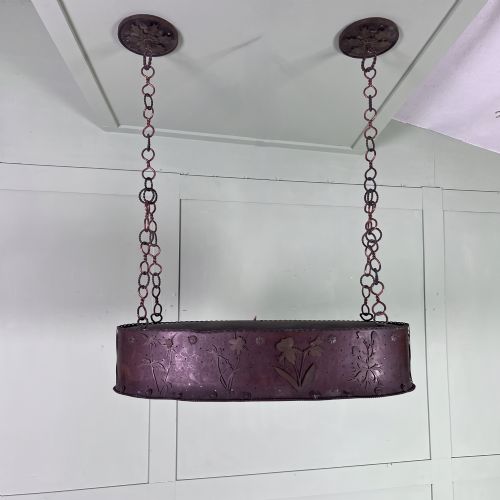
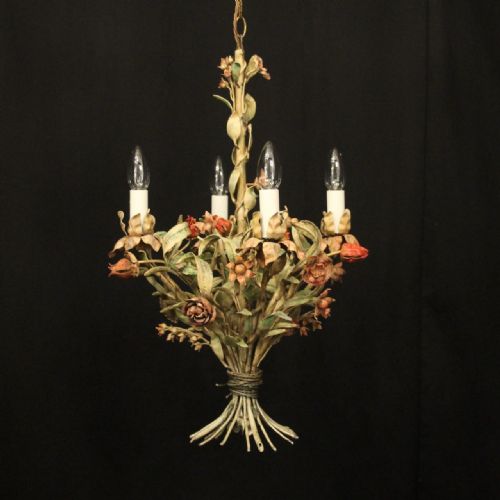
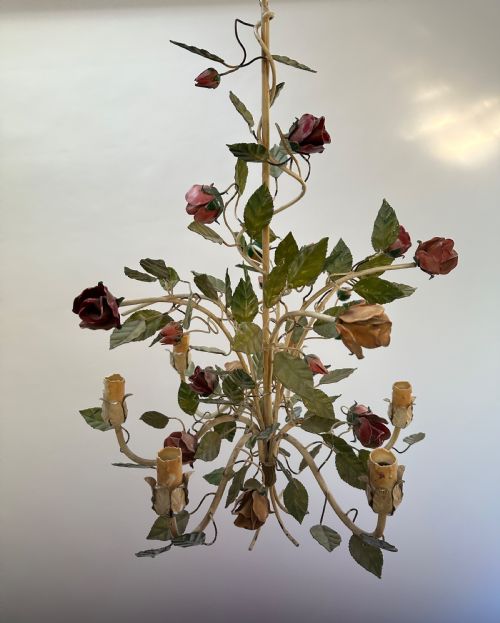
When you search for a botanical pendant light, you encounter decorative French chandeliers and hanging lanterns dating from 1900 to 1930. These pieces typically take the form of branch chandeliers, polychrome toleware floral fixtures, and bronze lanterns decorated with enamel.
The pieces listed on this page originate primarily from French workshops, spanning styles such as French country, Hollywood Regency, and Rococo revival. Alongside these French fixtures, Chinese export bronze and champleve enamel lanterns appear within the selection.
You are most likely to meet multi-light chandeliers featuring gilt metal branches or painted metal leaves. These fixtures range from four-light to five-light configurations designed for ceiling suspension.
Materials and construction methods
These lighting fixtures are constructed from metals including bronze, brass, iron, wrought iron, and gilt metal. Workshops shaped these metals into structural frames and delicate branch motifs.
Surface decoration relies heavily on polychrome paint and gilding applied to metal and toleware components. Chinese export lanterns incorporate champleve enamel alongside bronze casting.
Botanical Pendant Light Retail Price Guide 2026
Typical asking prices for botanical pendant light among the pieces listed under this phrase on Sellingantiques today, from the lower quarter to the upper quarter. They describe what is for sale here now, not the wider market.
Gilded branches and painted toleware leaves let you bring an entire French forest indoors without the dampness.
Assessing quality in botanical lighting
Quality rests in the precision of the metalwork and the delicacy of the natural forms, such as the shaping of individual leaves and branches on gilt metal frames. Finer examples display careful hand-painting on polychrome toleware that retains its original colour and surface depth.
The integration of decorative elements, from champleve enamel panels on bronze lanterns to multi-light branch configurations, separates standard production from superior decorative output.
The Botanical Pendant Light Glossary
- Toleware
- Painted or lacquered metalware, often decorated with floral motifs. This material forms the colourful painted leaves and flowers found on many vintage chandeliers.
- Champleve
- An enamelling technique where troughs are sunk into a metal surface and filled with vitreous enamel. This method decorates bronze lanterns with coloured patterns.
- Gilt metal
- Metal coated with a thin layer of gold paint or leaf to simulate solid gold. It provides the bright finish seen on branch chandeliers.
- Polychrome
- Painted in several colours. This term describes toleware fixtures decorated with varied hues on floral and leaf details.
Botanical Pendant Light: Frequently Asked Questions
How do I hang a botanical pendant light?
These fixtures suspend from ceilings using chains or matching metal rods attached to the main frame.
Professional installation ensures the weight of bronze or iron chandeliers is supported safely.
What periods do these lights come from?
The available lighting fixtures date from the early twentieth century, specifically between 1900 and 1930.
French workshops created the majority of these branch and toleware designs during this period.
What materials are used in these chandeliers?
Construction relies on metals such as bronze, brass, iron, wrought iron, and gilt metal.
Surfaces often feature painted toleware or champleve enamel details to mimic natural botanical forms.
Are these lights suitable for low ceilings?
Pendant lights and chandeliers require adequate clearance depending on the drop of the chain and the height of the frame.
Branch chandeliers with multiple lights suit rooms with standard or elevated ceiling heights.