


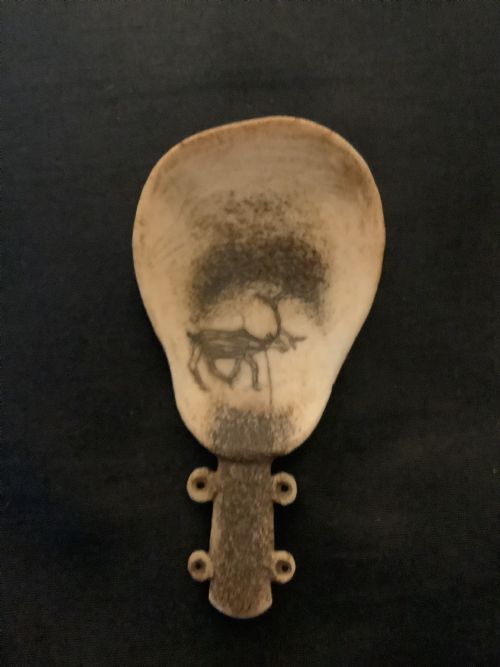


Bone Carved Horn
Bone carved horn brings together practical objects and decorative carvings fashioned from natural materials across several centuries.
Bone Carved Horn
When you search for bone carved horn, you encounter objects shaped from bone, horn, antler, and whalebone. These items range from walking stick handles and parasol grips to powder flasks and spoons.
The pieces on this page span from the eighteenth century through the Victorian era, including maritime folk art, tribal carvings, and European decorative objects.
You are most likely to meet nineteenth-century walking sticks and handles alongside functional items like powder flasks and love spoons.
Materials and construction
Craftsmen utilised stag horn, deer antler, bone, and whalebone, shaping the dense material with hand tools to achieve detailed relief carving. Metal mounts and wooden shafts frequently accompany the carved horn and bone elements.
Makers exploited the natural contours and grain of the horn and antler to guide the design of handles, flasks, and sculptures.
Bone Carved Horn Retail Price Guide 2026
Typical asking prices for bone carved horn among the pieces listed under this phrase on Sellingantiques today, from the lower quarter to the upper quarter. They describe what is for sale here now, not the wider market.
Current listings feature materials including bone, horn, stag horn, metal, wood, antler, and deer antler across various nineteenth and eighteenth-century objects.
Judging quality in carved horn and bone
Quality rests upon the depth and precision of the carving, distinguishing crisp execution from softer, worn work. The natural material dictates the complexity of the design, with well-chosen antler and bone providing a superior surface for detailed relief.
Proportion and integration with mounts, such as silver collars on riding crops or wooden shafts on walking sticks, separate everyday utility items from finer decorative pieces.
The Bone Carved Horn Glossary
- Stag horn
- Hard material taken from the antlers of deer, frequently utilised for walking stick handles and carved objects. Its dense structure allows for deep, durable relief work.
- Whalebone
- Material derived from the baleen of whales, employed historically in maritime folk art for walking sticks and practical items. It possesses a distinctive fibrous texture.
- Powder flask
- Container used for holding gunpowder, often shaped from bone or horn with metal fittings during the eighteenth and nineteenth centuries.
- Love spoon
- Decorative wooden or horn spoon carved as a token of affection, particularly associated with European folk traditions.
Bone Carved Horn: Frequently Asked Questions
What are bone carved horn items?
These pieces comprise functional and decorative objects fashioned from animal bone, horn, and antler. They include walking sticks, handles, flasks, and spoons.
They reflect historical craftsmanship from various global traditions, spanning maritime folk art to European folk pieces.
How were these objects used?
Many items served practical daily functions, such as walking aids, riding crops, and containers for gunpowder or opium. Others, like love spoons and sculptures, served ceremonial or decorative purposes.
Their dual nature as useful tools and carved art made them popular across different social spheres.
How do I date a piece?
Dating relies on stylistic clues, the nature of the mounts, and the wear on the bone or horn. Eighteenth-century pieces often display different carving depths compared to Victorian or Edwardian examples.
Examining accompanying metalwork and construction techniques helps confirm the period.
How should I care for horn and bone?
Keep items away from direct sunlight and extreme humidity changes to prevent the natural material from drying out and splitting. Gentle dusting with a dry cloth is usually sufficient for maintenance.
Avoid harsh chemical cleaners that can damage the surface patina.