

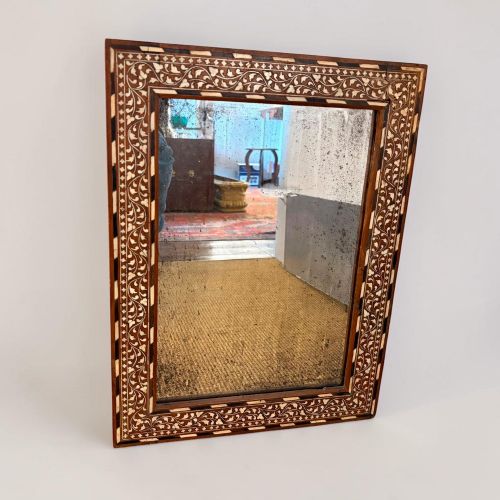
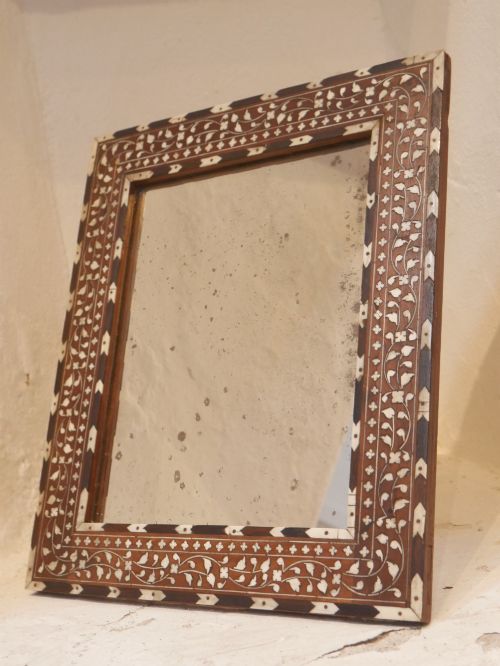

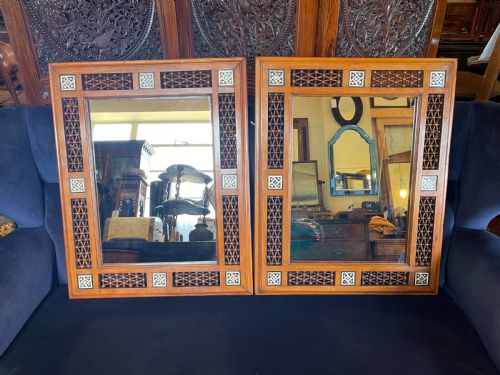


Bone and Wood Mirror
A bone and wood mirror brings intricate craftsmanship into a room, combining tactile inlay with rich timbers.
Bone and Wood Mirror
When you search for a bone and wood mirror, you find decorative wall mirrors created across distinct regional traditions and revival styles. The pieces combine carved wooden frames with detailed inlay work that catches the light.
You are most likely to meet 19th century examples on this page, particularly items showing Anglo-Indian, Levantine, Syrian, and Moorish revival influences. These wall mirrors range from compact toilet mirrors to large, richly inlaid wall hangings.
The forms draw on specific historical aesthetics including Islamic and Renaissance revival patterns. Walnut, teak, and shisham provide the structural timber base for these elaborate decorative objects.
How they were made
The construction of these mirrors relies on dense hardwoods such as walnut, teak, and shisham to support intricate surface ornamentation. Artisans shape these timbers into solid frames and incorporate turned wooden panels.
Surface decoration involves precise bone inlay and nacre-shell mother of pearl pieces set directly into the wood. This technique requires meticulous hand-cutting of small geometric and floral segments to cover the frame.
Bone and Wood Mirror Retail Price Guide 2026
Typical asking prices for bone and wood mirror among the pieces listed under this phrase on Sellingantiques today, from the lower quarter to the upper quarter. They describe what is for sale here now, not the wider market.
Listings feature wall mirrors incorporating walnut, teak, shisham, and mother of pearl.
What varies in quality
Quality in these mirrors rests primarily on the precision and density of the inlay work. Finer examples display tightly fitted bone and mother of pearl segments with minimal gaps in the surrounding timber.
The depth and crispness of the wood carving distinguish superior frames from simpler production. Skilled hand-carving in hardwood yields sharp relief work and well-defined turned panels that hold their structural integrity.
Material selection also dictates overall grade, with richly figured timbers and carefully selected nacre-shell inlay marking the higher tier. The complexity of the regional design influences the standard of execution across the piece.
The Bone and Wood Mirror Glossary
- Bone inlay
- A decorative technique where small pieces of bone are embedded into a wooden surface to form intricate patterns. This method creates striking contrast against dark hardwoods.
- Mashrabiya
- An architectural element adapted into frames consisting of turned wooden grilles and panels. It adds depth and intricate geometric shadow play to the mirror surrounds.
- Mother of pearl
- An iridescent inner layer of shells utilised for decorative inlay work alongside bone. It brings a subtle shimmer and varied colour play to the frame surface.
- Shisham
- An Indian hardwood frequently utilised for traditional carved furniture and mirror frames. It provides a durable and stable base for complex inlay work.
- Toilet mirror
- A small mirror designed to sit on a dressing table or box base rather than hang on a wall. These pieces often incorporate small drawers or adjustable pivoting stands.
Bone and Wood Mirror: Frequently Asked Questions
Where should I hang a bone and wood mirror?
These mirrors suit spaces where their detailed surfaces can catch natural light, such as hallways or living rooms. They work effectively as standalone focal points above mantelpieces or console tables.
Ensure the wall fixings support the weight of a solid hardwood and inlaid frame safely. Keeping them out of direct, harsh sunlight helps protect the natural timber and delicate inlay work over time.
How do I clean and care for the inlay?
Dust the frame regularly with a soft, dry cloth to prevent dirt settling into the recesses of the carved wood and bone inlay. Avoid using liquid polishes or harsh chemical cleaners that might loosen the adhesive holding the small inlay pieces.
Conditioning the wood occasionally with a suitable specialist wax helps maintain the moisture balance of the timber. Take care around the edges of the mirror glass to prevent moisture seeping behind the reflective coating.
How can I tell regional styles apart?
Anglo-Indian and Hoshiarpur pieces often feature dense overall floral or geometric bone inlay covering the entire wooden armature. Syrian and Levantine work frequently incorporates distinct mother of pearl sections alongside intricate mashrabiya turned panels.
Moorish and Islamic revival designs lean heavily into horseshoe arches and complex geometric lattice patterns. Examining the specific combination of timbers and inlay materials usually points toward the origin of the workshop.
Are these mirrors heavy?
Many of these pieces possess substantial weight due to the use of dense hardwoods like teak, walnut, or shisham. The added layers of bone and shell inlay further increase the overall mass of the framed mirror.
Because of this weight, secure wall mounting into solid masonry or direct stud work is essential for safety. Standard picture wire may need upgrading depending on the scale and heft of the specific frame.