





Bohemian Glass Urn
A bohemian glass urn brings colour and striking silhouette to a room, offering the tactile weight of nineteenth and early twentieth century craftsmanship.
Bohemian Glass Urn
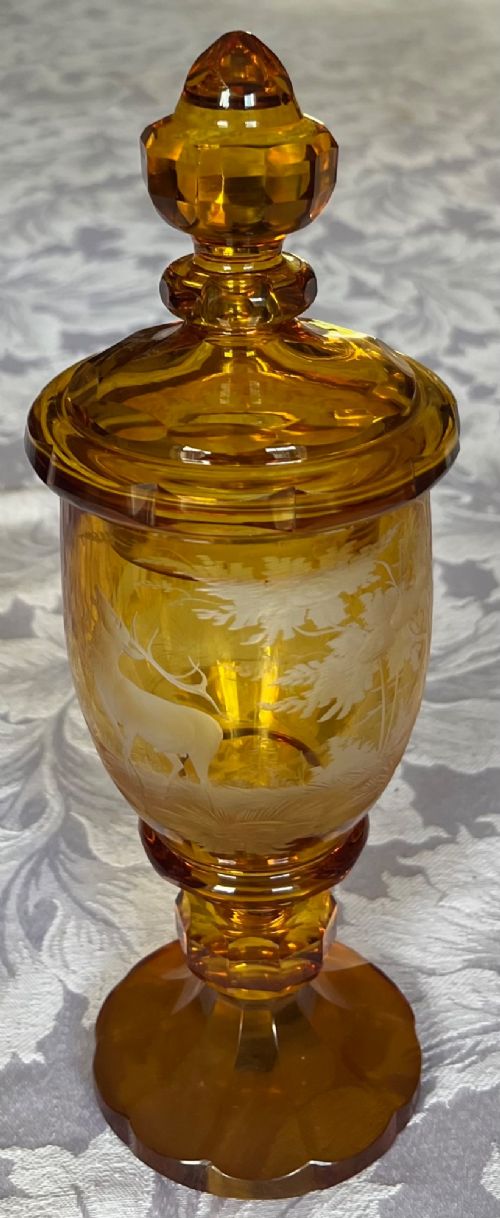
When you search for a bohemian glass urn, you encounter vessels produced across the Victorian era, the turn of the twentieth century, and into the Art Deco period. These pieces encompass lidded vases, garniture sets, and tall display forms designed primarily for decorative impact.
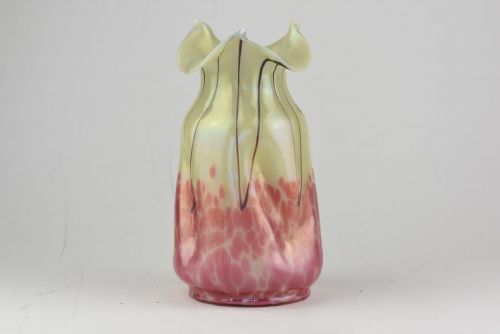
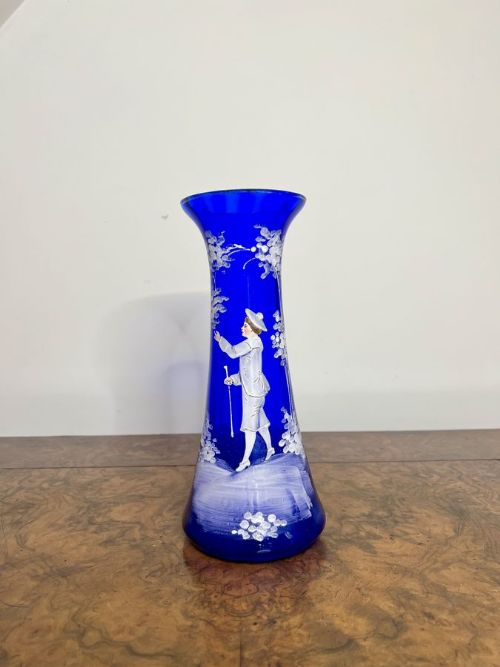
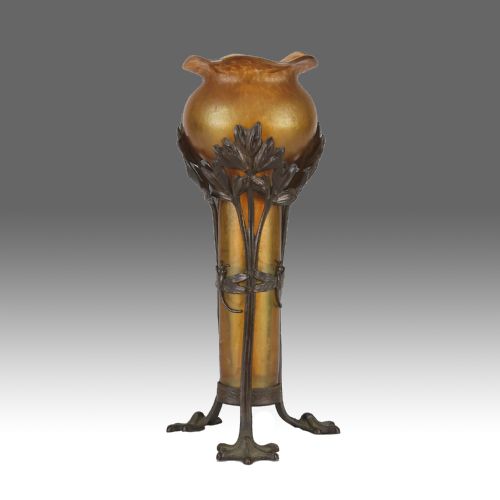
The selections on this page draw heavily from Victorian and Art Nouveau aesthetics, utilising rich colour palettes like cobalt blue, cranberry, ruby, and peachblow. Many incorporate covers or mounts in bronze, pewter, and sterling silver to elevate their architectural presence.
Makers and glasshouses from the region utilised varied techniques such as cutting to clear, acid-etching, and enamelling to create depth. You find both monumental centrepieces and paired vessels displaying portraits, floral motifs, or organic textures.
How they were made
Glassmakers shaped molten material through free-blowing or mould-blowing, often casing layers of different coloured glass together before cutting away the outer stratum. This overlay technique created high-contrast panels where transparent or opaque glass emerged beneath a vibrant surface.
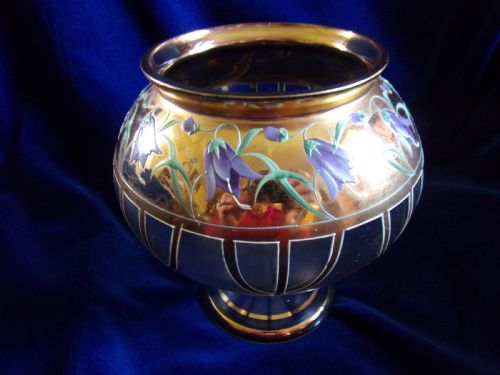
Surface decoration required specialised artistic hands, employing polychromatic enamel, gold leaf, and delicate engraving directly onto the glass body. Artisans also applied metalwork, securing pewter, bronze, or silver mounts and overlays around the rims, necks, and handles.
Bohemian Glass Urn Retail Price Guide 2026
Typical asking prices for bohemian glass urn among the pieces listed under this phrase on Sellingantiques today, from the lower quarter to the upper quarter. They describe what is for sale here now, not the wider market.
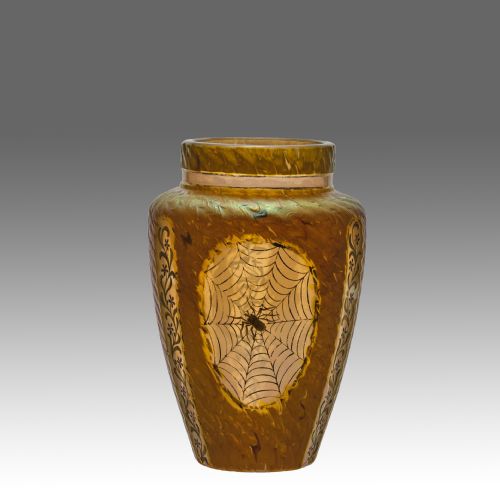
A few cunning bohemian pieces wear coats of slithering metal snakes and creeping water plants.
What varies in quality
The distinction between standard production and exceptional work rests on the crispness of the cutting, the complexity of the glass body, and the integration of metal mounts. Pieces with multiple cased layers and deeply hand-etched or wheel-cut facets demand superior technical control.
Artistry in surface embellishment further separates the tiers, seen in the precision of polychromatic enamelling, hand-painted portraits, and fine metallic overlays. Complete sets and matched pairs with original covers command greater interest than isolated vessels.
Pallme Konig·Loetz·Kralik Glass·Loetz Witwe·Moser·Harrach·Paul Heller·Booms glass
The Bohemian Glass Urn Glossary
- Cased glass
- A vessel formed of two or more distinct layers of glass fused together during production. This allows craftsmen to cut through the outer layer to reveal a contrasting colour underneath.
- Peachblow
- A nineteenth-century art glass type shading softly from white to pink or peach. It often has a matte or glossy finish.
- Phänomen
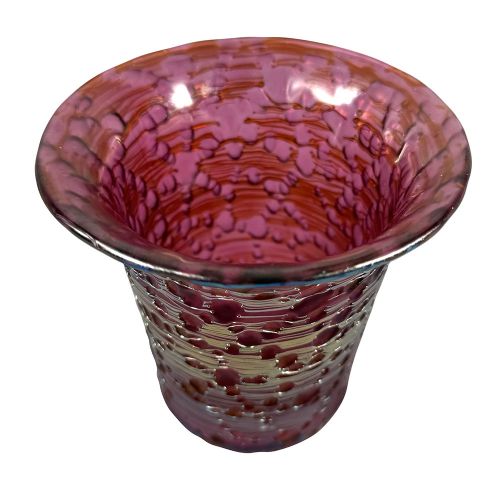
- An iridescent glass decor characterised by combed, undulating feather patterns across the surface. It is strongly associated with the Loetz factory during the Art Nouveau period.
- Hyalite
- An opaque black or red glass developed in nineteenth-century Bohemia. It mimics the appearance of polished stone or ceramic.
- Garniture set
- A matched group of three or more vases or urns designed to be displayed together on a mantelpiece or sideboard.
Bohemian Glass Urn: Frequently Asked Questions
How do I identify a bohemian glass urn?
Look for characteristic nineteenth and early twentieth-century design traits, including cased colour layers, metallic overlays, and distinct Art Nouveau or Victorian motifs. Many pieces also display characteristic deep cutting or iridescent finishes.
Examine the base and rims for signs of hand-finishing, polished pontil marks, and the weight associated with nineteenth-century production. While some bear signatures or maker attributions, many rely on decorative style and material composition for identification.
Where should I display my glass urn?
These vessels suit prominent positions on mantelpieces, entrance tables, or inside glass-fronted cabinets where light can pass through the coloured or iridescent body. Paired urns work well framing a central mirror or artwork.
Keep them away from direct, harsh sunlight to protect any delicate enamel work or gold leaf gilding over extended periods. Ensure the surface is stable and free from vibrations, especially for tall or heavy lidded pieces.
Were these urns used for flowers?
While some lidded and open vessels functioned as vases for cut blooms, many served strictly as decorative garnitures or mantel ornaments. The inclusion of fitted covers often points toward decorative display rather than daily utility.
If you choose to use a lidded urn for flowers, handle the cover carefully and inspect the interior for any historic residue or moisture sensitivity. Most collectors prefer to display them empty to preserve the interior glass surfaces.