




Bohemian Art Deco Glasses
These bohemian art deco glasses and vessels bring sharp geometric forms and vibrant coloured enamels straight from Central European workshops into a modern room.
Bohemian Art Deco Glasses
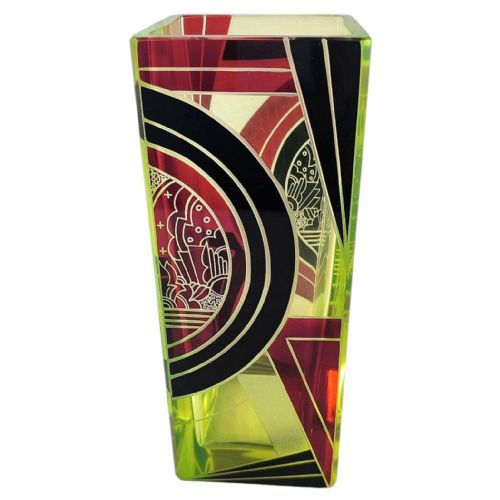
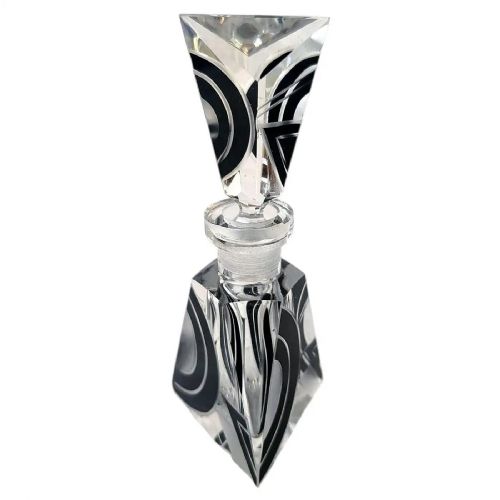
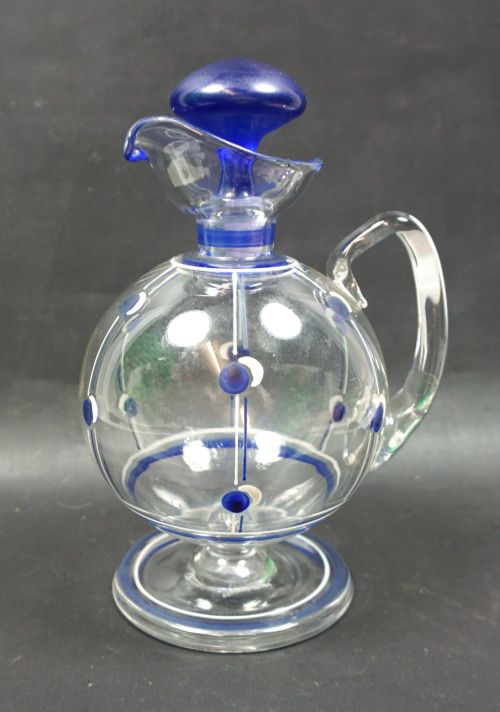
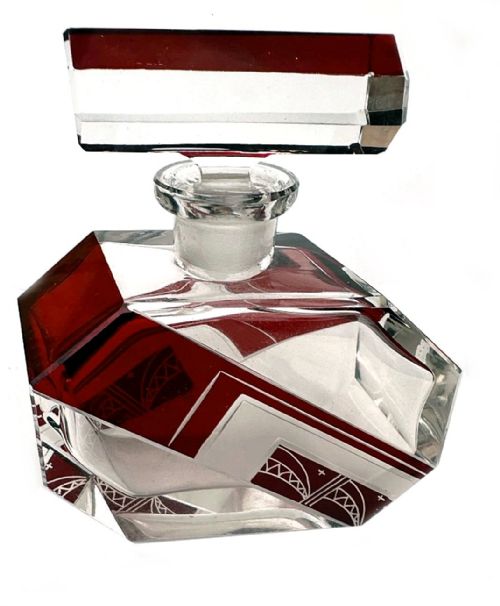
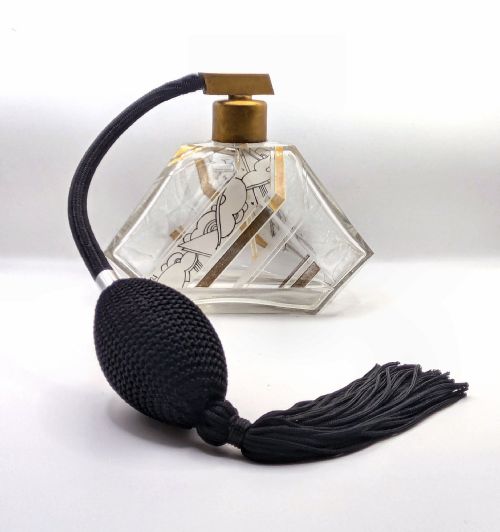
When searching for bohemian art deco glasses, collectors encounter items primarily made in Czechoslovakia during the nineteen thirties, encompassing decanter sets, perfume bottles, and vases. The period output reflects modernist design trends mixed with traditional Bohemian glassmaking skill.
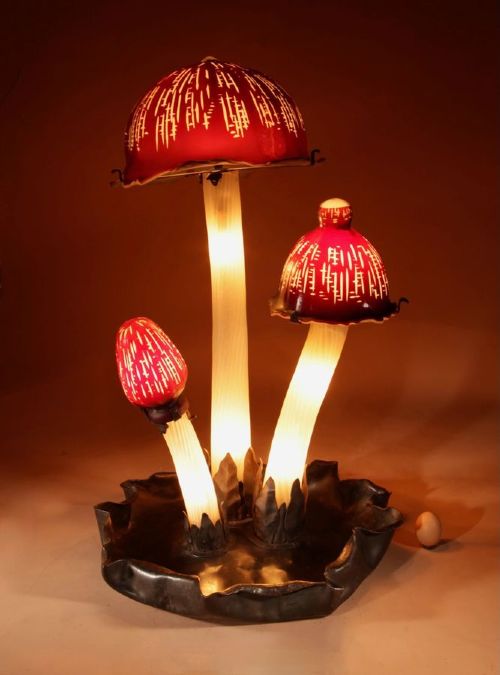
Vessels span from geometric crystal decanter sets with matching glasses to tall black enamel vases and table lamps. Pieces frequently show bold cuts, stark black accents, and bright enamelling characteristic of Central European manufacture from the interwar decades.
How they were made
Makers utilised clear crystal, uranium glass, and opaque hyalite glass shaped through blowing and pressing techniques. Heavy geometric cutting creates sharp facets that catch light across decanters and scent bottles.
Surface decoration relies on applied enamel, acid etching, and hand painting, often fixed by firing. Metal elements such as chrome mounts or silver overlay provide structural contrast to the coloured glass.
Bohemian Art Deco Glasses Retail Price Guide 2026
Typical asking prices for bohemian art deco glasses among the pieces listed under this phrase on Sellingantiques today, from the lower quarter to the upper quarter. They describe what is for sale here now, not the wider market.
Jazz age cocktail culture lives on through matching decanter sets equipped with six identical glasses ready for a nineteen thirties toast.
What varies in quality
Quality rests on the crispness of the glass cutting and the precision of the hand-applied enamel work. Sharp, deep facets and clean geometric lines separate finer examples from simpler production pieces.
Attribution to known designers or documented workshops elevates a piece, as does the completeness of matched sets involving decanters and matching glasses.
Karl Palda·Libochovice·Paul Heller·Booms glass·Hermanova·Rudolf Hlousek·Emmy Seyfried
The Bohemian Art Deco Glasses Glossary
- Crystal
- Glass containing lead oxide, which increases weight, clarity, and refractive index. This material permits deep, sharp geometric cutting.
- Enamel
- Opaque or translucent vitreous composition fused to the glass surface by heat. It provides the bold colour blocks seen on interwar vessels.
- Atomiser
- A perfume bottle fitted with a spray mechanism and bulb. These often feature matching glass bases and metal collar hardware.
- Hyalite glass
- An opaque black or coloured glass developed in Bohemia. It imitates the appearance of polished stone.
Bohemian Art Deco Glasses: Frequently Asked Questions
Are these items safe for drinking?
Interwar glassware was manufactured primarily for display and serving rather than modern daily consumption. Historic enamel decoration and lead crystal compositions require careful handling.
Utilise decanter sets for decorative display or light service rather than storing liquids long-term.
How do I identify Czech pieces?
Look for distinct geometric cutting, black enamel contrasting with clear crystal, and characteristic perfume bottle shapes. Many items originate from Bohemian regions known for interwar glass production.
Compare specific bottle profiles and enamel motifs against documented works by known regional designers.
Where should I display my vase?
Place vases and lamps where natural daylight passes through the coloured crystal or uranium glass to highlight the geometric cuts. Ensure wooden surfaces are protected if items lack padded bases.
Keep pieces away from direct heat sources and bright sunlight to prevent enamel fading over time.