




Bobbin Turned Leg Chair
A bobbin turned leg chair brings centuries of English woodwork into a room through repeated spool-like carvings.
Bobbin Turned Leg Chair
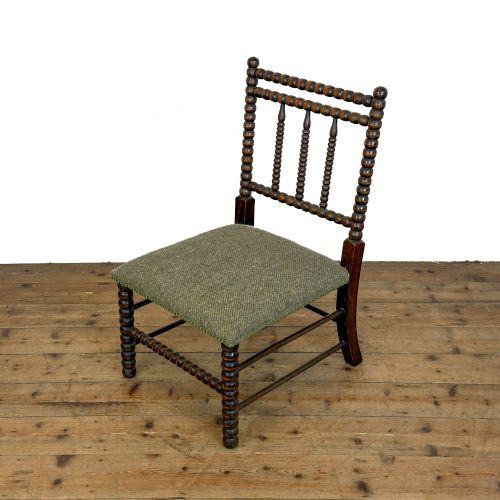
A bobbin turned leg chair relies on rhythmic, cylindrical carvings shaped like spools of thread to form its structural supports and legs. When searching for a bobbin turned leg chair, buyers encounter various seating forms including armchairs, side chairs, dining chairs, and corner chairs.
The pieces span several historical periods, with Victorian revivals and 18th century examples appearing frequently across the selection. Oak forms the primary structural material, often accompanied by beech, walnut, and rosewood.
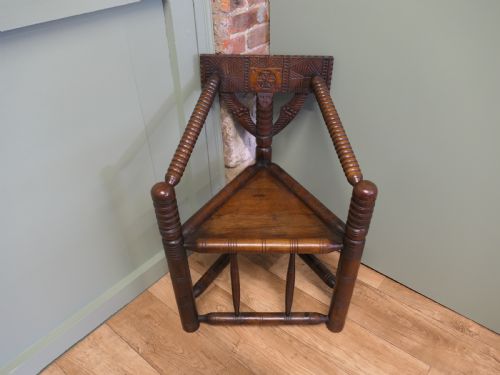
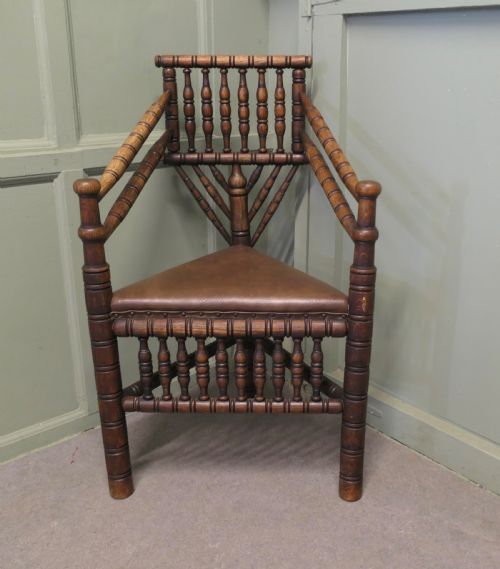
Regional designations such as Old Saxon or turners chair appear among the listings, describing substantial elbow seats rooted in early English seating traditions. These designs balance functional seating with decorative turning that draws the eye.
Materials and construction
Carpenters shaped solid hardwoods including oak, beech, and walnut using lathe-turning techniques to produce the characteristic spool profiles. The cylindrical sections required precise hand-chiselling and turning to achieve uniform repetition along the length of each leg or stretcher.
Seating surfaces often incorporate natural materials such as rush and cane woven tightly into frames, or integrated pads upholstered in leather, tweed linen, and other textiles. Joints relied on traditional pegged mortise and tenon construction to sustain daily weight.
Bobbin Turned Leg Chair Retail Price Guide 2026
Typical asking prices for bobbin turned leg chair among the pieces listed under this phrase on Sellingantiques today, from the lower quarter to the upper quarter. They describe what is for sale here now, not the wider market.
Some Victorian makers apparently decided that if a little spool turning was good, turning every single rail until the chair vibrated was even better.
Distinctions in quality
The refinement of the turning defines the upper tier of these chairs, where spool profiles maintain crisp edges and consistent spacing along every leg and stretcher. Heavier timber frames and tighter joinery indicate superior workshop standards from the outset.
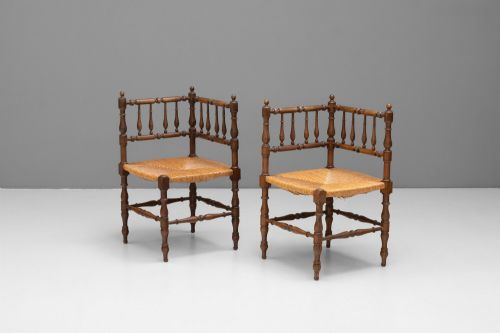
Condition of original woven rush or cane seating surfaces, alongside the integrity of dense hardwoods like oak and walnut, separates well-preserved examples from heavily restored counterparts. The presence of matching pairs or sets introduces a higher level of scarcity.
The Bobbin Turned Leg Chair Glossary
- Bobbin turning
- A type of lathe work producing a series of rounded, spool-like shapes along a length of wood. This decorative woodwork defines the legs and stretchers of the seating.
- Turners chair
- A heavy elbow seat constructed from turned wooden members intersecting to form a triangular or square frame. These traditional forms date back to early vernacular English furniture.
- Corner chair
- A seating form designed to fit into the corner of a room, featuring a diagonal orientation with a curved backrest supported by turned posts. They often utilise bobbin legs for structural detailing.
- Rush seating
- A woven seat made from dried marsh grasses twisted into cords and laced across the chair frame. It provides a resilient and traditional surface for vernacular seating.
- Ebonised wood
- Timber treated with a chemical stain or finish to imitate the dark appearance of ebony. This dark surface treatment highlights the carved profiles of the turned elements.
Bobbin Turned Leg Chair: Frequently Asked Questions
What is a bobbin turned leg chair?
A bobbin turned leg chair is a piece of seating furniture featuring wooden legs and stretchers carved with repeating spool-like shapes. These turned details mimic reels of thread lined up end to end.
The style draws on 17th-century vernacular traditions that were later revived during the Victorian era. They appear in forms ranging from compact side chairs to substantial armchairs.
How old are these chairs usually?
The pieces span several centuries, with examples originating in the 18th century alongside Victorian revivals from the 19th century. Later interpretations also appear from the early decades of the 20th century.
Revival pieces often replicate earlier Jacobean or Old Saxon forms while retaining the manufacturing techniques of their actual period of production.
What woods were used to make them?
Oak serves as the predominant timber across the selection, providing a heavy and durable framework for the turned members. Beech, walnut, and rosewood also appear among the listed pieces.
These hardwoods supported the rigorous lathe work required to produce crisp spool profiles without splitting the grain.
How do I use one in a modern room?
A single armchair or corner chair works effectively as an accent piece in a hallway or study. Dining chairs can surround a timber table to introduce textural contrast through their turned legs.
Their distinct wooden profiles allow them to complement both traditional interiors and contemporary spaces seeking historical character.