

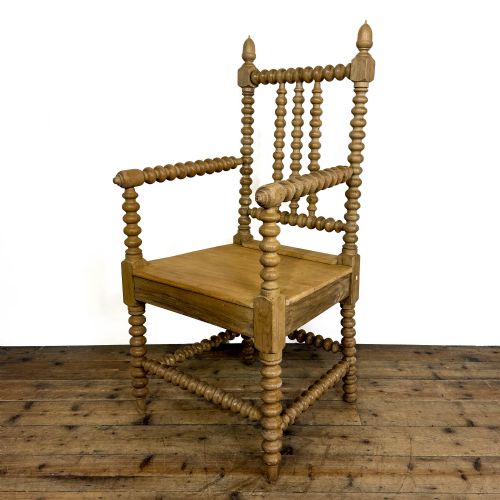
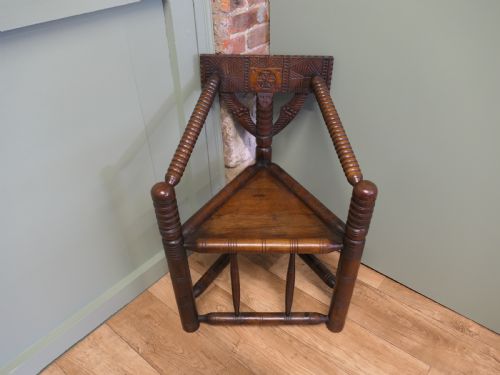
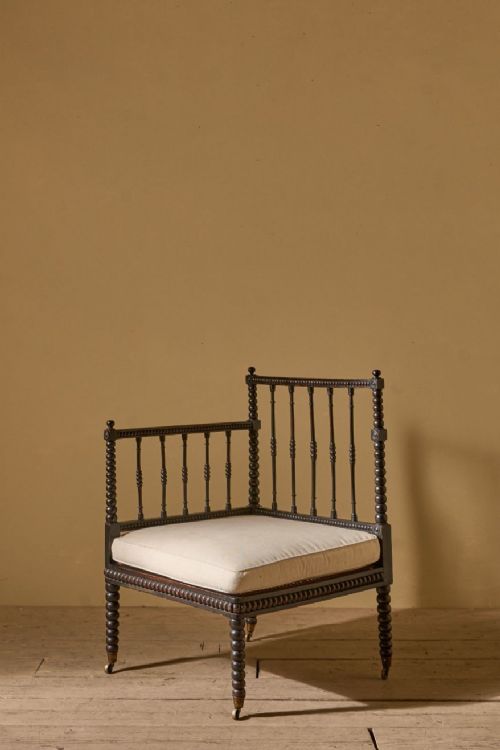

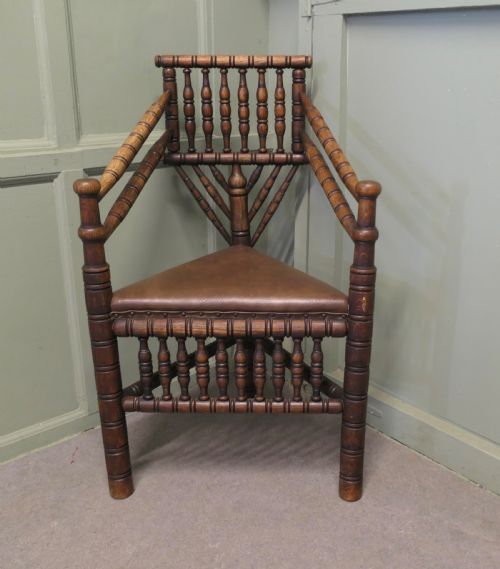
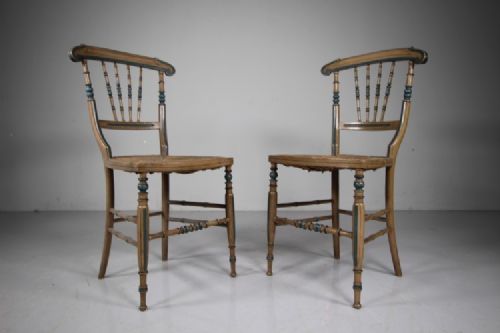


Bobbin Turn Chair
A bobbin turn chair offers sculptural spigot-turned spindles and sturdy seating, rooted in centuries of vernacular craftsmanship.
Bobbin Turn Chair
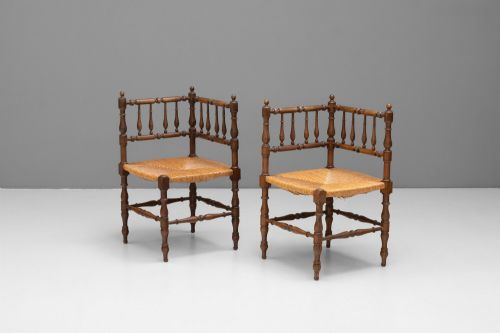
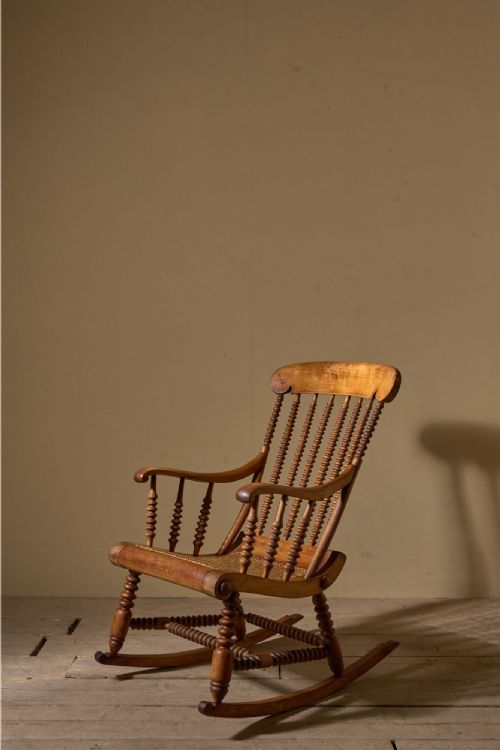
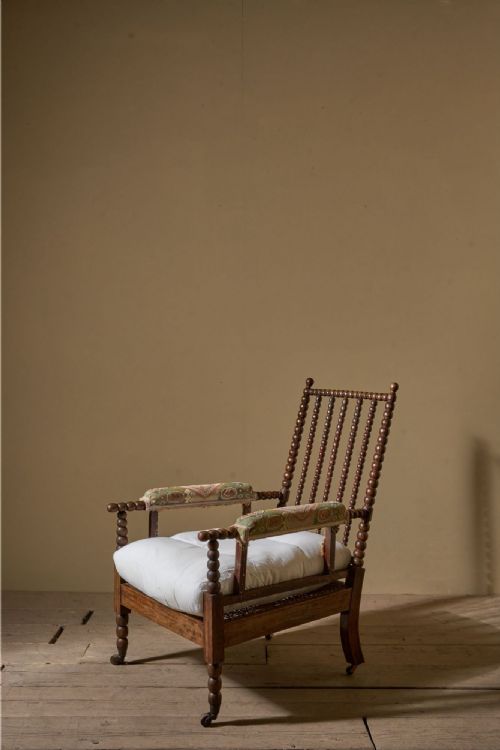
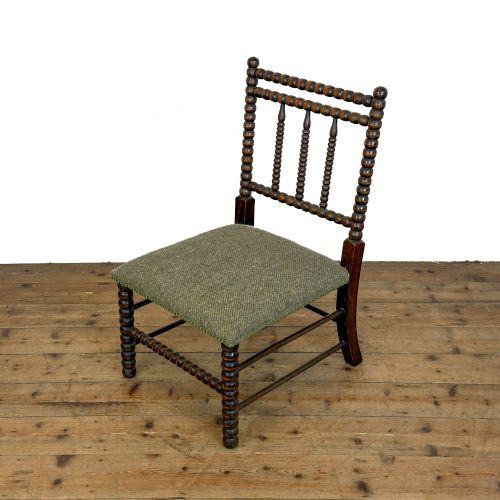
The selections available here span nineteenth-century interpretations and earlier iterations, utilising oak, beech, and walnut alongside simulated rosewood finishes. Alongside standard armchairs and side chairs, the groupings include corner chairs, daybeds, and children's versions.
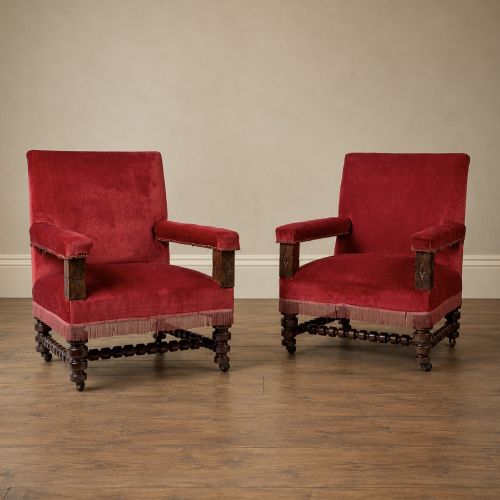
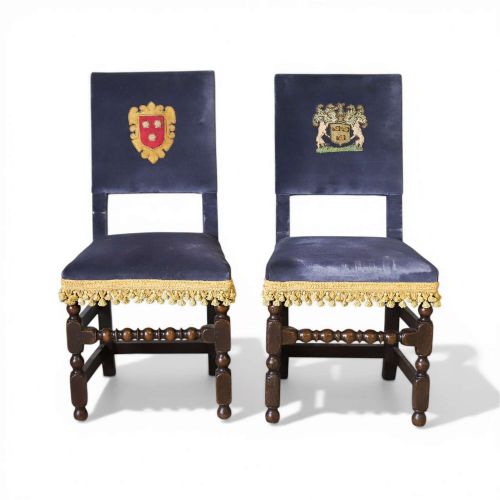
Many examples adhere to Jacobean revival and Victorian Gothic aesthetics, while others reflect English country or Swedish vernacular traditions. Buyers find both open-arm configurations and upholstered variants fitted with velvet, fabric, rush, cane, or leather.
Materials and Construction Methods
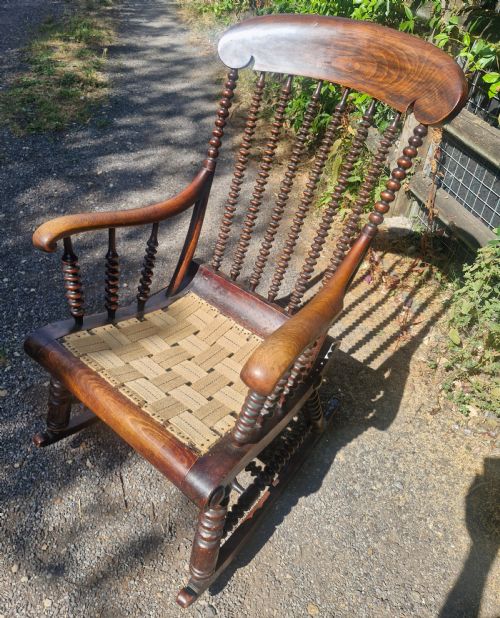
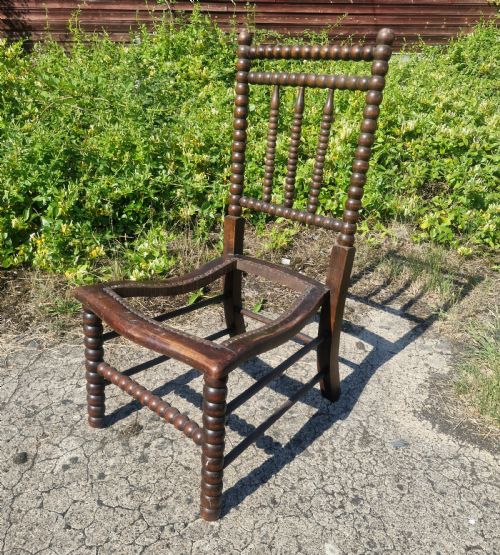
Makers shaped the defining spool ornaments on a lathe, turning solid hardwoods such as oak, beech, and walnut into repeating circular segments. These turned members formed the legs, stretchers, arm supports, and back uprights of the frame.
Joinery relied on traditional mortise and tenon joints to secure the heavily turned components together, ensuring rigid support under daily use. Seats were integrated using woven rush, cane panels, or drop-in pads upholstered in fabric, leather, or velvet.
Bobbin Turn Chair Retail Price Guide 2026
Typical asking prices for bobbin turn chair among the pieces listed under this phrase on Sellingantiques today, from the lower quarter to the upper quarter. They describe what is for sale here now, not the wider market.
Several chairs swap standard timber for simulated rosewood, proving that nineteenth-century decorators loved a clever painted illusion just as much as solid exotic hardwoods.
Distinctions in Quality
The integrity of the turned spindles dictates the standard of execution, separating finely articulated spool work from flat or coarse profiling. Crisp junction points and evenly spaced turning sections denote careful workshop production.
Timber selection and finish longevity also set pieces apart, with dense native oaks and rich ebonised or simulated rosewood coatings holding greater visual depth. Original surface treatments and structurally sound joints distinguish superior examples from heavily altered pieces.
Liberty and Co
The Bobbin Turn Chair Glossary
- Bobbin turning
- A form of woodturning characterised by a succession of rounded, spool-like shapes resembling bobbins of thread.
- Wainscot chair
- An early heavy wooden armchair constructed with panelled backrests and solid seats, typical of the seventeenth century.
- Backstool
- An early term for a chair without arms, essentially an upholstered or panelled stool fitted with a vertical back.
- Spigot
- The cylindrical projecting end of a turned wood component designed to fit snugly into a corresponding mortise hole.
- Vernacular
- Objects made by regional craftsmen for local domestic use rather than following formal metropolitan design canons.
Bobbin Turn Chair: Frequently Asked Questions
What is a bobbin turn chair?
A bobbin turn chair is a seating form defined by its turned spindle framework, which resembles a string of bobbins or spools.
These chairs draw heavily on seventeenth-century designs, though most surviving examples date from nineteenth-century revivals.
How do I date a bobbin chair?
Dating relies on timber species, construction joinery, and the style of the turning work, with earlier pieces showing hand-cut joinery.
Victorian revivals often feature ebonised finishes or simulated rosewood, while seventeenth-century originals typically employ heavy joined oak.
Where were these chairs used?
They served as functional seating in parlours, bedrooms, and libraries, depending on the scale and upholstery of the specific model.
Smaller variants functioned as corner or bedroom chairs, while sturdier armchairs stood in studies and hallways.
How should I care for the wood?
Maintain the timber by keeping it away from direct heat sources and sudden humidity changes that cause wood to split.
Apply microcrystalline wax periodically to nourish the surface without building up excessive residue on the turned details.