

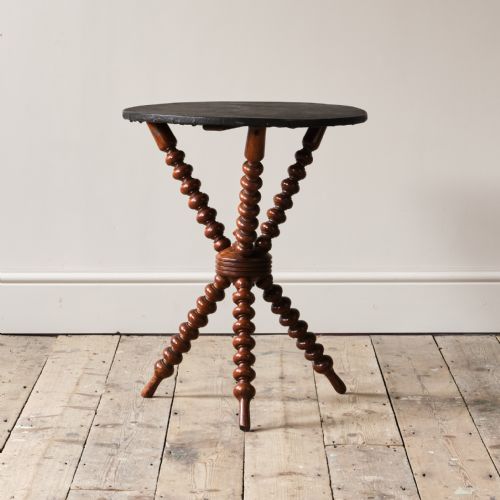
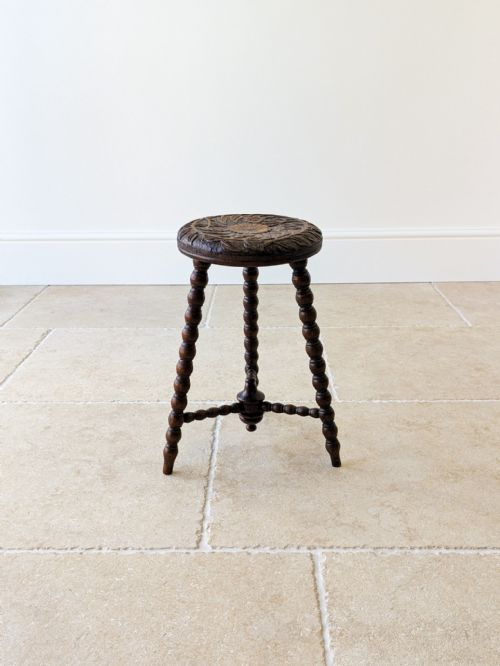

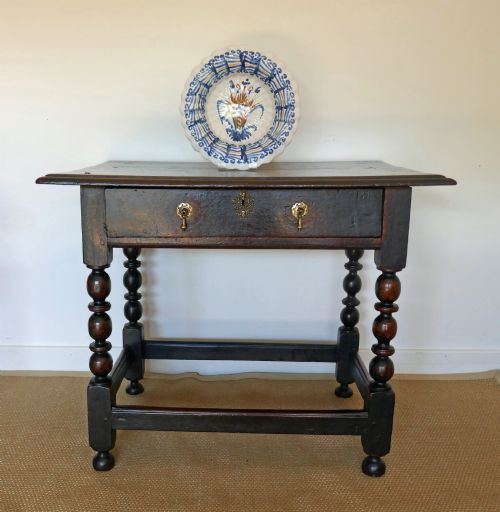
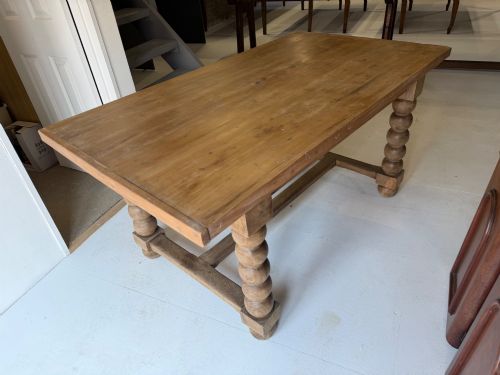
Bobbin Legged Side Table
A bobbin legged side table brings tactile turned profile and sturdy utility into a room.
Bobbin Legged Side Table
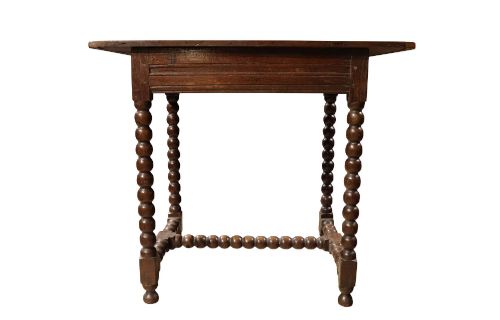
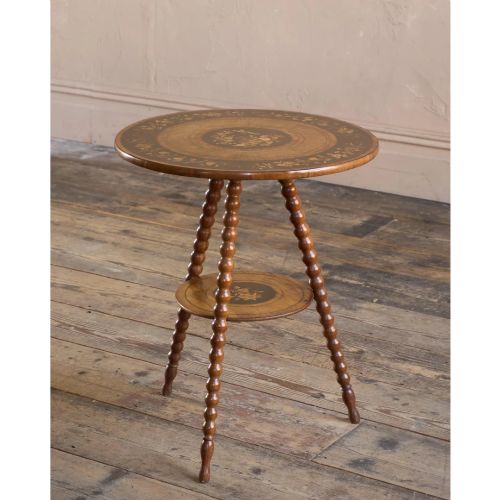
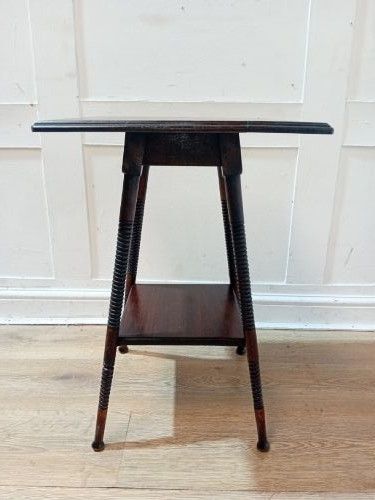
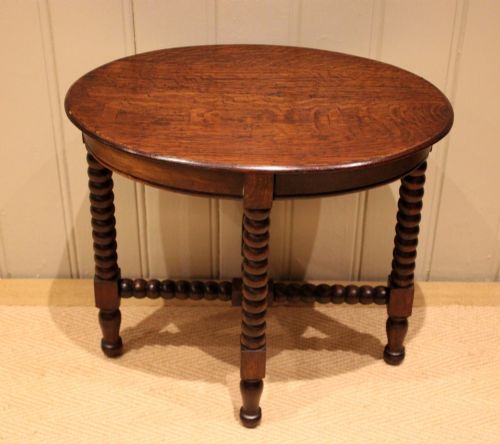
A bobbin legged side table is a compact surface defined by spool-turned supports that date from the seventeenth century through to later revival periods. These pieces serve practical needs in hallways, beside seating, or as occasional surfaces in a living space.
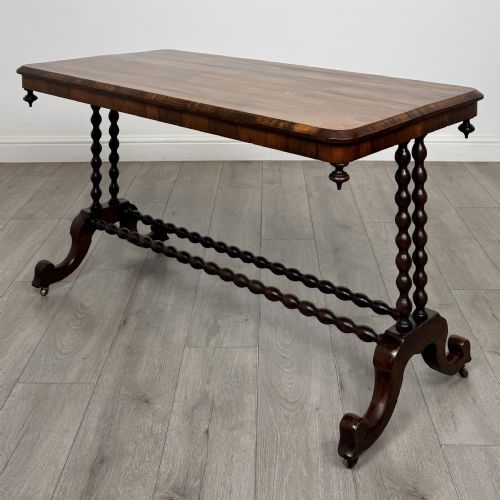
The versions most commonly met on this page span seventeenth-century origins, nineteenth-century Victorian interpretations, and later Edwardian or twentieth-century examples. Oak is the primary wood encountered, often accompanied by walnut, mahogany, or ebonised finishes.
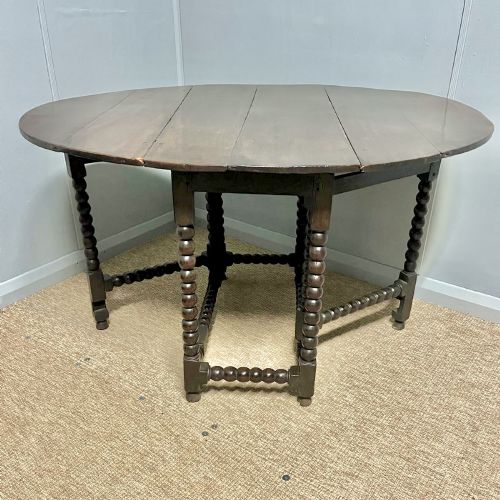
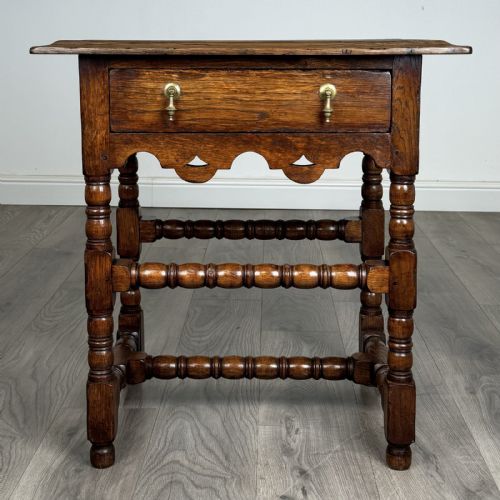
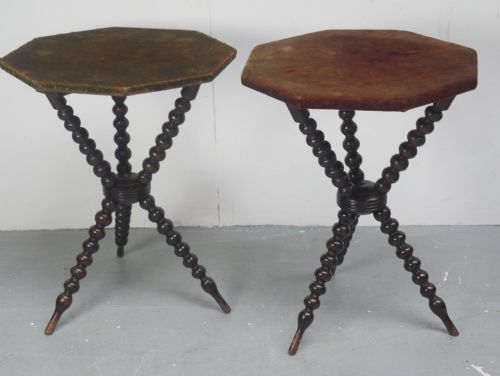
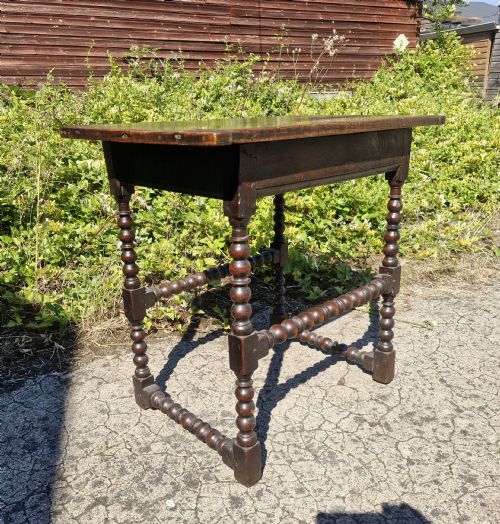
Forms range from simple single-drawer side tables and drop-leaf gateleg tables to smaller occasional stands and hall tables. Buyers select them for the distinct rhythm of their turned timber legs and the warmth of patinated older wood.
How They Were Made
Carpenters shaped the distinctive bobbin legs using a lathe to turn solid timbers such as oak, beech, or walnut into repeating spherical and cylindrical spool shapes. These turned elements were then joined into sturdy frames using traditional mortise and tenon joints.
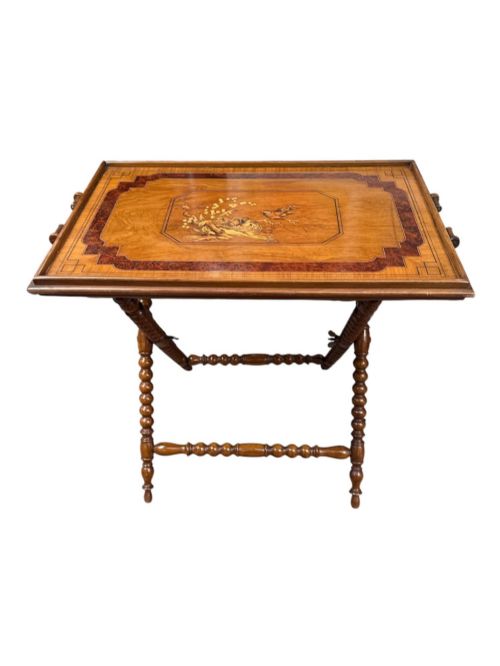
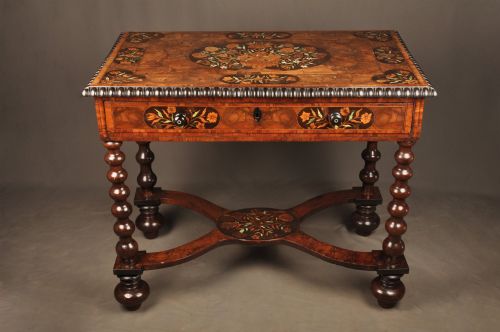
Surfaces frequently feature solid timber tops, sometimes enhanced with marquetry, leather inserts, or velvet upholstery in the case of decorative gipsy tables and console variants. Cabinetmakers utilised hand planes and basic joining methods to construct drawers and drop-leaf mechanisms.
Bobbin Legged Side Table Retail Price Guide 2026
Typical asking prices for bobbin legged side table among the pieces listed under this phrase on Sellingantiques today, from the lower quarter to the upper quarter. They describe what is for sale here now, not the wider market.
Listings feature oak, walnut, and mahogany timbers across periods ranging from the seventeenth century through to the early twentieth century.
What Varies in Quality
The distinction between tiers rests on the integrity of the timber and the crispness of the lathe work on the turned legs. Finer examples display deep, uniform spool turning and well-figured grain on the top boards rather than dull, flat surfaces.
Originality of components dictates the standing of a piece, separating intact seventeenth-century or Victorian survivors from heavily altered examples. Smooth drawer movement and tight, stable joints without excessive modern replacement timber separate better specimens from lesser ones.
Liberty of London·William Birch
The Bobbin Legged Side Table Glossary
- Bobbin turning
- A form of lathe turning that produces a sequence of rounded spool-like shapes along the length of a wooden leg or stretcher. This technique creates a strong textural element seen on seventeenth-century furniture and later revivals.
- Gateleg table
- A drop-leaf table with hinged flaps supported by swing-out legs that resemble a gate opening. This design allows the surface area to expand or contract according to space requirements.
- Marquetry
- The art of applying decorative veneer pieces to a structure to form intricate patterns or pictures. It appears on the tops of select occasional and centre tables.
- Ebonised wood
- Timber stained or painted black to imitate costly ebony wood. This finish is frequently found on nineteenth-century aesthetic movement and revival tables.
- Gipsy table
- A small three-legged occasional table popular in the nineteenth century, often draped with fabric or fitted with a lightweight wooden top. These tables offer a portable surface for lamps or decorative objects.
Bobbin Legged Side Table: Frequently Asked Questions
What is a bobbin legged side table used for?
These tables function well as compact surfaces for lamps, books, or decorative objects in hallways, sitting rooms, and bedrooms. Their modest footprints allow them to fit into narrow spaces where larger furniture will not go.
Historically, they provided convenient movable surfaces for writing or serving before modern fitted furniture became common. Today, owners place them beside armchairs or against walls to add character and practical table space.
How do I date a bobbin turned table?
Dating relies on examining the timber species, construction joints, and overall style cues. Seventeenth-century originals generally show heavy oak construction with pegged joints and deep patination, while nineteenth-century revival pieces may utilise walnut, mahogany, or ebonised finishes.
Tool marks and the type of fixings used underneath the top boards also offer clues to the era of manufacture. Later twentieth-century versions tend to display lighter modern timbers and cleaner internal joins.
Are these tables sturdy enough for daily use?
Most surviving examples possess robust timber frames built to withstand everyday household activities. The interconnected stretchers running between the bobbin legs provide additional structural rigidity.
Care should be taken with drop-leaf gateleg mechanisms to ensure the supporting legs swing smoothly without straining the hinges. Regular dusting and occasional wax polishing keep the wood conditioned and stable.