
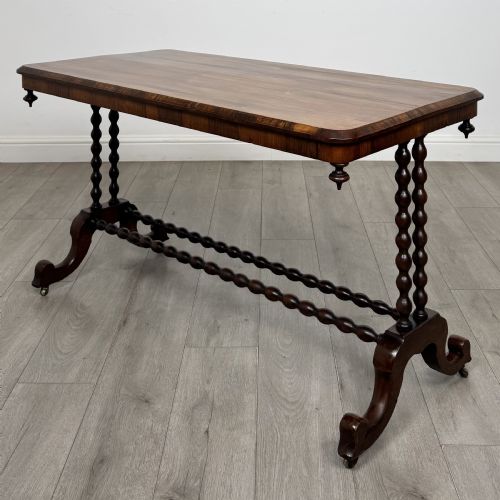
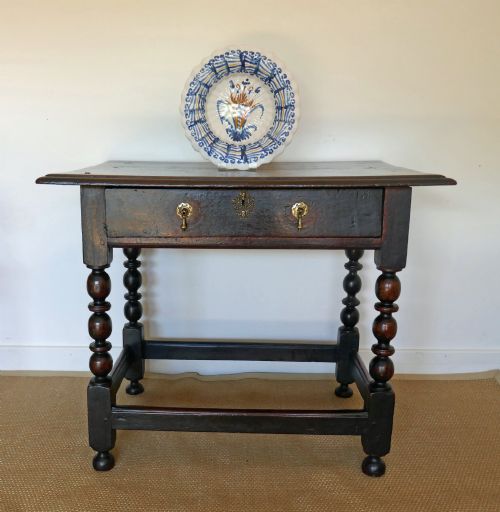
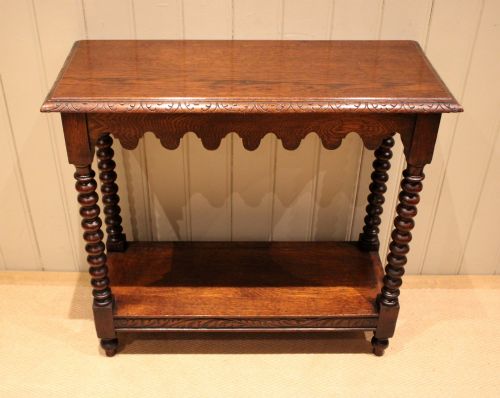
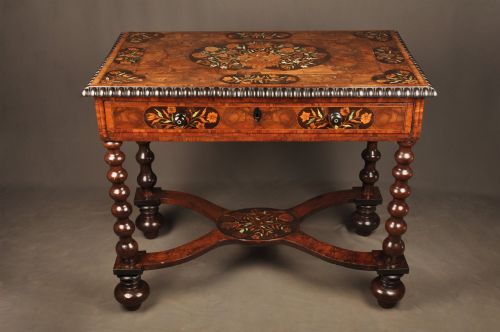


Bobbin Leg Console Table
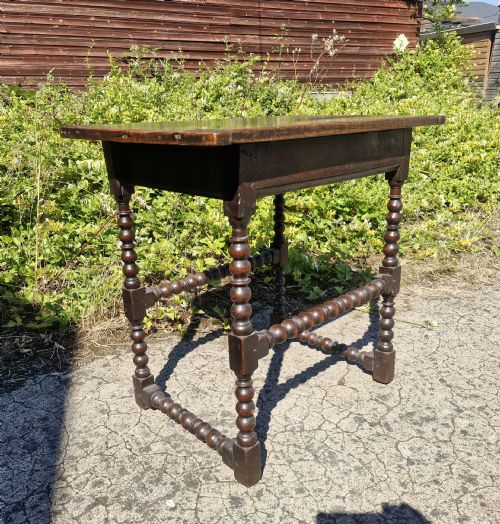
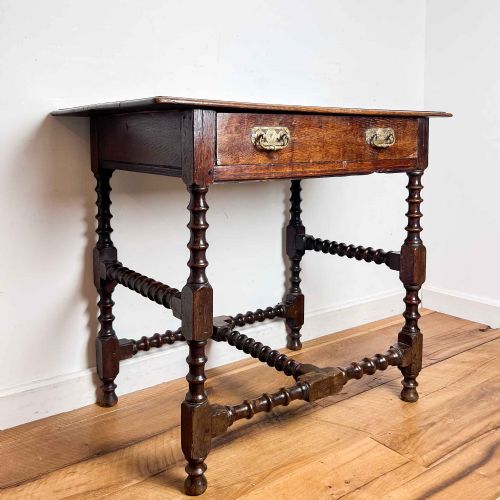
A bobbin leg console table brings sturdy timber and turned spindles into a hallway with genuine seventeenth-century character.
Bobbin Leg Console Table
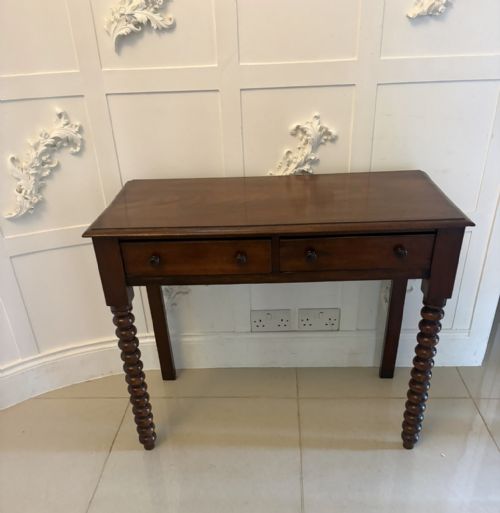
A bobbin leg console table is a narrow surface designed for hallways and side spaces, featuring distinctive turned spool legs that recall seventeenth-century craftsmanship. When searching for a bobbin leg console table, buyers encounter sturdy oak examples alongside walnut, mahogany, and ebonised pieces spanning from the seventeenth century through to the Victorian era.
The form crosses several traditional styles, including Charles II, English country, and Dutch baroque, appearing variously as side tables, hall tables, and occasional tables. Oak and walnut predominate in the earlier seventeenth-century pieces, while nineteenth-century interpretations introduce rosewood and ebonised wood to the form.
What varies in quality
Quality rests upon the crispness of the timber turnery and the integrity of the original construction timbers. Tables displaying dense, well-figured oak or rich rosewood with consistent spool profiles stand apart from plainer, later adaptations.
The proportion of the base relative to the top dictates visual balance, with bolder seventeenth-century turnery offering a different presence compared to slender Victorian interpretations.
Listings span from the seventeenth century to the late Victorian era, utilising oak, walnut, mahogany, and rosewood.
The Bobbin Leg Console Table Glossary
- Bobbin turnery
- A method of woodturning that produces a series of rounded, spool-like shapes along the length of a furniture leg. This decorative technique is also referred to in some pieces as barley twist.
- Console table
- A narrow table designed to stand flat against a wall, frequently utilised in hallways and entrance spaces. These pieces provide a surface without taking up excessive floor area.
- Ebonised wood
- Timber treated with a dark stain or chemical process to imitate the appearance of ebony. This finish appears on nineteenth-century aesthetic movement furniture.
- Drop leaf table
- A table featuring hinged flaps on either side that can be raised to expand the surface area or lowered when space is restricted.
Bobbin Leg Console Table: Frequently Asked Questions
Where should I place a bobbin leg console table?
These narrow tables suit hallways, landings, and entrance spaces where floor area is restricted. Their decorative turned legs add architectural interest to an empty wall without obstructing movement.
They also function effectively as side or lamp tables in living rooms, pairing well with traditional and rustic interiors.
How do I date an oak bobbin leg table?
Dating relies on timber selection, joinery methods, and the boldness of the turnery. Seventeenth-century examples typically feature heavy oak construction with pegged joints and deep spool profiles.
Victorian interpretations from the nineteenth century often utilise lighter oak, sometimes combined with machine-turned elements and applied mouldings.
What is the difference between a console and a side table?
Console tables are specifically proportioned to stand against a wall in hallways and reception rooms. Side tables share a similar domestic function but can sit freestanding within a room layout.
In practice, historical listings often interchange these terms based on current usage rather than original design intent.
Are these tables suitable for daily use?
Solid timber construction in oak, walnut, and mahogany provides robust durability for everyday placement. Their surfaces accommodate lamps, post, and decorative objects without structural strain.
Routine care involves simple waxing or dusting to preserve the historic patina of the wood.