



Bobbin Leg Armchair
A bobbin leg armchair delivers solid timber construction and turned spindle details, bringing traditional seating into daily use.
Bobbin Leg Armchair
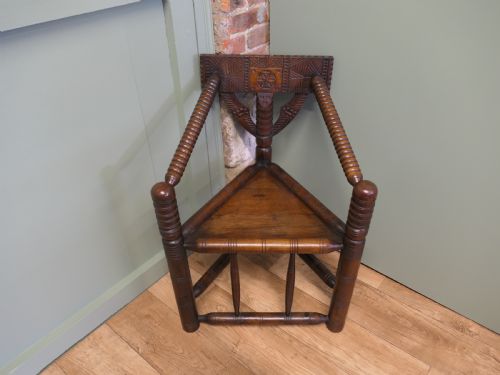
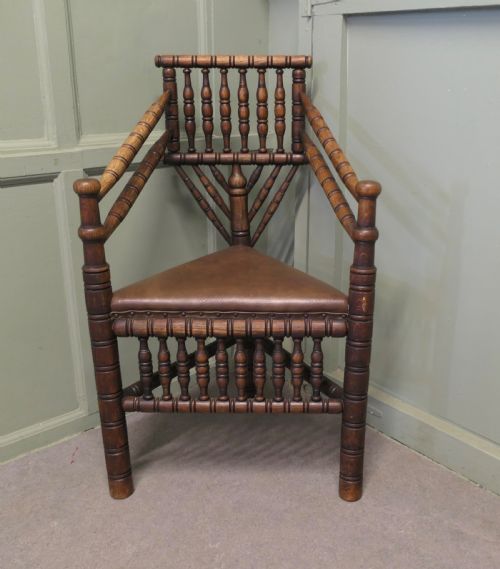
A bobbin leg armchair is a sturdy seating option rooted in traditional carpentry, frequently encountered in 19th Century and Victorian revivals. These armchairs display prominent turned woodwork that mimics rows of bobbins along the frame, offering both structural support and visual texture.
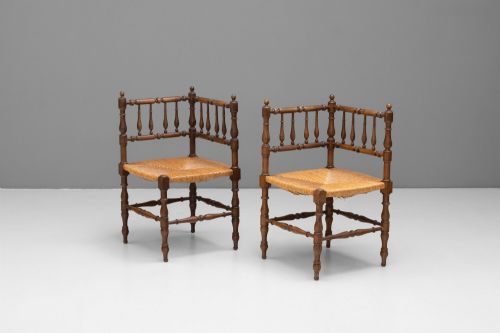
The selections on this page span several centuries, including 18th Century examples alongside robust oak turners chairs and corner chairs. Many pieces incorporate descriptors like Old Saxon or English Country, pointing towards vernacular seating traditions.
How they were made
Joiners fashioned these chairs primarily from solid timber such as oak, walnut, beech, and ebonised wood, turning the spindles on a lathe to create the characteristic bobbin profile. Frames often utilise traditional mortise and tenon joints to secure the heavy wooden elements together.
Seats and upholstery vary across the evidence, utilising woven rush, natural cane, leather, and tapestry fabric. Some models also integrate brass hardware or exposed wooden elbow seats without padding.
Listings feature oak, walnut, and beech timbers paired with rush, cane, and tapestry fabric.
What varies in quality
The caliber of a bobbin leg armchair rests upon the crispness of the spindle turnings and the selection of timber used in the frame. Dense hardwoods like oak and walnut retain sharper lathe details and withstand generations of heavy use better than softer woods.
Integrity of the original construction and the preservation of secondary materials, such as rush seating or tapestry fabric, dictate the distinction between standard vernacular chairs and finer revival examples.
The Bobbin Leg Armchair Glossary
- Bobbin turning
- A form of woodturning where a series of rounded, spool-like shapes are cut along the length of a spindle. This decorative technique defines the profile of the legs and arm supports.
- Turners chair
- A traditional heavy armchair constructed entirely from turned wooden members and spindles. These items frequently feature triangular or elbow seats.
- Corner chair
- A chair designed specifically to fit into the corner of a room, possessing a diagonal seat orientation and a continuous curved armrest supported by turned posts.
- Ebonised wood
- Timber treated with a chemical stain or finish to imitate the dark, dense appearance of ebony. This treatment appears frequently on Victorian revival frames.
Bobbin Leg Armchair: Frequently Asked Questions
What is a bobbin leg armchair?
A bobbin leg armchair is a traditional wooden seat defined by legs and stretchers carved to resemble rows of connected bobbins or spools.
These chairs draw on historical turnery methods popularised during earlier centuries and revived heavily throughout the Victorian era.
How do I care for a wooden armchair?
Maintain wooden frames by dusting regularly with a soft cloth and applying a microcrystalline wax periodically to nourish the surface.
Keep these chairs away from direct heat sources and strong sunlight to prevent the timber and traditional finishes from drying out.
Are these chairs comfortable for daily use?
Many of these armchairs provide upright support through solid wooden elbow seats, while others feature woven rush or upholstered pads.
Adding a loose cushion can increase comfort if you plan to sit in the chair for extended periods during daily use.
How can I identify the period of a chair?
Dating relies on examining the timber species, the precision of the lathe turnings, and the overall construction methods used in the frame.
Revival pieces from the 19th Century often employ darker ebonised finishes or heavier oak construction that mimics earlier 18th Century styles.