



Blue Sapphire Bangle
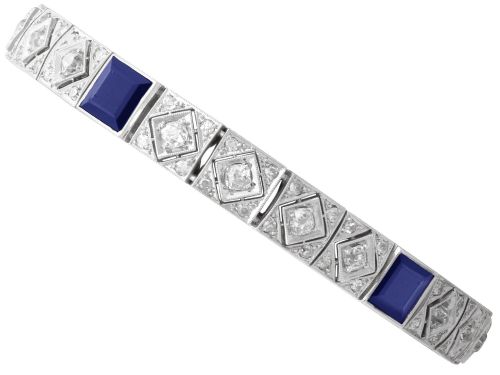
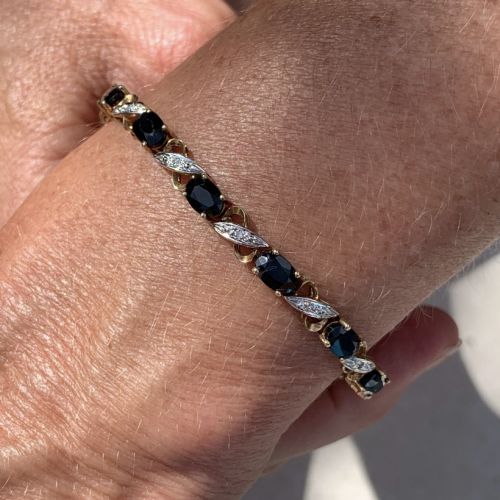
A blue sapphire bangle offers a wrist ornament of rich blue stones, combining precious metals with fine gemstone arrangement.
Blue Sapphire Bangle
A blue sapphire bangle brings together wrist ornaments from Victorian, Edwardian, Art Deco, and Mid-Century periods. The pieces appearing here span from 1900 to 1960, showing diverse stylistic shifts across these decades.
Buyers encounter forms ranging from delicate 9ct gold bands set with seed pearls to substantial platinum line bracelets encrusted with diamonds. These items primarily function as fine jewellery bracelets rather than rigid slip-on bangles.
Origins include specific geographical designations such as natural unheated Ceylon sapphires and basaltic sapphire stones. Pieces reflect distinct design eras, including Edwardian grace and geometric Art Deco styling.
Assessing Quality and Craftsmanship
Quality separates pieces through the scale and clarity of the central stones, such as substantial carat weights in natural Ceylon sapphire against smaller basaltic sapphire examples. The proportion and weight of accompanying diamonds heavily influence the overall character.
Metal selection and setting precision dictate structural integrity, moving from simpler 9ct gold mounts to intricate platinum frameworks. The presence of documented origins like unheated Ceylon stones adds notable distinction to specific items.
Blue Sapphire Bangle Retail Price Guide 2026
Typical asking prices for blue sapphire bangle among the pieces listed under this phrase on Sellingantiques today, from the lower quarter to the upper quarter. They describe what is for sale here now, not the wider market.
Periods represented span from the Victorian era and 1900 through to the 1950s and 1960s.
The Blue Sapphire Bangle Glossary
- Ceylon Sapphire
- A sapphire originating from Sri Lanka, known for distinct colouration and clarity. These stones are frequently highlighted in period fine jewellery.
- Platinum
- A dense, durable precious metal utilised in jewellery manufacturing for its strength and bright white lustre. It permits delicate stone settings without sacrificing security.
- Seed Pearl
- A very small natural pearl, often drilled and strung or set alongside larger gemstones in Edwardian and Victorian pieces. They contribute delicate texture to floral or geometric motifs.
- Line Bracelet
- A bracelet featuring a continuous, symmetrical line of gemstones, commonly diamonds and sapphires, set closely together. This style gained particular prominence during the Art Deco period.
- Basaltic Sapphire
- A sapphire originating from alkaline basalt volcanic rock deposits, often possessing darker or different trace element characteristics compared to metamorphic stones.
Blue Sapphire Bangle: Frequently Asked Questions
What is a blue sapphire bangle?
A blue sapphire bangle is a piece of fine jewellery designed for the wrist, incorporating blue sapphires alongside metals like gold or platinum.
These items appear across multiple historical periods, reflecting shifts in design from Victorian elegance to Mid-Century modernism.
How do I date a sapphire bracelet?
Dating relies on examining the metal alloys, stone cuts, and stylistic markers characteristic of eras like Edwardian or Art Deco.
Platinum settings and geometric lines typically point towards the 1920s, whereas yellow gold and seed pearls often indicate earlier Victorian or Edwardian origins.
Are these bracelets made of solid gold?
The listings include pieces fashioned from solid 9ct gold, 18ct yellow gold, and 9ct rose gold frameworks.
These precious metals provide the necessary structural durability to securely hold sapphires, diamonds, and pearls.
What is a Ceylon sapphire?
A Ceylon sapphire is a gemstone originating from Sri Lanka, recognised in the trade for specific clarity and brightness.
Such stones are sometimes noted in period descriptions as natural or unheated examples.
Can I wear these bracelets daily?
Wearing these pieces depends on the secure setting of the stones and the durability of the metal band, such as platinum or 18ct gold.
Careful handling is recommended for antique items featuring delicate elements like seed pearls or older claw settings.