





Blue Salon Chair
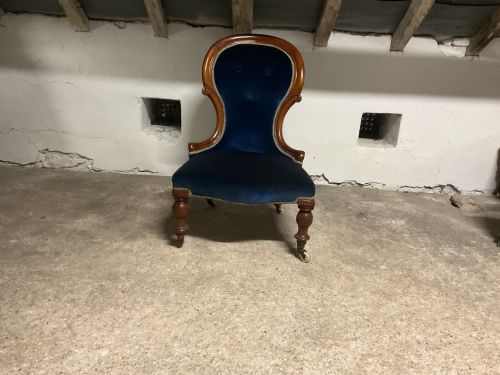
A blue salon chair offers a striking seat for a drawing room, combining period woodwork with rich upholstery.
Blue Salon Chair
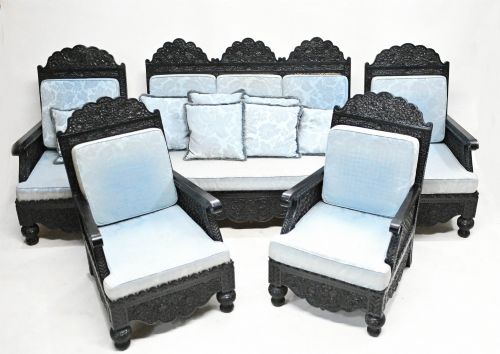
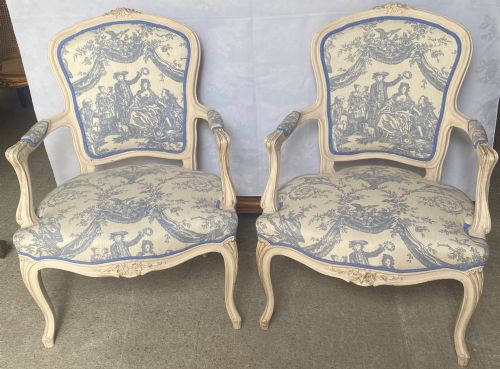
A blue salon chair is typically an upholstered seat designed for formal reception rooms, appearing in various revival styles across the eighteenth, nineteenth, and early twentieth centuries. These pieces span French Louis XV and Louis XVI designs, Victorian walnut or mahogany frames, and Edwardian inlaid mahogany models.
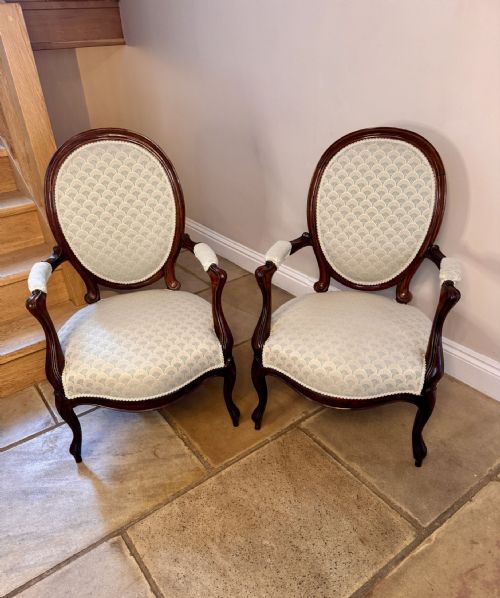
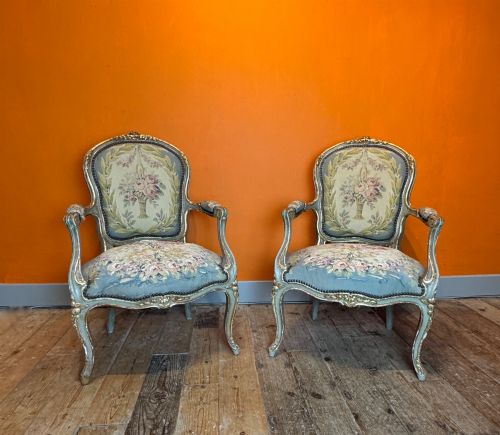
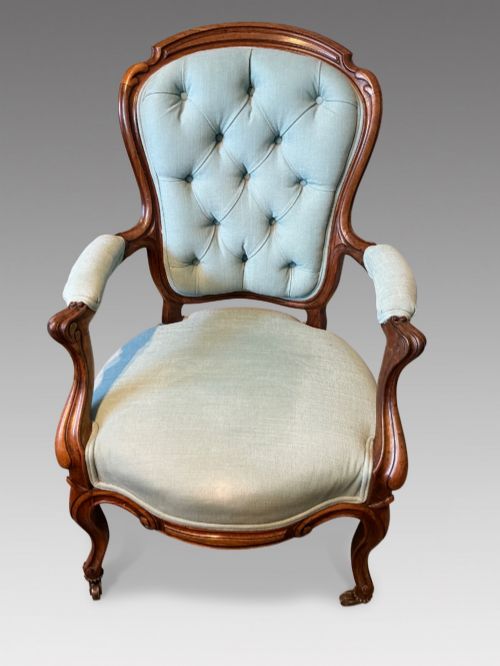
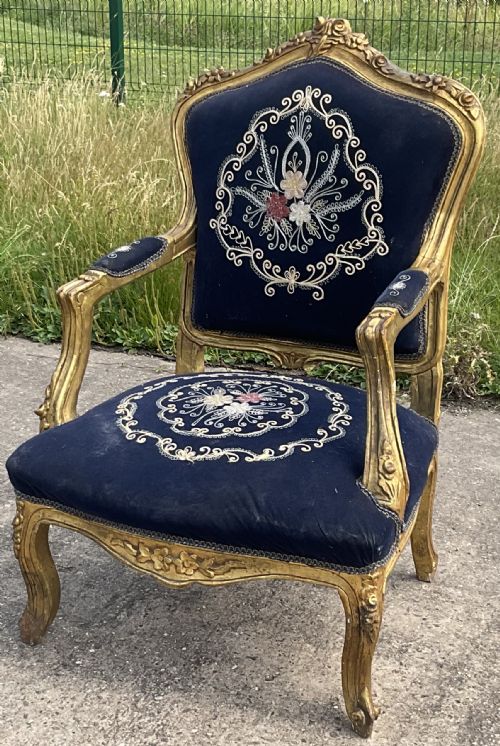
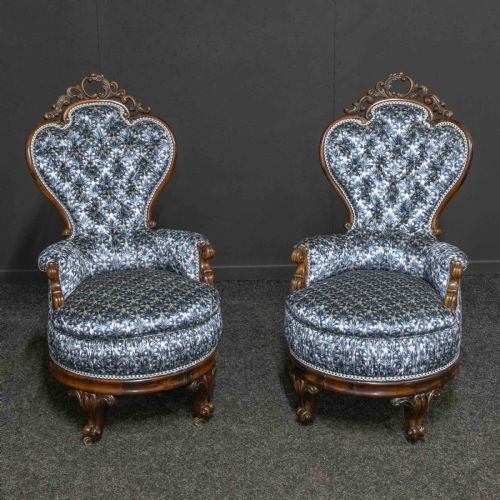
The version most commonly met on this page is the nineteenth-century French painted or gilt armchair upholstered in blue velvet, silk, or tapestry. Alongside these are Victorian nursing chairs, bedroom chairs, and open armchairs featuring walnut and mahogany frames.
Makers and makers' workshops occasionally emerge in the evidence, such as Henry Thomas Peters of Genoa and Howard and Sons, though most pieces remain anonymous examples of their period. Forms range from single boudoir chairs and pairs of fauteuils to larger sets of dining chairs and salon suites.
Materials and construction
Frames are constructed from solid hardwoods including mahogany, walnut, beech, and giltwood, often shaped with carved details. Joinery techniques of the period ensure structural stability in both English Victorian and continental frames.
Upholstery relies on traditional stuffing methods covered in fabrics such as velvet, silk, tapestry, and general upholstery fabric. Painted and parcel-gilt finishes frequently adorn the wooden elements of French revival pieces.
Blue Salon Chair Retail Price Guide 2026
Typical asking prices for blue salon chair among the pieces listed under this phrase on Sellingantiques today, from the lower quarter to the upper quarter. They describe what is for sale here now, not the wider market.
Listings feature periods spanning from the eighteenth century through the Victorian and Edwardian eras up to nineteen-ten.
Assessing quality and craftsmanship
Quality reveals itself in the crispness of the hand-carved wood and the integrity of the underlying frame construction. Finer examples display deeply carved walnut or mahogany, balanced proportions, and original painted or gilt surfaces.
The grade of the textile and the execution of the upholstery contribute significantly to the standing of a piece. Better chairs retain their original or sympathetically restored tapestry, silk, or velvet coverings without compromising the silhouette.
Henry Thomas Peters·Howard and Sons
The Blue Salon Chair Glossary
- Fauteuil
- An open-framed armchair with upholstered armrests, originating in France. These chairs typically feature exposed wooden frames in giltwood or painted finishes.
- Bergère
- An enclosed upholstered armchair with wooden framing and a solid upholstered back and sides. This style appears in Edwardian and nineteenth-century forms.
- Giltwood
- Timber coated with a thin layer of gold leaf. It is frequently found on eighteenth-century and revival salon furniture.
- Parcel Gilt
- Woodwork partially decorated with gold leaf alongside painted surfaces. This technique highlights specific carved details on nineteenth-century French frames.
Blue Salon Chair: Frequently Asked Questions
Where were blue salon chairs placed?
These chairs originally sat in formal drawing rooms, parlours, and boudoirs for social gatherings and reception use. Their decorative frames and colourful upholstery complemented the interior scheme of grand nineteenth-century homes.
Today, they function well as accent pieces in modern living rooms, bedrooms, or studies, adding a distinct historic element to contemporary spaces.
How do I distinguish Victorian from Edwardian styles?
Victorian frames typically employ darker timbers like rosewood and walnut, often featuring heavy carvings, buttoned upholstery, and robust proportions. They lean towards revivalism with substantial comfort in mind.
Edwardian pieces generally present lighter mahogany frames with delicate inlay work and tapered legs. The overall aesthetic feels airier and less ornate than earlier Victorian counterparts.
Are these chairs suitable for daily use?
Most antique salon chairs serve well for occasional seating rather than heavy, continuous lounging. Their historic frames and traditional upholstery require considerate treatment to preserve their structural integrity.
Placing them in low-traffic areas or using them as bedroom and corner chairs ensures they remain protected while still functional.
What is a boudoir chair?
A boudoir chair is a smaller, intimate seat historically kept in a private dressing room or bedroom. These pieces prioritize comfort and decorative upholstery over grand formal display.
On this page, they often appear alongside larger salon armchairs and nursing chairs, offering a compact seating option.