


Blue Printed Pottery
Blue printed pottery brings together cobalt decoration and earthenware forms across Georgian and Victorian dining tables.
Blue Printed Pottery
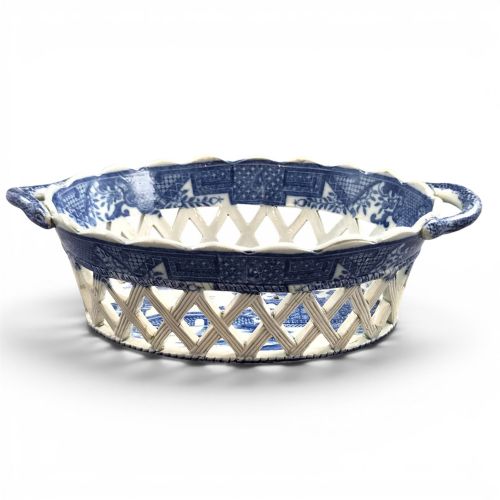
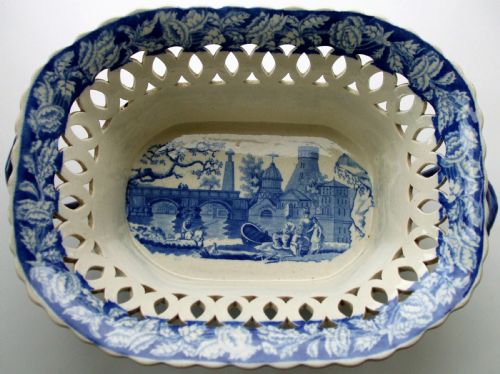
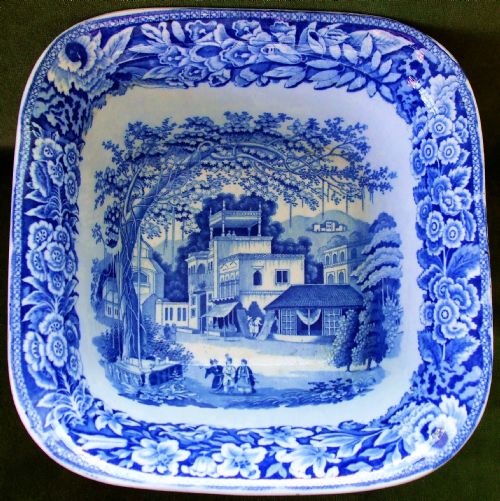
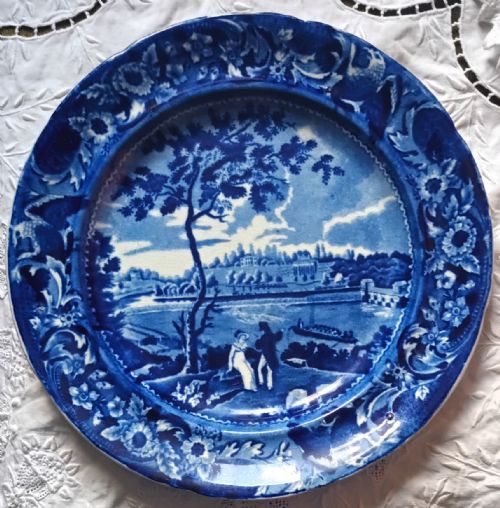
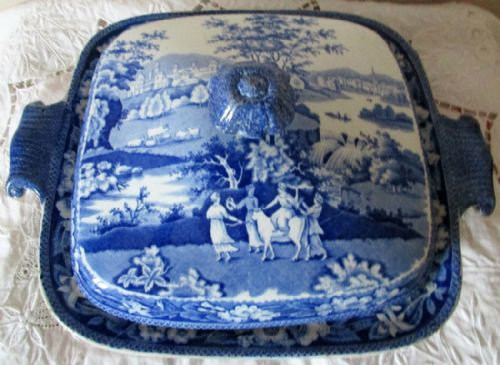
Blue printed pottery encompasses utilitarian and decorative tableware items such as plates, serving platters, tureens, jugs, and chestnut baskets. These pieces emerge predominantly from nineteenth-century English production, spanning Georgian, Regency, and Victorian periods.
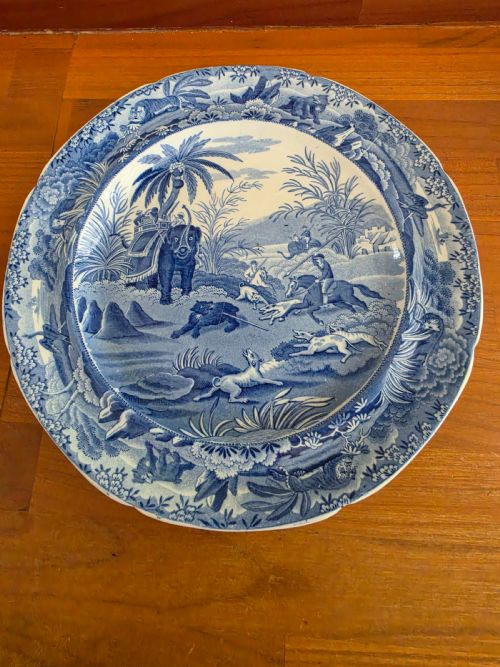
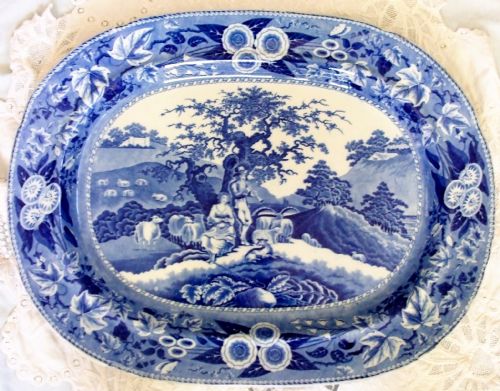
The version most commonly encountered on this page is the earthenware plate or serving dish decorated with a transfer-printed pictorial scene in blue pigment. These wares served functional roles in domestic dining before transitioning into decorative display items.
Materials and Techniques
Potters shaped ceramic bodies from earthenware and pearlware, applying a fluid glaze over the clay base. The body and glaze materials provided a smooth white ground suited to receiving contrasting colour.
Makers transferred cobalt pigment onto the ceramic surface using engraved paper prints pulled from copper plates before firing the piece beneath a lead glaze. This transfer-printing technique allowed complex topographical and figurative patterns to be repeated across large services.
A pint tankard bears an institution name and a specific ward number for a school.
Gradations of Execution
Quality rests upon the crispness of the transfer print and the stability of the glaze during the kiln firing. Sharp lines in detailed scenes separate superior examples from smudged or blurred impressions.
Form complexity also distinguishes items, moving from standard plates to reticulated chestnut baskets, handled tureens, and large meat platters that demand greater skill from the potter.
Spode·J. and R. Clews·J. and R. Riley·Stubbs·Minton Hollins·Copeland·Heathcote·Thomas Lakin·Don Pottery·Brameld and Co.·Mason·John Rogers and Son·James Wallace and Co.·Burgess and Leigh
The Blue Printed Pottery Glossary
- Pearlware
- A refined earthenware body featuring a subtle bluish tinge in the glaze, developed in the late eighteenth century to imitate Chinese porcelain.
- Transfer printing
- A method of decorating ceramics by pulling an engraved copperplate impression on tissue paper and pressing it onto the biscuit ware before glazing.
- Tureen
- A deep covered dish used for serving soups, sauces, or vegetables at the dining table.
- Reticulated
- Having an openwork network pattern or mesh design, often seen on the rims of baskets and serving dishes.
- Biscuit
- Unglazed ceramic ware that has undergone its initial firing before the application of glaze and decoration.
Blue Printed Pottery: Frequently Asked Questions
How were these dishes used?
These pieces functioned primarily as tableware for serving meals, meats, soups, and cheeses in domestic settings.
Larger items like platters and tureens accommodated communal dining, while plates and bowls served individual portions.
Can I use them for dining today?
Most buyers treat antique transferware as decorative or display items rather than daily tableware due to age and historic glaze compositions.
Gentle hand washing preserves the ceramic body and glaze if used occasionally.
How do I date blue printed pottery?
Dating relies on identifying the ceramic body, such as pearlware versus later earthenware, along with stylistic cues in the transfer pattern.
Maker marks stamped or printed on the reverse also help narrow the production era.
What subjects appear on the patterns?
Scenic views include classical ruins, eastern street scenes, pastoral landscapes, and historical events recorded by contemporary engravers.
Chinoiserie motifs and topographical landmarks from Britain and America also feature prominently across the wares.