


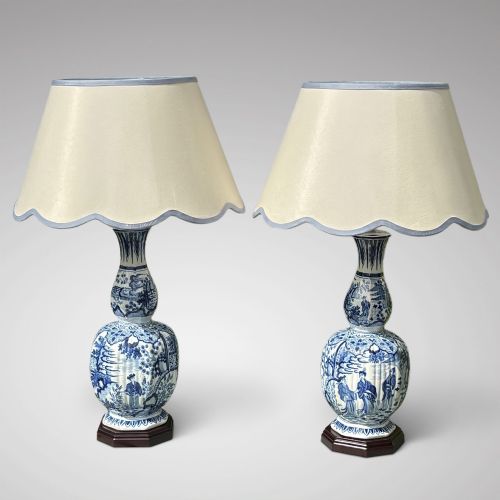


Blue Pottery Lamp
A blue pottery lamp brings painted ceramic form and soft illumination into a room, joining centuries of decorative tradition with modern function.
Blue Pottery Lamp
When you search for a blue pottery lamp, you encounter vessels transformed into lighting across several historic traditions and centuries. These pieces draw from Dutch Delftware, Chinese Qing Dynasty porcelain, Japanese Satsuma and Meiji periods, Italian Maiolica, and British art pottery.
The most common versions met on this page are converted vases, ginger jars, and tobacco jars fitted as table lamps. Many retain their original earthenware, ceramic, or porcelain bodies paired with brass or gilt bases, sometimes accompanied by handmade fabric and silk shades.
Dating ranges from the eighteenth century through the nineteenth century and into the early twentieth century, specifically noting years such as 1870, 1880, 1910, and broader Victorian and Edwardian periods. Table lamps dominate the object types, appearing singly or in matched pairs.
Materials and construction
The bodies of these lamps utilise ceramic, earthenware, porcelain, and tin-glazed earthenware painted in cobalt blue and related pigments. Workshops shaped these materials into vases, jars, and faience vessels before adapting them for electrical illumination.
Mounting often incorporates brass, wood, and gilt bases to stabilise the ceramic vessels. Shades fashioned from fabric and silk complete the construction, complementing the painted blue and white surfaces.
Blue Pottery Lamp Retail Price Guide 2026
Typical asking prices for blue pottery lamp among the pieces listed under this phrase on Sellingantiques today, from the lower quarter to the upper quarter. They describe what is for sale here now, not the wider market.
Materials documented across the listings include brass, wood, earthenware, ceramic, fabric, silk, porcelain, and tin-glazed earthenware.
Distinctions in quality
Quality rests upon the fineness of the original ceramic body and the precision of the hand-painted blue decoration. Painted detail on tin-glazed earthenware, porcelain, and faience exhibits varying degrees of artistic control and depth of cobalt tone.
The integration of the conversion process matters significantly, distinguishing sensitive adaptations that preserve the vessel from heavier alterations. Paired lamps demand consistency in the matching of both ceramic bodies and supporting bases.
The Blue Pottery Lamp Glossary
- Delftware
- Tin-glazed earthenware produced in the Netherlands, typically featuring blue and white painting inspired by Chinese porcelain.
- Maiolica
- Italian tin-glazed pottery noted for colourful painted decoration on an opaque white glaze.
- Faience
- European tin-glazed earthenware, frequently associated with art pottery traditions of the nineteenth century.
- Ginger jar
- A high-shouldered ceramic storage vessel with a rounded body, commonly converted into a table lamp.
- Gilt base
- A metal support finished with gold leaf or gilding, elevating the ceramic body of the lamp.
Blue Pottery Lamp: Frequently Asked Questions
What is a blue pottery lamp?
A blue pottery lamp is a decorative lighting fixture created by converting a historic ceramic vessel into a table lamp. These pieces utilise painted earthenware, porcelain, or faience bodies.
Origins span Dutch Delftware, Chinese ginger jars, Japanese Satsuma, and Italian Maiolica. They combine historic ceramic artistry with practical electrical illumination.
How were these vessels converted?
Historic vases, ginger jars, and tobacco jars were adapted to house electrical wiring and lamp fittings. Many sit upon brass or wooden bases for stability.
This conversion allows fragile or decorative antique vessels to serve a functional purpose in modern interiors while retaining their historic character.
How do I style a blue pottery lamp?
These lamps work effectively on side tables, desks, or chests where their blue and white patterns can act as a focal point. Paired examples suit symmetrical placements such as sideboards or mantels.
Selecting a shade in fabric or silk helps balance the weight of the ceramic base and diffuses light softly across the room.
How do I date these lamps?
Dating relies upon identifying the ceramic style, glaze characteristics, and manufacturing period of the underlying vessel. Pieces range from eighteenth-century Delft to nineteenth-century Victorian art pottery and early twentieth-century examples.
Changes in painting style, material composition, and mounting hardware help distinguish between eighteenth-century pieces and later nineteenth-century revivals.