






Blue Mantel Clock
A blue mantel clock brings colour and architectural presence to a room, uniting mechanical precision with decorative ceramic, enamel or glass artistry.
Blue Mantel Clock
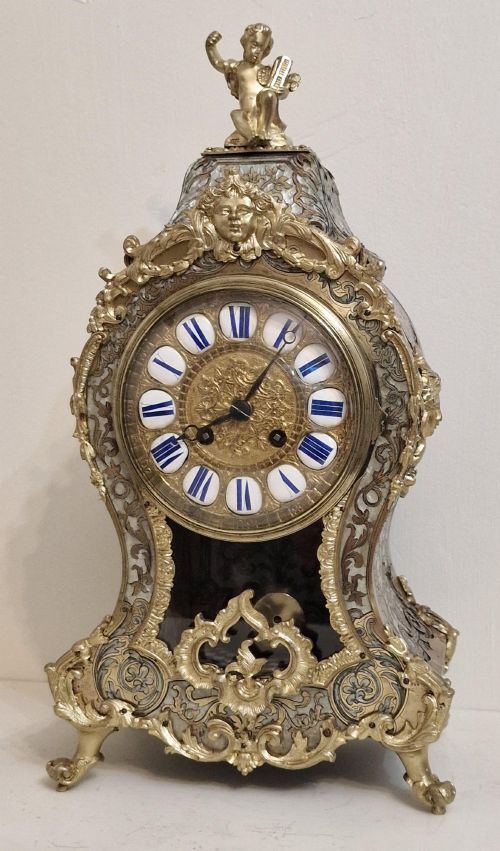
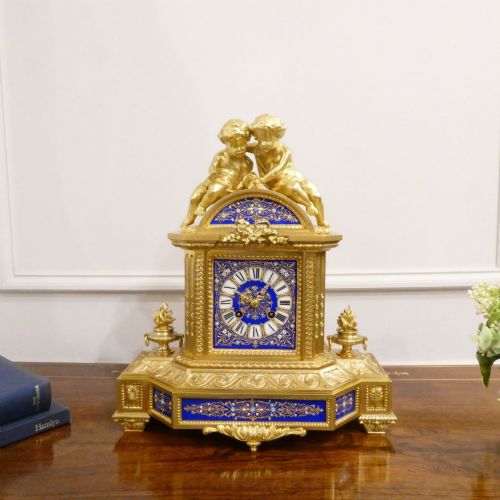
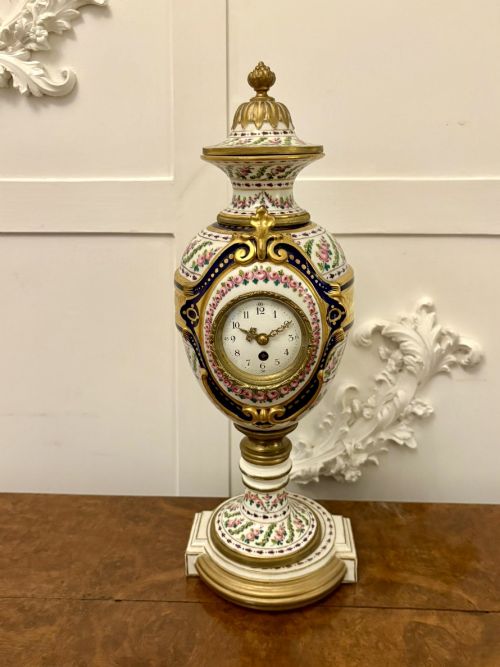
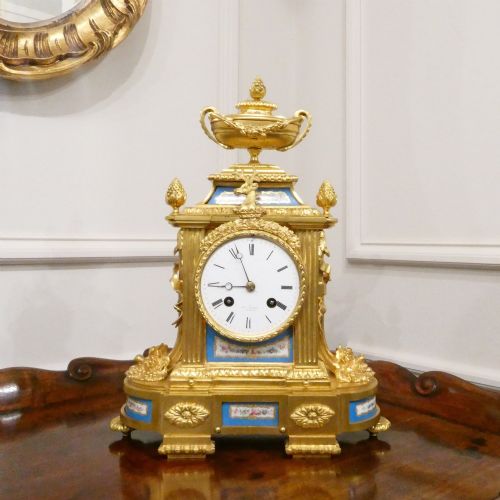
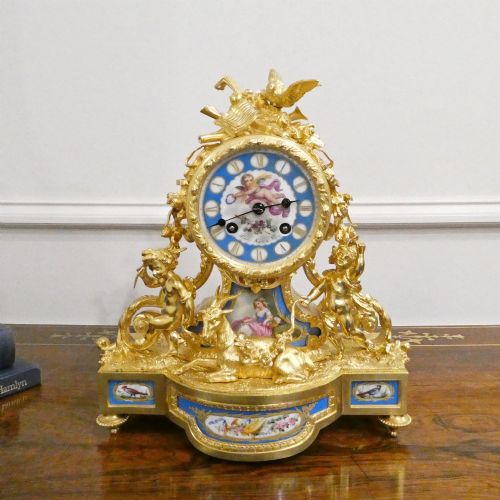
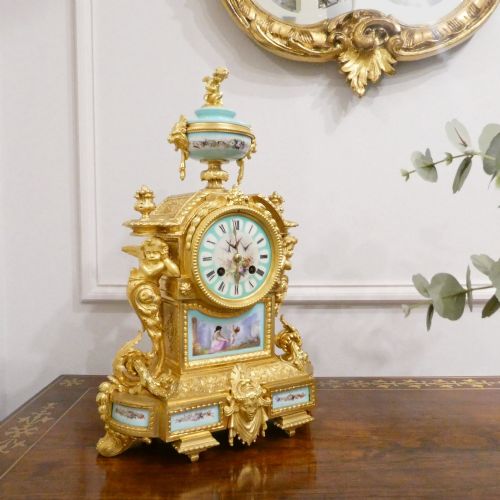
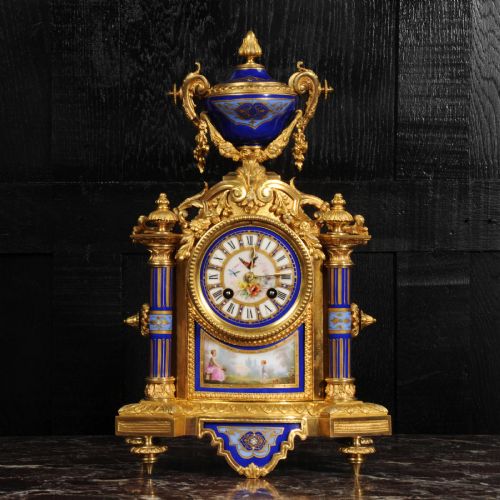
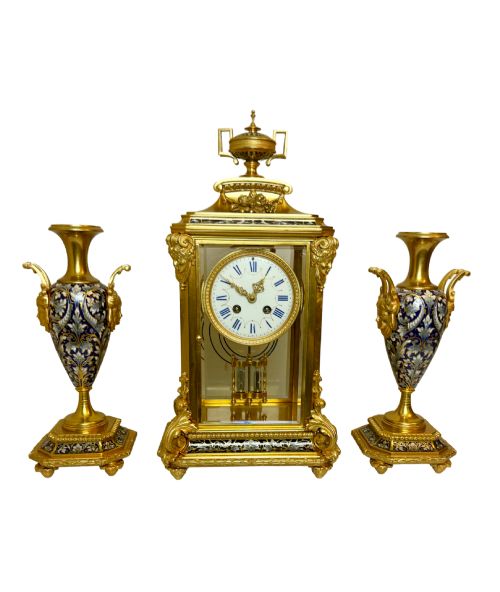
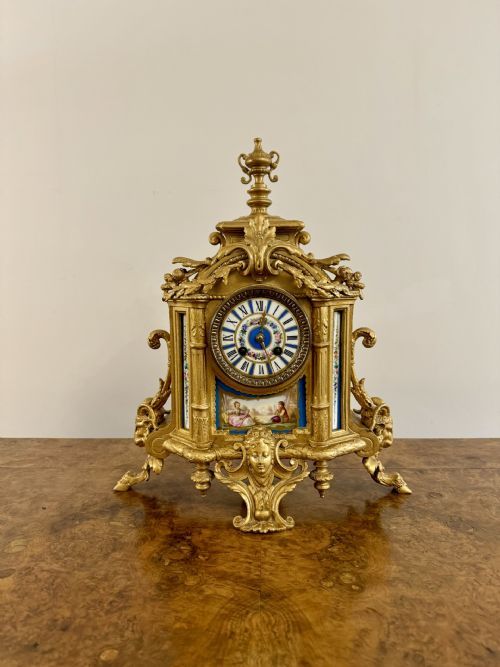
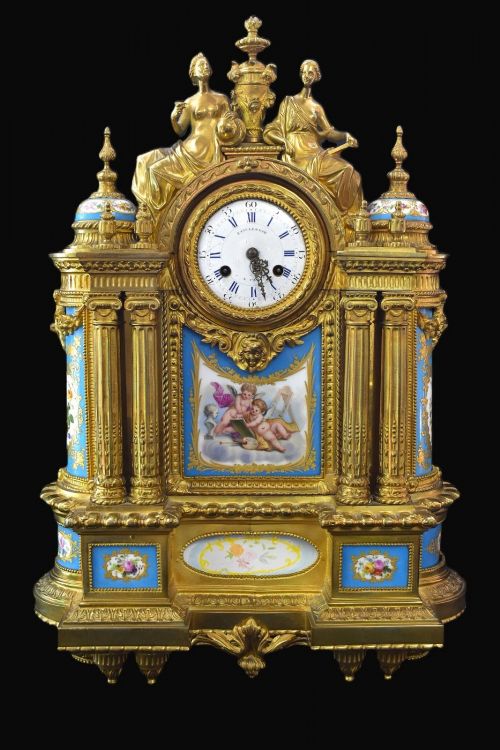
A blue mantel clock selected from this page most frequently appears as a nineteenth-century French production, combining gilt bronze or ormolu mounts with hand-painted porcelain panels. These objects range from compact boudoir timepieces and carriage clocks to large garniture sets flanked by matching urns or candelabra.
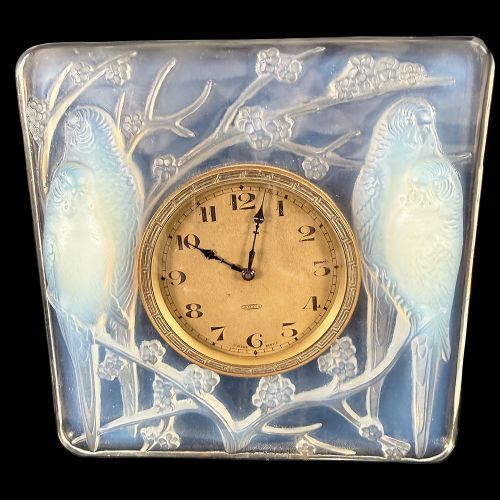
The aesthetic vocabulary leans heavily towards Rococo Revival and Louis XVI styles, alongside occasional departures into Arts and Crafts pewter, Art Deco opalescent glass, and nineteenth-century Chinese export forms. Buyers encounter drum head clocks, lyre-shaped porcelain bodies, and crystal regulators where blue enamel or glass reveals the internal escapement.
Materials and construction
Maker workshops built these pieces using cast bronze, brass, and gilt metals as structural housings for mechanical brass movements, often enhanced by fire-gilded ormolu surfaces. Porcelain components, notably Sevres-style ceramic plates and urn bodies, received hand-painted floral or figural compositions under glaze before mounting.
Alternative constructions integrate champleve and cloisonne enamel panels, opalescent pressed glass, or Tudric pewter paired with enamel dials. Makers like Japy Freres and Henry Marc supplied standard mechanical movements that were housed within these decorative housings by specialist bronze-workers and ceramists.
Blue Mantel Clock Retail Price Guide 2026
Typical asking prices for blue mantel clock among the pieces listed under this phrase on Sellingantiques today, from the lower quarter to the upper quarter. They describe what is for sale here now, not the wider market.
Several clocks feature love birds nestled within opalescent glass, proving that even strict timepieces appreciate a touch of romance.
Distinctions in quality
Quality reveals itself in the crispness of the bronze chasing, the weight and depth of the fire-gilding, and the artistic merit of the hand-painted ceramic panels. Superior examples exhibit finely articulated relief work on the metal mounts and meticulous brushwork on the blue porcelain surfaces.
The integration of the clock set matters greatly, as complete garnitures with matching side urns or candelabra demonstrate higher original status. Furthermore, movement makers of note, such as Japy Freres or Leroy et Fils, elevate the mechanical integrity alongside the external decorative artistry.
Japy Freres·Henry Marc·Rene Lalique·Margaine·Liberty And Co·Achille Brocot·Leroy Et Fils
The Blue Mantel Clock Glossary
- Ormolu
- A technique of applying finely ground high-carat gold to a bronze object using a mercury amalgam, producing a durable, warm metallic sheen.
- Garniture
- A set of decorative matching objects for a mantelpiece, typically consisting of a central clock flanked by two urns, vases or candelabra.
- Champleve
- An enamelling technique where troughs or cells are hollowed out of a metal surface and filled with vitreous enamel before firing.
- Crystal Regulator
- A type of mantel clock featuring glass panels on all four sides, allowing an unobstructed view of the mechanical movement and swinging pendulum.
- Sevres
- A term denoting porcelain made at the French royal manufactory or executed in that distinctively ornate, hand-painted decorative style.
Blue Mantel Clock: Frequently Asked Questions
What is a blue mantel clock?
A blue mantel clock is a domestic timekeeper featuring blue porcelain, enamel, glass or lapis-style casing designed to sit upon a fireplace mantel or shelf. These pieces combine mechanical clockwork movements with decorative housing.
Most examples originate from nineteenth-century French workshops, employing gilt bronze mounts and hand-painted ceramic panels to achieve an ornate decorative effect.
How do you wind a vintage clock?
Winding requires inserting a matching key into the designated winding arbours on the dial face and turning gently until resistance is felt. Care must be taken not to over-wind the mainspring.
Most mechanical clocks require a consistent weekly wind to maintain accurate timekeeping, and moving the hands should be done strictly according to the specific movement type.
What is a clock garniture set?
A clock garniture set is a matched ensemble consisting of a central mantel clock accompanied by two side pieces, such as decorative urns or candelabra. These matched items create a balanced, symmetrical display for a large fireplace mantel.
The side pieces often share the exact same blue porcelain body, gilt bronze mounts, and stylistic motifs as the main clock housing.
How do I identify French clock periods?
French clock periods are identified through a combination of stylistic revival motifs, material choices, and maker signatures stamped on the internal brass movements. Rococo and Louis XVI revivals dominate the nineteenth century.
Signatures from makers like Japy Freres or Henry Marc, combined with registration stamps and specific dial numerals, help narrow down the exact decade of manufacture.