



Blue Landscape Transferware
Blue landscape transferware brings scenic views into daily service on earthenware and porcelain.
Blue Landscape Transferware
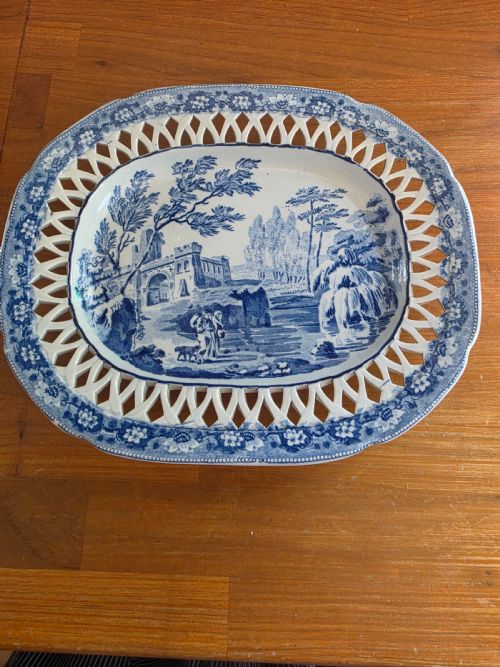
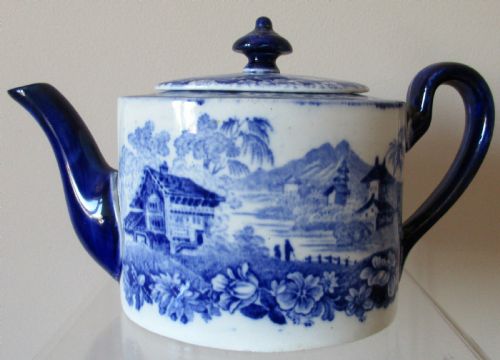
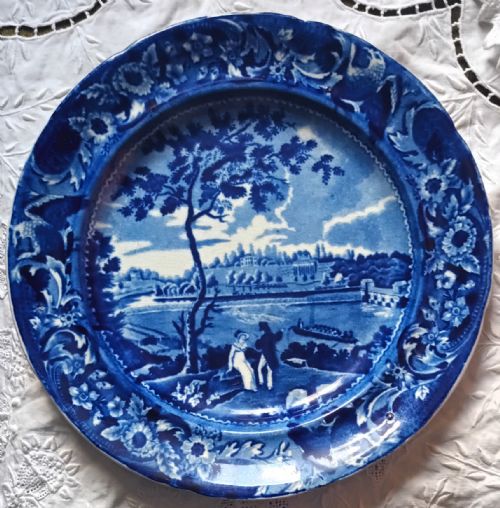
When you search for blue landscape transferware, you encounter 19th-century ceramic plates, platters, teapots, and serving dishes. These items display printed architectural, rural, and international vistas in deep blue pigment.
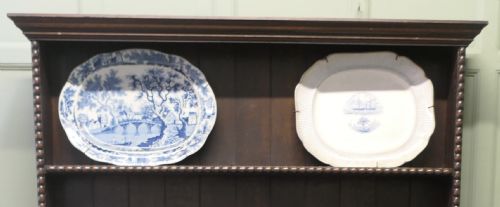
The version you most frequently meet on this page is the Staffordshire earthenware plate or meat platter. These domestic pieces date across the Regency and Victorian periods, often bearing named topographical scenes.
Makers produced these functional items in forms ranging from asparagus dishes and sauce tureen stands to large chargers and covered vegetable tureens. Each piece combines utility with pictorial decoration spanning British and foreign landscapes.
What varies in quality
Clarity of the transfer print defines the visual success of the piece. Crisp lines in distant architectural details separate finer work from blurred or smudged impressions.
The smoothness of the glaze and the refinement of the ceramic body dictate the tactile standard. Uniformity in the blue cobalt colour across large platters and tureens indicates superior kiln control.
Blue Landscape Transferware Retail Price Guide 2026
Typical asking prices for blue landscape transferware among the pieces listed under this phrase on Sellingantiques today, from the lower quarter to the upper quarter. They describe what is for sale here now, not the wider market.
Early diners could ponder Philadelphia scenery or Yorkshire asparagus while eating off the exact spot illustrated on the plate.
Davenport·Stubbs·Mintons·Spode·William Adams·Mason·James Wallace and Co.
The Blue Landscape Transferware Glossary
- Transferware
- Ceramic pieces decorated by transferring a printed design from an engraved copper plate onto the clay or glaze using a paper tissue. This mechanical process allowed complex pictorial scenes to be replicated rapidly.
- Pearlware
- A refined earthenware developed in the late 18th century featuring a bluish-tinted glaze that pooled in crevices to mimic Chinese porcelain. It forms the body of many early 19th-century blue and white items.
- Ironstone
- A heavy, durable type of feldspathic stoneware patented in the 19th century to resist chipping. It provided a robust surface for large serving platters and meat dishes.
- Charger
- A large decorative or serving plate exceeding standard dining dimensions. These pieces often hang on walls or anchor tables due to their expansive pictorial centres.
- Tureen
- A deep covered serving vessel designed for soups, sauces, or vegetables. They frequently incorporate matching stands to protect dining surfaces.
Blue Landscape Transferware: Frequently Asked Questions
How do I date blue landscape transferware?
Examine the ceramic body and base marks to determine the era. Pearlware bodies and specific registry marks point to early 19th-century production.
Style shifts also help narrow the timeframe. Regency pieces often feature distinct border motifs, while later Victorian items adopt heavier ironstone bodies and different pictorial compositions.
Were these pieces used for dining?
Yes, makers designed these items for practical household service. Platters, teapots, and vegetable tureens saw regular use on dining tables.
The durable earthenware and ironstone bodies withstood daily washing and serving duties across the 19th century.
Can I use them for daily meals?
Collectors generally restrict antique transferware to display or careful serving. Modern dishwashers and microwaves can damage historic ceramic bodies and glazes.
Hand washing in warm water preserves the stability of the earthenware and the integrity of the blue transfer print.
What do the named views mean?
Many patterns depict specific locations, such as American landmarks or European rivers. Potters drew inspiration from travel books and romanticized foreign landscapes to appeal to buyers.
Identifying the named view often reveals the exact source print used by the Staffordshire factory.