

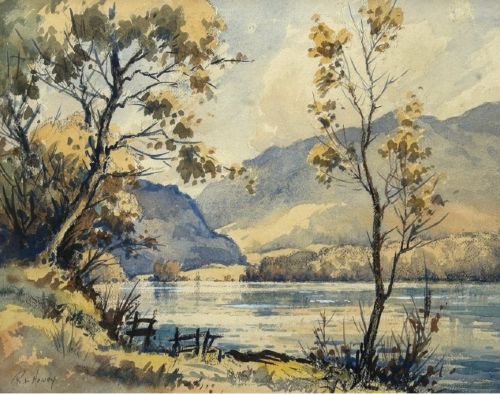


Blue Lake Painting
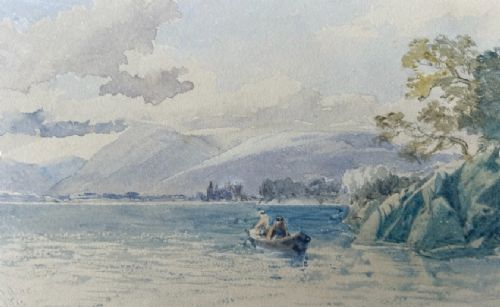
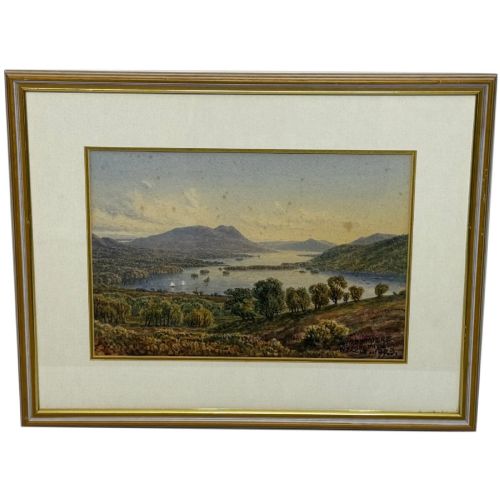
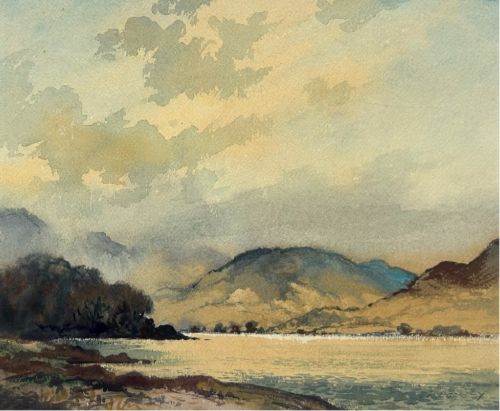
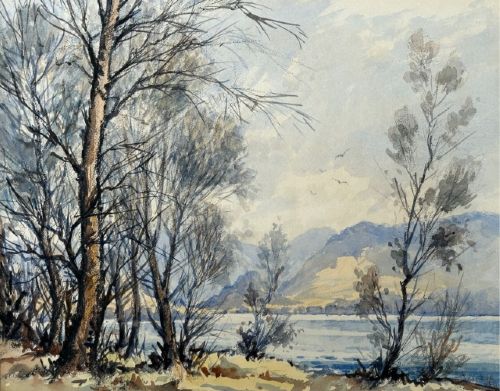
A blue lake painting captures quiet water and distant shores, bringing the stillness of a Cumbrian tarn or a Scottish loch directly into a room.
Blue Lake Painting
A blue lake painting portrays open water, mountainous backdrops, and riverside banks through varied historical lenses, ranging from 19th-century romantic watercolours to mid-century British impressionism. When searching for a blue lake painting, a buyer encounters paper and canvas works depicting British, French, and Italian waters alongside framed porcelain plates and stained glass panels.
The selections span the Edwardian era, the Victorian period, and the mid-20th century, capturing specific views of Windermere, Loch Awe, and Lake Garda. Watercolours dominate the selection, often signed by listed artists who recorded topographical and atmospheric scenes across Britain and Europe.
Materials and methods
Watercolour and oil paint form the primary pigments applied to paper or stretched canvas, supported by traditional timber frames and gilt accents. Artists layered washes of pigment for water and sky, while impasto oil techniques built tactile texture for lily pads and shorelines.
Stained glass panels and porcelain cabinet plates introduce alternative mediums, utilising hand-painted vitreous enamels fired onto glass or ceramic bases to preserve lake scenery with permanent brilliance.
Blue Lake Painting Retail Price Guide 2026
Typical asking prices for blue lake painting among the pieces listed under this phrase on Sellingantiques today, from the lower quarter to the upper quarter. They describe what is for sale here now, not the wider market.
Listings feature works created across the 19th and 20th centuries, utilising paper, canvas, porcelain, and glass.
Evaluating quality
Quality rests upon the artist's handling of light and the atmospheric depth achieved within the water and mountainous distance. Superior pieces display confident brushwork or delicate washes that evoke genuine movement and weather, rather than static reproduction.
The framing and preservation condition elevate a piece, with period gilt mouldings and protected paper sheets maintaining the original integrity of the composition against fading and damp.
William Taylor Longmire·Thomas Miles Richardson Jnr·Robert Leslie Howey·Helen Layfield Bradley·Claude Muncaster·Antoine Bouvard
The Blue Lake Painting Glossary
- Impasto
- Paint applied thickly to a canvas so that it stands out from the surface. This technique gives texture to elements like foliage and water lilies.
- Gouache
- An opaque water-based paint that provides solid areas of colour. It appears alongside watercolour in topographical lake scenes.
- Monogram
- A motif made by overlapping or combining letters to form a signature. Artists frequently used these initials on 19th-century watercolours.
Blue Lake Painting: Frequently Asked Questions
How do I choose between oil and watercolour lake paintings?
Watercolours offer delicate transparency suited to misty mountain reflections and pale skies. Oils provide richer texture and deeper tonal contrast for water and foliage.
Consider where the piece will hang and how direct light interacts with glazed frames versus unglazed canvases.
What periods do these lake artworks come from?
The available pieces span from the mid-19th century through the Edwardian era and into the mid-20th century. Victorian and Edwardian works often favour romantic topographical detail, while post-war examples lean towards impressionistic abstraction.
Each period reflects distinct artistic approaches to capturing natural light over water.
Are these lake paintings signed by the artists?
Many examples feature original signatures, monograms, or attribution to known painters of the British and continental schools. Signed works provide clear provenance and a direct link to the creator's hand.
Unsigned pieces rely on stylistic indicators, frame characteristics, and period materials for identification.
How should I frame and display a paper watercolour?
Watercolours on paper require conservation mounting with acid-free materials to prevent discolouration over time. Glazing protects the delicate pigment from dust and atmospheric moisture in the room.
Position the framed work away from direct sunlight to preserve the subtlety of the blue tones.