



Blue Glass Lamp
A blue glass lamp brings rich colour and diffused light to a room, spanning functional nineteenth-century oil burners and sleek twentieth-century electric designs.
Blue Glass Lamp
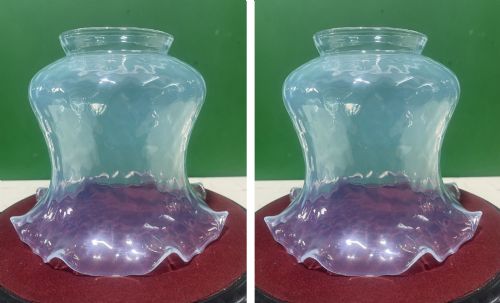
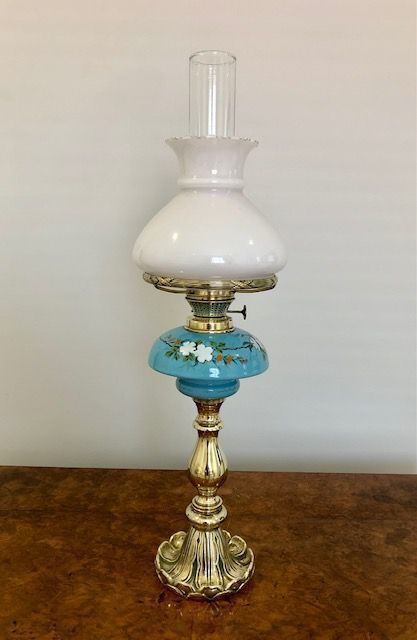
A blue glass lamp encompasses a diverse group of lighting fixtures that utilise cobalt, tinted, and cut glass bodies across various historical periods. When searching for a blue glass lamp, buyers encounter everything from nineteenth-century Victorian oil lamps with tinted fonts to twentieth-century Art Deco pendants and desk lamps.
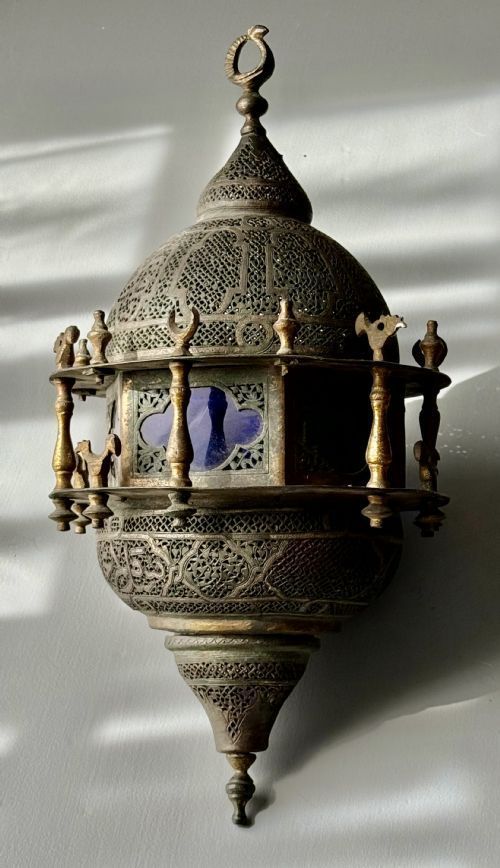
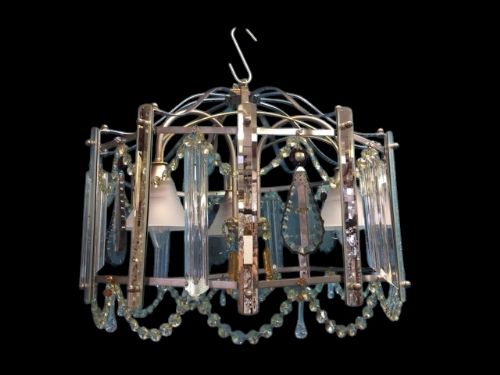
The selection ranges from utilitarian oil lamps mounted on brass or ceramic bases to decorative hanging lanterns, wall sconces, and French chandeliers adorned with blue prisms. Table lamps conversion pieces and dedicated electric lights dominate the twentieth-century offerings, while earlier pieces retain their original oil mechanisms.
Origins stretch from English workshops to French studios, incorporating styles such as Moorish Revival, Arts and Crafts, and French Art Nouveau. Buyers will find that nineteenth-century examples often pair rich glass fonts with embossed brass or copper mountings.
How they were made
These lamps rely on a combination of blown or moulded glass working alongside metal components such as brass, bronze, chrome, and wrought iron. Glassmakers achieved the characteristic blue hue through mineral oxides added during the melting process, whilst others employed surface decalcomania or frosted finishes.
Metal mountings were cast, pierced, or embossed to secure the glass reservoirs and shades, frequently incorporating brass collars and heavy ceramic or black glass bases for stability. Twentieth-century lighting introduced chrome and leaded glass construction, moving away from traditional oil lamp architecture toward electrical wiring.
Blue Glass Lamp Retail Price Guide 2026
Typical asking prices for blue glass lamp among the pieces listed under this phrase on Sellingantiques today, from the lower quarter to the upper quarter. They describe what is for sale here now, not the wider market.
Several lamps double as nineteenth-century apothecary jars, proving that Victorian chemists knew how to style a shelf.
What varies in quality
Quality rests upon the depth of the glass colour, the crispness of any cut or moulded detail, and the integrity of the metal mountings. Superior examples demonstrate heavy, uniform glass blowing without excessive bubbles, coupled with finely chased or pierced brass and bronze work rather than stamped sheet metal.
The relationship between the glass font and its base dictates overall success, with top-tier pieces maintaining their original matching components and undamaged shades. Craftsmanship in specialised techniques, such as leaded glass assembly or intricate metalwork, separates standard production items from finer studio pieces.
Baccarat·Hinks·Tiffany Studios NYC
The Blue Glass Lamp Glossary
- Font
- The reservoir portion of an oil lamp that holds the fuel and supports the burner. In these pieces, the font is frequently rendered in coloured or cut glass.
- Plafonnier
- A ceiling-mounted dome light or flush-fitting light fixture popular during the Art Deco period. These often feature moulded or frosted glass shades.
- Decalcomania
- A decorative technique involving the transfer of printed designs onto glass or ceramic surfaces. It appears on nineteenth-century table lamp bodies.
- Ewer
- A large jug with a wide spout and handle, adapted in some Victorian instances to serve as an ornamental lamp base.
- Prism
- A cut glass pendant or drop suspended from chandeliers and light fittings to refract light. They appear in blue glass variants on early twentieth-century fixtures.
Blue Glass Lamp: Frequently Asked Questions
How do I date an old lamp?
Dating relies on examining the manufacturing methods of the glass, the style of the metal mountings, and the presence of oil burner mechanisms versus electrical fittings. Nineteenth-century examples typically feature heavy brass bases and threaded collars designed for wick burners.
Twentieth-century pieces introduce modern materials like chrome or distinct modernist silhouettes associated with Art Deco design. Comparing the hardware and wiring style helps narrow down the decade of production.
Were these all originally oil lamps?
Many nineteenth-century and Edwardian pieces began life as oil lamps utilising brass burners before being converted to electricity later in their lifespan. Other forms, such as hall lanterns, pendants, and chandeliers, were designed from the outset for suspension and illumination via candles or gas.
When evaluating a piece, look for burner threads or wick adjustment keys that indicate original fuel usage. Converted lamps remain entirely standard within the antique market.
How do I clean blue glass safely?
Cleaning requires warm water and a mild, non-abrasive soap applied with a soft cloth to protect both the glass and any metallic elements. Avoid submerging antique metal mounts or wired components to prevent corrosion and damage to historical wiring.
Dry the glass thoroughly with a lint-free cloth to maintain its clarity and sheen. Chemical cleaners should be avoided on frosted, decalcomania, or gilded surfaces.
Can antique lamps be used daily?
Most antique electric lamps function well for daily use provided the wiring meets contemporary safety standards. It is prudent to have older wiring inspected or replaced by a qualified professional before plugging in any vintage lighting.
Oil-burning lamps are typically enjoyed as decorative objects or ambient pieces rather than functional primary lighting sources. Handle all glass components with care during bulb changes or placement.