

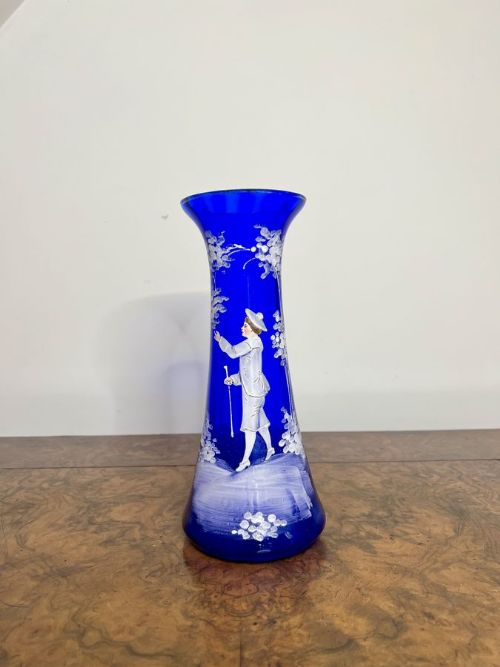


Blue Glass Flower Vase
A blue glass flower vase brings intense colour to a room, ranging from deep sapphire tones to pale translucent shades.
Blue Glass Flower Vase
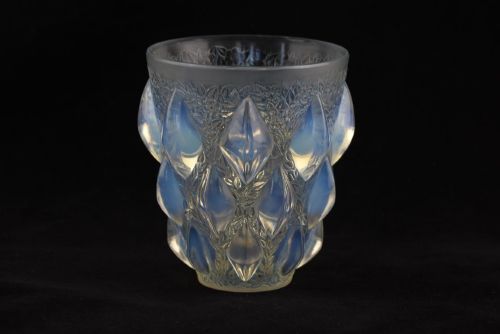
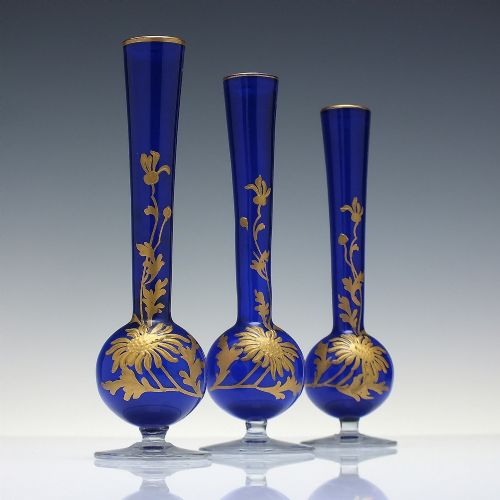
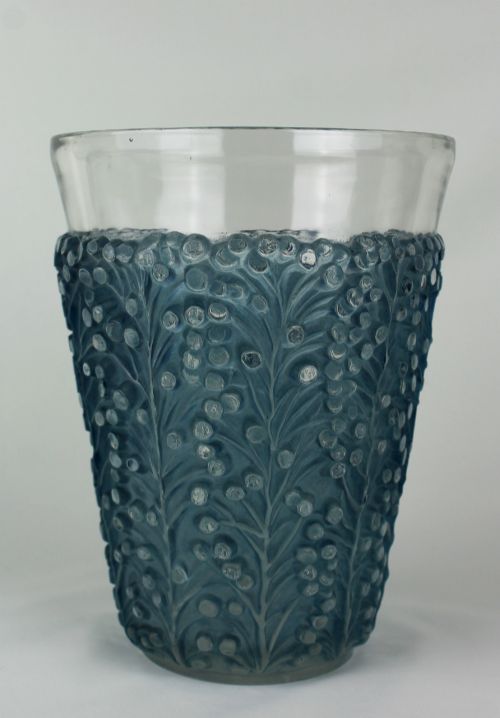
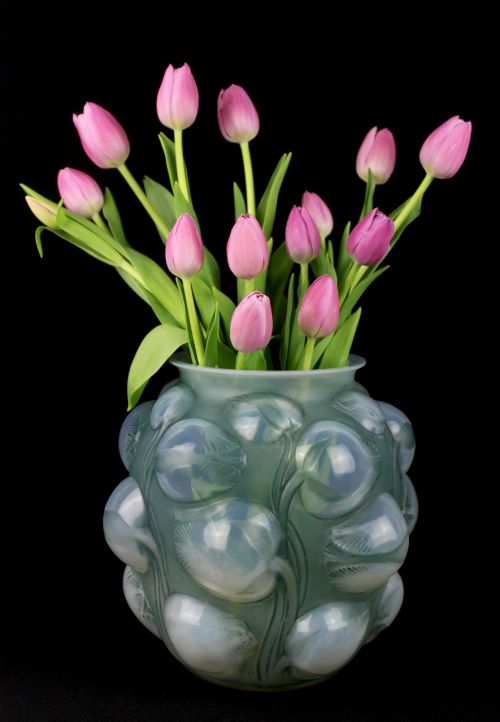
A blue glass flower vase encompasses items created across the Victorian, Art Nouveau, Art Deco, and Mid-Century Modern periods. Buyers encounter diverse forms, from cameo and opalescent glass to cut crystal and silver-mounted designs.
While most examples are dedicated vessels for blooms, the category also includes related paintings depicting floral studies in glass containers. Pieces originate from British, French, Austrian, and Belgian makers.
The selection ranges from posy vases and bulb vessels to large display pieces, reflecting shifting design tastes from the mid-nineteenth century onward.
Materials and construction methods
Makers utilised various glass techniques, including cameo carving, mould-pressed opalescent effects, and iridescent treatments. Some vessels incorporate silver mounts, enamel paint, or gilt applique to enrich the surface.
The handling of colour varies from uniform deep saturation to layered casing over crystal, allowing light to interact with the material in different ways.
Blue Glass Flower Vase Retail Price Guide 2026
Typical asking prices for blue glass flower vase among the pieces listed under this phrase on Sellingantiques today, from the lower quarter to the upper quarter. They describe what is for sale here now, not the wider market.
Some early pieces were traded specifically as tokens of friendship among nineteenth-century acquaintances.
Distinctions in quality
Quality rests in the precision of the glassmaking technique, whether through crisp cameo relief work, complex surface iridescence, or refined hand-cut facets. The harmony between the colour saturation and the vessel form dictates the visual strength.
Artistic execution in secondary elements, such as enamel painted floral motifs or applied metalwork, separates standard production pieces from finer studio and factory outputs.
Loetz Witwe·René Lalique·Emile Gallé·Val St. Lambert
The Blue Glass Flower Vase Glossary
- Cameo glass
- Glass vessels produced with multiple layers of contrasting colours, carved down to create raised designs. This demanding technique creates depth and distinct relief work.
- Opalescent glass
- Glass that displays a milky, semi-transparent appearance with shifting blue or amber highlights when lit. It was a favourite of interwar French designers.
- Iridescent glass
- Glass treated with metallic salts while hot to produce a shimmering, rainbow-like surface effect. This finish mimics ancient weathered glass.
- Posy vase
- A small vessel designed to hold a compact bunch of flowers rather than a large arrangement. These were particularly popular during the Victorian period.
- Enamel paint
- Opaque glass paint fired onto the surface of the vessel to add painted floral details. It provides a tactile, colourful decoration.
Blue Glass Flower Vase: Frequently Asked Questions
How do I clean an antique vase?
Wash the glass gently in warm soapy water using a soft cloth, avoiding abrasive pads that can scratch delicate surfaces or remove enamel paint.
Dry the vessel thoroughly with a lint-free cloth to prevent water spots from forming on the glass.
Can I put water in these vases?
Most glass vessels hold water safely, but pieces with applied metalwork, delicate enamel, or internal metallic residues require careful handling to avoid damage.
Use a bottle brush if necessary, and avoid sudden temperature changes that might crack older glass.
How do I date a blue glass vase?
Examine the manufacturing marks, pontil scars on the base, and stylistic traits that correspond to periods like Art Nouveau or Art Deco.
Compare the glass weight, tint, and surface techniques with documented examples from known makers and eras.
Where should I display my vase?
Place the vessel near a natural light source to let the sunlight pass through the coloured glass and illuminate the tones.
Keep pieces away from direct, intense sunlight for prolonged periods to protect any delicate painted enamel details.