


Blue Gemstone Bracelet
A blue gemstone bracelet brings together coloured stones and precious metals across Edwardian, Victorian and Art Deco designs.
Blue Gemstone Bracelet
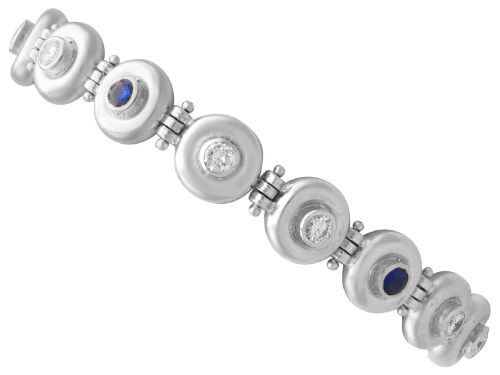
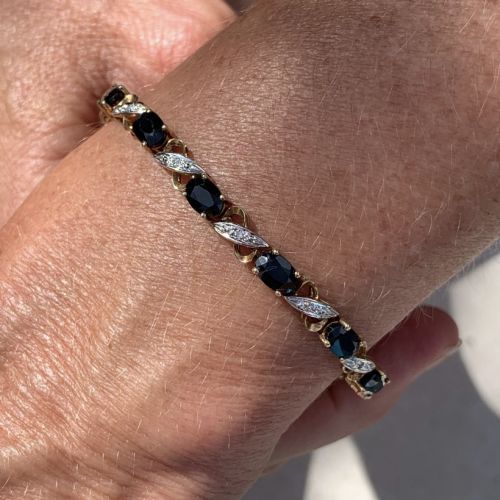
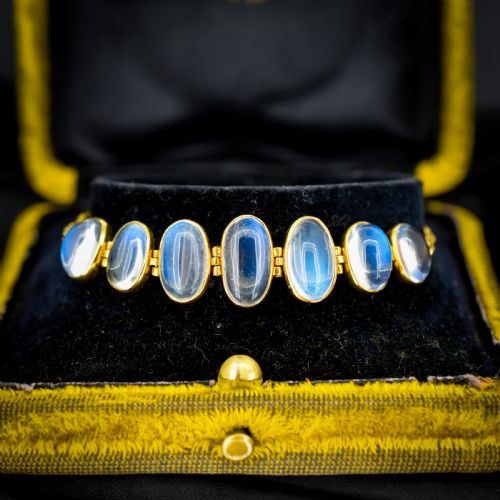
A blue gemstone bracelet unites gold or platinum mountings with sapphires, aquamarines, moonstones or blue topaz. These pieces span Victorian, Edwardian, Art Deco and mid-century periods, showing how goldsmiths set blue stones alongside diamonds and pearls.
Most examples on this page pair sapphires with yellow gold, rose gold, white gold or platinum in line and tennis bracelet formats. Others feature aquamarine, moonstone or blue topaz arranged in Victorian clusters or geometric Art Deco rows.
How they were made
Goldsmiths constructed these mounts in 9ct gold, 15ct gold, 18ct yellow gold, rose gold and platinum, hand-setting the stones into secure claws or flush channels. Metal weights range from delicate mountings to substantial gold and platinum structures.
Stones including natural sapphire, aquamarine, blue topaz and moonstone are frequently accented with small diamonds, seed pearls or split pearls. These combinations reflect the distinct bench techniques of Victorian, Edwardian and Art Deco workshops.
What varies in quality
Quality rests in the depth of colour and saturation of the central stones, alongside the weight and purity of the precious metal mount. Pieces featuring certified natural sapphires paired with substantial diamond carat weights stand apart from lighter topaz or moonstone variations.
The precision of period metalwork and the integration of secondary gems like diamonds or seed pearls define the upper tier of these pieces. Articulation between links and the overall balance of the design show the maker's skill.
The Blue Gemstone Bracelet Glossary
- Sapphire
- A precious corundum mineral valued in these pieces for its deep blue hues, appearing alongside diamonds in Edwardian and Art Deco settings.
- Aquamarine
- A pale blue beryl variety used in substantial Victorian and Art Deco bracelets, often set in rose gold or platinum.
- Platinum
- A dense, white precious metal favoured during the Art Deco period for creating fine, strong settings that hold intricate diamond and sapphire layouts.
- Moonstone
- A translucent feldspar exhibiting adularescence, seen in Victorian graduating link bracelets.
- Seed Pearl
- Tiny, natural or cultured pearls used as delicate borders or spacers in Victorian and Edwardian gemstone designs.
Blue Gemstone Bracelet: Frequently Asked Questions
How do I care for a blue gemstone bracelet?
Store your bracelet in a dedicated lined box to prevent metal and stone contact. Clean precious metal and gemstone links gently using warm soapy water and a soft brush.
Avoid harsh ultrasonic cleaners if the piece contains pearls or treated stones. Regular checks by a jeweller ensure claws remain secure around the gems.
What is the difference between Victorian and Art Deco styles?
Victorian designs often use warmer metals like rose and yellow gold with seed pearls and clustered stones. They lean towards romantic motifs and graduating link structures.
Art Deco pieces favour platinum and white gold with geometric lines, sharp angles and heavy diamond accents alongside sapphires or aquamarines.
Can I wear my bracelet every day?
Sapphires and diamonds offer strong durability for daily wear, housed in robust gold or platinum settings. Lighter pieces with seed pearls or moonstones benefit from occasional, careful wear.
Consider the clasp security and metal weight before wearing vintage jewellery during physical activities.
How are different gold purities used in these bracelets?
Gold purity ranges from 9ct and 15ct to 18ct yellow and rose gold, each offering different colour tones and structural hardness. Lower carat golds provide extra resilience for daily links.
Higher carat gold yields a richer yellow hue and softer lustre, commonly paired with fine Victorian and Edwardian gemstone settings.