




Blue Enamel and Diamond
Blue enamel and diamond pieces combine vitreous colour with bright stones, offering collectors wearable historical artistry from Victorian and Edwardian periods.
Blue Enamel and Diamond
When you search for blue enamel and diamond, you encounter rings, pendants, brooches, necklaces, and bangles spanning Georgian, Victorian, Edwardian, Art Nouveau, and Mid-Century periods.
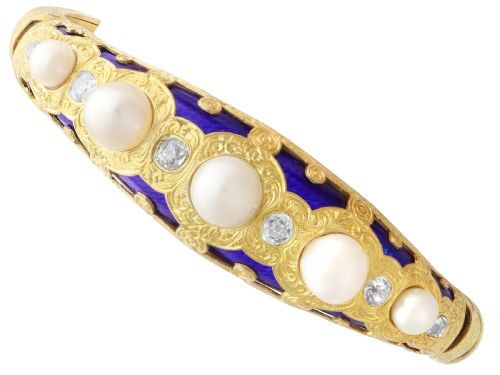
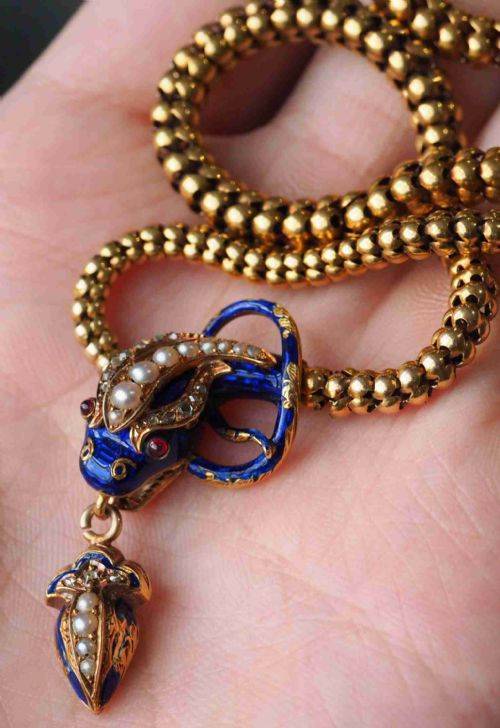
The Victorian pieces form the largest group, frequently featuring snake motifs, heart-shaped lockets, and star designs set in yellow gold alongside pearls.
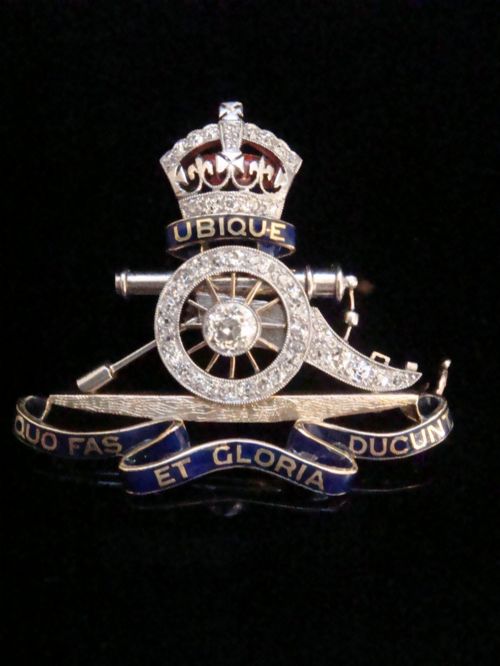
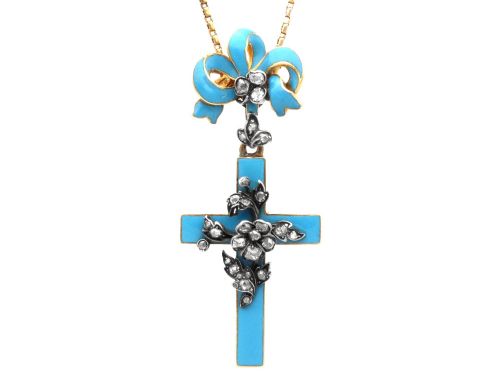
Earlier Georgian examples combine silver settings for the diamonds mounted directly onto blue enamel over gold bases, while later Edwardian and mid-century items utilise guilloche and plique-a-jour techniques.
Materials and Techniques
These items combine vitreous enamel or guilloche enamel with diamond, pearl, silver, and various carats of yellow gold, ranging from nine to twenty carat.
Goldsmiths fused powdered glass to metal surfaces through high-temperature firing to create the rich blue background fields.
Diamonds, including rose-cut and brilliant-cut stones, were then secured within gold or silver settings against the enamel surface.
Blue Enamel and Diamond Retail Price Guide 2026
Typical asking prices for blue enamel and diamond among the pieces listed under this phrase on Sellingantiques today, from the lower quarter to the upper quarter. They describe what is for sale here now, not the wider market.
Victorian jewellers frequently used coiled serpents intertwined with blue enamel and diamonds to symbolise eternal love.
Evaluating Quality
Quality rests upon the preservation of the vitreous enamel surface and the precision of the metalwork surrounding the diamonds.
Finer examples display even enamel colour without significant losses, alongside well-matched diamonds and secure original mountings in gold or platinum.
The Blue Enamel and Diamond Glossary
- Guilloche enamel
- A decorative technique where a precise pattern is mechanically engraved beneath translucent enamel, creating a shimmering wave effect. This method was widely used in Edwardian pieces.
- Vitreous enamel
- A material made by fusing powdered glass to a metallic substrate through firing at high temperatures. It provides the deep, permanent blue colour seen in these jewels.
- Rose-cut diamond
- A stone style featuring a flat base and a faceted dome shape resembling an unopened rosebud. These appear frequently in Victorian and Georgian rings and pendants.
- Plique-a-jour
- An enamelling technique where the enamel is applied without a backing metal, resembling miniature stained glass. Examples of this style appear in Art Nouveau brooches.
Blue Enamel and Diamond: Frequently Asked Questions
How do I clean blue enamel jewellery?
Clean these pieces gently using a soft cloth dampened with warm soapy water, avoiding harsh chemicals and ultrasonic cleaners that damage the glass surface.
Dry the item thoroughly immediately after cleaning to protect the delicate gold, silver, and pearl components.
Can I wear a blue enamel ring daily?
Daily wear requires caution because vitreous enamel can chip or crack upon hard impact against solid objects.
Reserve these historical rings for occasional wear to preserve the enamel and diamond settings over time.
How do I date a blue enamel piece?
Dating relies on identifying stylistic elements such as Georgian silver-topped gold settings, Victorian snake motifs, or Edwardian guilloche patterns.
Gold carats and accompanying materials like natural pearls also offer clues to the specific manufacturing period.