

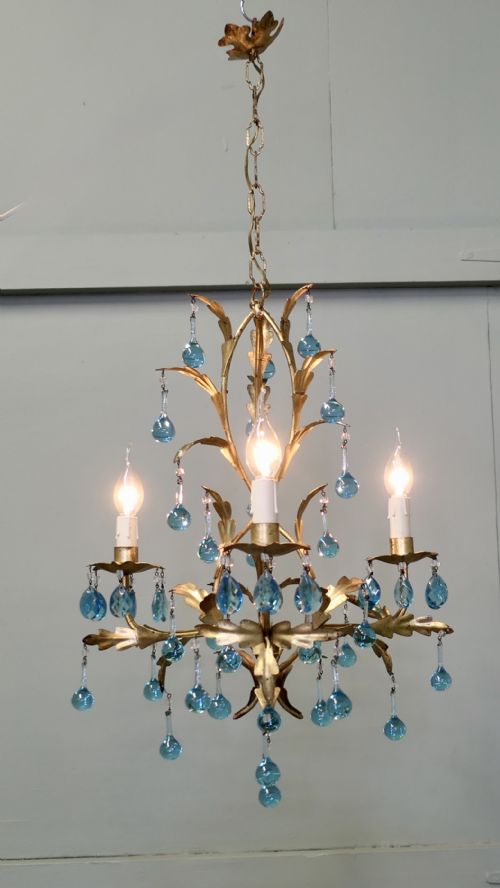


Blue Crystal Pendant
A blue crystal pendant brings striking colour and gathered light to a room, offering an immediate focal point for your ceiling or jewellery collection.
Blue Crystal Pendant
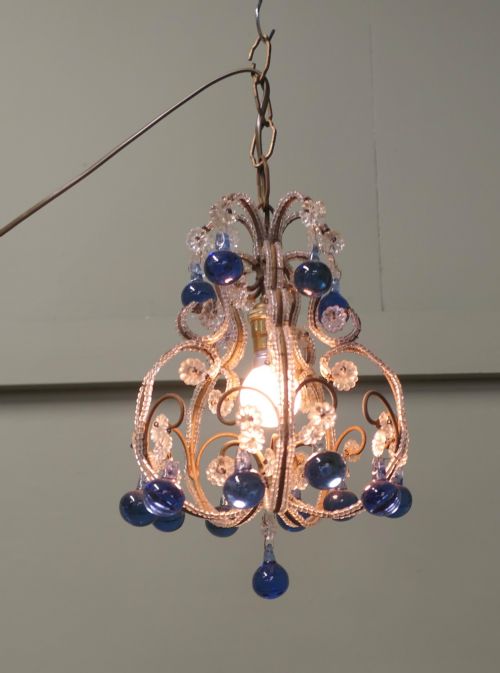
When you search for a blue crystal pendant, you encounter a selection spanning the nineteenth century through the nineteen-fifties, featuring diverse forms from ceiling lighting to personal jewellery. These pieces include various hanging light fittings, chandeliers, and earrings that incorporate blue glass or crystal elements.
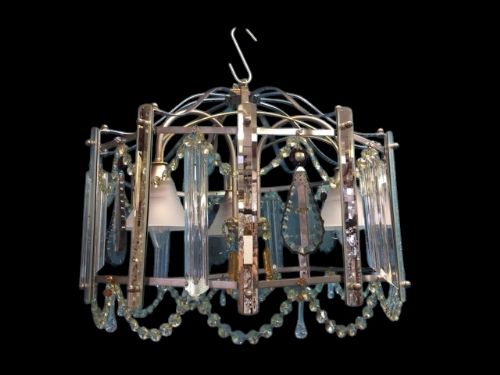
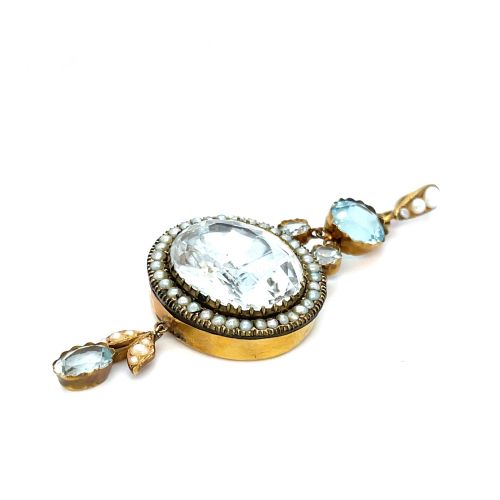
The objects appearing on this page range from Victorian gold pendants set with rock crystal to early twentieth-century bead chandeliers adorned with blue prisms. Pendant lights and ceiling fixtures often integrate brass, chrome, or silver plating alongside their glass components.
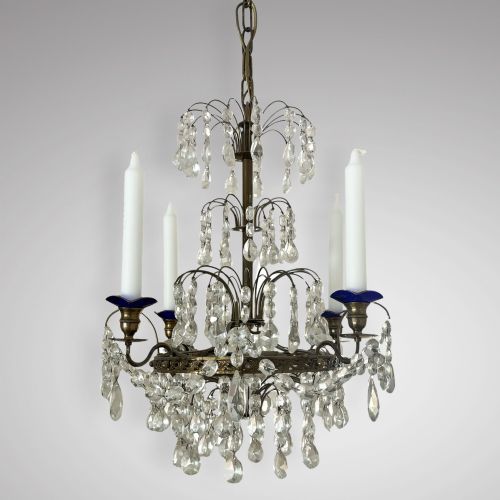
Regional styles represented across these items include French Chateau, Swedish Gustavian, and Russian Empire designs. Buyers find both intimate personal ornaments and substantial multi-branch chandeliers sharing these characteristic hues.
Materials and construction
These items utilise traditional combinations of glass, crystal, and metal, where metal frameworks of brass, gold, or silver-plated structures support hanging prisms and beads. Coloured elements appear as cobalt glass or treated stones such as foil-backed aquamarine and blue topaz.
Lighting fixtures employ cut glass and crystal drops suspended from frames, whilst jewellery settings utilise nine-carat gold or silver plating to secure individual stones. The integration of toleware and metalwork provides structural support for larger chandeliers.
Blue Crystal Pendant Retail Price Guide 2026
Typical asking prices for blue crystal pendant among the pieces listed under this phrase on Sellingantiques today, from the lower quarter to the upper quarter. They describe what is for sale here now, not the wider market.
Some early twentieth-century pendant lights hide their blue prisms right at the top and centre, keeping the colourful show strictly for the ceiling.
Markers of distinction
Quality in these pieces rests upon the clarity of the crystal, the precision of the glass cutting, and the integrity of the metal setting. Finer examples display superior light refraction through hand-cut facets and securely mounted prisms rather than moulded substitutes.
The distinction between standard and superior pieces also involves the harmony of the design style, such as balanced French Empire or Gustavian proportions. Original metalwork and authentic period fixings distinguish the more accomplished works from later adaptations.
Wedgwood
The Blue Crystal Pendant Glossary
- Foil back
- A technique where a reflective metallic sheet is placed behind a gemstone or glass to enhance its brilliance and colour. This method is frequently observed in Victorian pieces.
- Rock crystal
- Naturally occurring colourless quartz that has been cut and polished for use in decorative objects and jewellery. It differs from manufactured glass through its hardness and thermal properties.
- Gustavian style
- The Swedish interpretation of French neoclassical design, characterised by restrained elegance and pale painted finishes. It frequently informs the aesthetic of Scandinavian chandeliers.
- Toleware
- Painted or enamelled metalware that often incorporates floral or rustic motifs. It appears in conjunction with crystal elements on decorative light fittings.
- Prism
- A geometric cut glass or crystal component designed to refract light into spectral colours. These hang from chandeliers and pendant lights to disperse illumination across a space.
Blue Crystal Pendant: Frequently Asked Questions
What is a blue crystal pendant?
A blue crystal pendant encompasses both hanging light fixtures and personal jewellery items that incorporate blue glass, crystal, or gemstones. These pieces range from Victorian gold necklaces to early twentieth-century ceiling lights.
They serve as decorative accessories or illumination sources that bring distinctive colour into an interior space or personal wardrobe.
How do I date a pendant light?
Dating relies on examining the mounting materials, metal types, and cutting styles characteristic of periods like the Victorian era or the nineteen-twenties. Construction techniques such as hand-cut facets and specific metal platings offer chronological clues.
Comparing the decorative motifs against established design styles like Art Deco or French Empire further clarifies the period of origin.
How do I care for antique glass?
Maintenance involves gentle cleaning with soft cloths and mild solutions to preserve the delicate metal settings and glass surfaces. Harsh chemical cleaners can damage foil backs or degrade vintage metal plating.
Regular dusting prevents grime accumulation on intricate crystal prisms and hanging beads.