


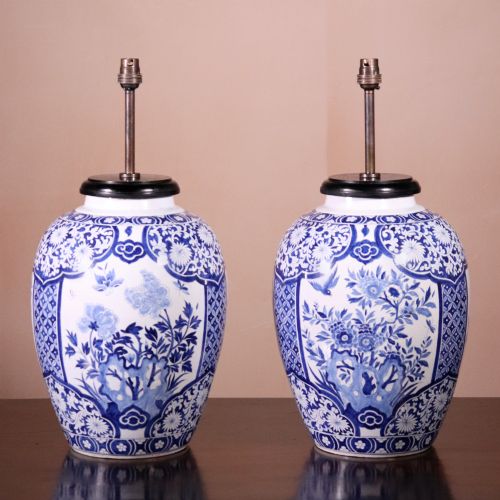


Blue and White Jar Lighting
Blue and white jar lighting brings together centuries-old ceramic vessels and fitted lamp hardware, illuminating rooms with historic cobalt decoration.
Blue and White Jar Lighting
When you search for blue and white jar lighting, you are looking at ceramic vessels converted into table lamps. These pieces primarily date from the eighteenth and nineteenth centuries, originating from Chinese and Japanese kilns before receiving later electrical wiring.
The forms you will most frequently meet on this page are ginger jar lamps, baluster vases, and crackleware vessels fitted with lamp hardware. They often feature classic Chinoiserie motifs, prunus blossom patterns, and traditional Qing Dynasty designs.
Most examples function as pairs or single statement table lamps, combining antique porcelain bodies with brass mountings and fabric shades. Their robust ceramic forms make them enduring centerpieces for interior spaces.
How they were made
The bodies of these lamps are constructed from high-fired porcelain, decorated with cobalt blue pigments beneath a clear glaze. This traditional ceramic technique creates the deep, layered tones characteristic of nineteenth-century export wares.
Makers adapted these historic vessels for domestic illumination by mounting them onto turned wood or polished brass bases. Electrical fittings and silk or fabric shades were then added to complete the transformation from vessel to lamp.
Blue and White Jar Lighting Retail Price Guide 2026
Typical asking prices for blue and white jar lighting among the pieces listed under this phrase on Sellingantiques today, from the lower quarter to the upper quarter. They describe what is for sale here now, not the wider market.
The listings show nineteenth-century Chinese porcelain jars combined with eighteenth-century Japanese Arita wares.
What varies in quality
The distinction between standard examples and superior pieces rests largely on the fineness of the porcelain body and the clarity of the cobalt painting. Crisp detailing in floral and landscape motifs indicates a higher grade of craftsmanship in the original ceramic.
Proportion and stability also dictate the worth of a converted jar lamp. Expert mounting ensures the vessel remains undamaged while supporting the weight of the brass hardware and fabric shade in a balanced silhouette.
The Blue and White Jar Lighting Glossary
- Ginger jar
- A high-shouldered ceramic vessel originally used for storing spices or preserved goods. These jars form the most common bodies for table lamps.
- Cracklware
- A type of pottery featuring a network of fine cracks intentionally created in the glaze during firing. This finish appears frequently on nineteenth-century Chinese lamp bases.
- Prunus blossom
- A decorative motif depicting plum branches in bloom, which is a recurring pattern on export porcelain. It symbolises perseverance and renewal.
- Chinoiserie
- European stylistic interpretations of Chinese artistic traditions, visible in the decorative schemes of many period ceramics. This style heavily influenced interior design across the eighteenth and nineteenth centuries.
Blue and White Jar Lighting: Frequently Asked Questions
Are these lamps newly wired?
Most antique ceramic lamps receive modern electrical wiring to ensure safety and compliance with current household standards. This allows delicate historic vessels to function reliably in contemporary homes.
Buyers should inspect the specific wiring details in each listing to confirm the setup meets their local electrical requirements.
How do I clean ceramic lamp bases?
Dust the porcelain body gently with a soft, dry cloth to prevent the accumulation of dirt on the glaze. Avoid harsh chemical cleaners that might damage the surface or the surrounding brass hardware.
Care should be taken around fitted mounts and electrical components to keep moisture away from the interior wiring.
Can I replace the lampshade?
Lampshades on converted jar lamps can typically be swapped to suit your interior colour scheme and lighting preferences. Standard fitter sizes allow for straightforward replacement with compatible fabric or silk shades.
Consider the scale of the ceramic jar when selecting a new shade to maintain a balanced proportion for the whole lamp.
How do I date a porcelain jar lamp?
Dating relies primarily on the characteristics of the porcelain body, the depth of the cobalt blue pigment, and any visible potting marks. Eighteenth-century pieces often display different clay densities and glaze qualities compared to nineteenth-century productions.
Matching the style of the brass mounts and wiring components can also provide clues regarding when the vessel was converted into a lamp.