



Blue and White Glass
Blue and white glass combines contrasting tones across vases, oil lamps and decanters from the Victorian and Edwardian periods.
Blue and White Glass
Collectors seeking blue and white glass encounter a broad spectrum of domestic and decorative items spanning the Georgian era to the mid-twentieth century. The pieces recorded here range from vibrant Victorian apothecary bottles and Bristol blue vessels to French opaline wares and opalescent Art Deco creations.
Vases and oil lamps form a large proportion of the selection, often accompanied by decanters, sugar bowls and chandeliers. French workshops such as Baccarat and Clichy sit alongside English Nailsea output and Bohemian overlay glass.
Dating primarily from the nineteenth and early twentieth centuries, these objects demonstrate how makers combined translucent white elements with cobalt, sapphire or pale blue canes and rims. The resulting items function as both practical household furnishings and decorative cabinet pieces.
Materials and methods
Makers utilised distinct glass types including opaline, opalescent and latticinio formulas, fusing white and blue components together while molten. Applied glass canes, enamel decoration and gilt bands frequently accent the primary body.
Metal mounts in brass, silver and gilt provide structural support for oil lamps, decanters and dressing table jars. Overlay techniques involved cutting through an outer layer of coloured glass to reveal the contrasting white material beneath.
Blue and White Glass Retail Price Guide 2026
Typical asking prices for blue and white glass among the pieces listed under this phrase on Sellingantiques today, from the lower quarter to the upper quarter. They describe what is for sale here now, not the wider market.
Listings feature glass pieces incorporating brass, silver, enamel and gilt across nineteenth and twentieth-century periods.
Distinguishing quality
Superior examples display crisp application of enamel details, precise cane work and clean integration of metal fittings such as brass bases or silver lids. The depth of colour in the glass and the smoothness of the surface finish dictate the standing of individual items.
The reputation of the maker, whether associated with Bohemian overlay or French opalescent production, influences the desirability of a piece. Original components, such as matching stoppers or intact glass shades, complete the integrity of the object.
Baccarat·Rene Lalique·Loetz·Sabino
The Blue and White Glass Glossary
- Opaline glass
- An opaque or translucent pale glass developed in France during the nineteenth century, frequently tinted white or soft colours. It mimics porcelain while retaining the working properties of glass.
- Opalescent glass
- A type of glass that appears milky or bluish when viewed by reflected light, yet warm orange or amber by transmitted light. It gained prominence through twentieth-century Art Deco mould-pressed production.
- Latticinio
- A decorative glass technique featuring intertwined threads of opaque white or coloured glass encased within clear metal. It creates delicate net-like patterns across bowls and vessels.
- Overlay glass
- A layered glass construction where a vessel is dipped in one or more contrasting colours while hot. Craftsmen then cut away portions of the outer layer to expose the base colour underneath.
- Mary Gregory glass
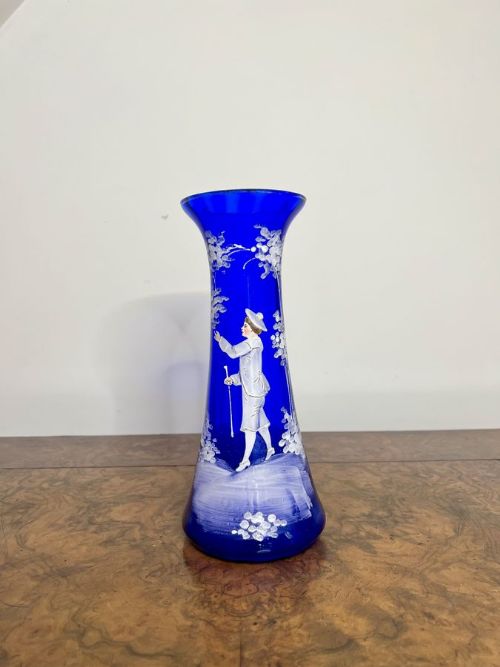
- Victorian glassware decorated with enamel silhouettes depicting white children at play amidst foliage. The technique appears on both blue and cranberry backgrounds.
Blue and White Glass: Frequently Asked Questions
What is Nailsea glass?
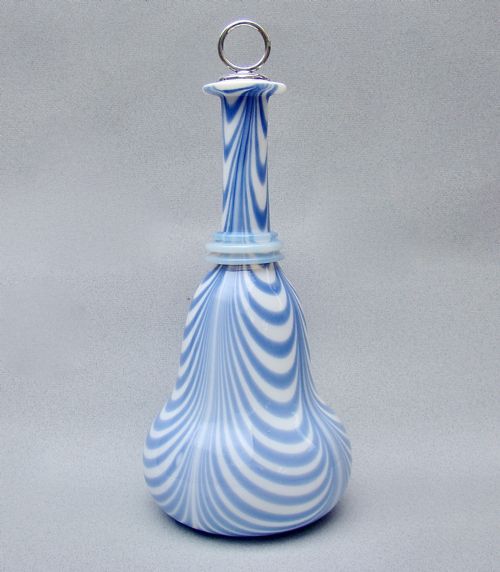
Nailsea glass originates from the English glassworks and is celebrated for its distinctive looped or combed trailing patterns. White glass threads are typically fused into a coloured body during blowing.
These pieces often take the form of flasks, pipes and domestic vessels created for everyday utility or fairground souvenirs.
How were Victorian oil lamps constructed?
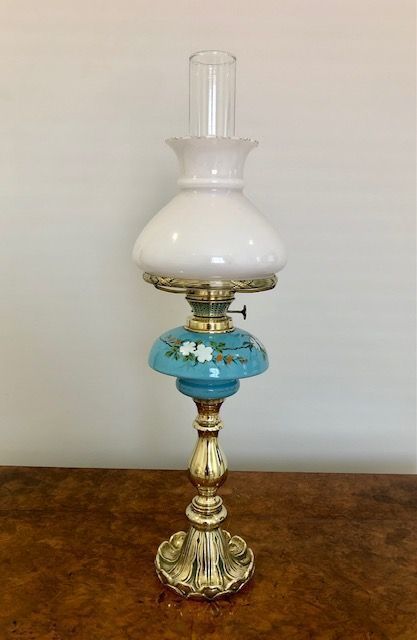
Victorian oil lamps combine a ceramic or glass font mounted on a brass or cast-iron base, frequently finished with a matching glass shade. The materials were chosen for both stability and decorative effect.
Many incorporate black glass or ceramic elements to anchor the heavier metal reservoirs above.
What distinguishes Art Deco opalescent glass?
Art Deco opalescent glass relies on mould-pressed techniques rather than free-blowing, creating sculptural depth across vases and perfume bottles. Makers such as Lalique utilised the milky quality to catch natural light.
Relief motifs stand out through shading created by the varying thickness of the opalescent material.