



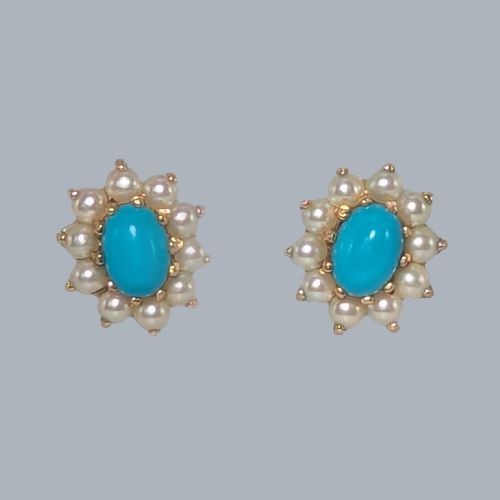


Blue and Gold Studs
Blue and gold studs bring together rich lapidary colour and precious metal work in compact earring and cufflink forms.
Blue and Gold Studs
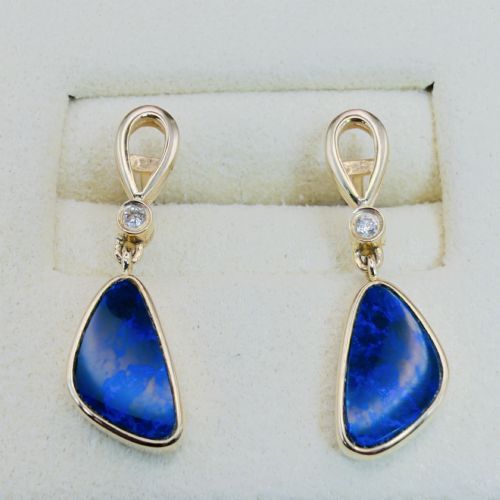
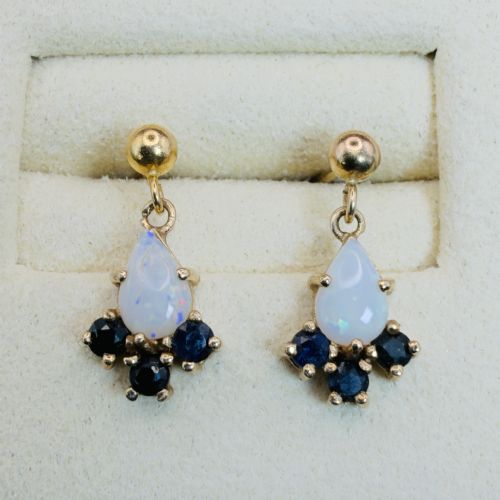
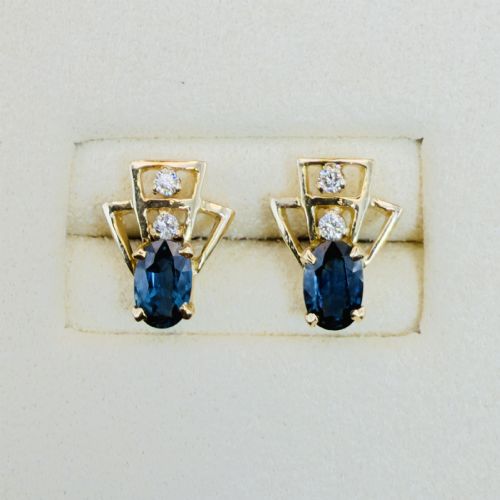
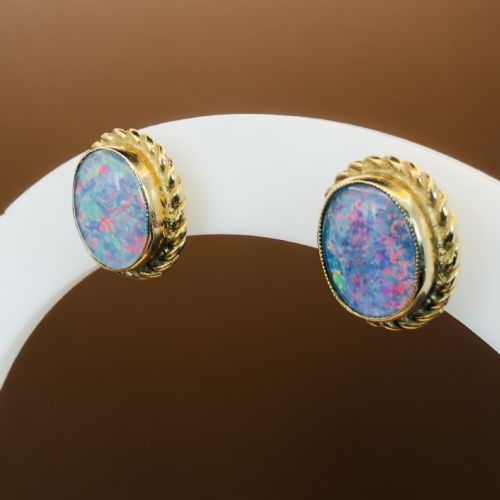
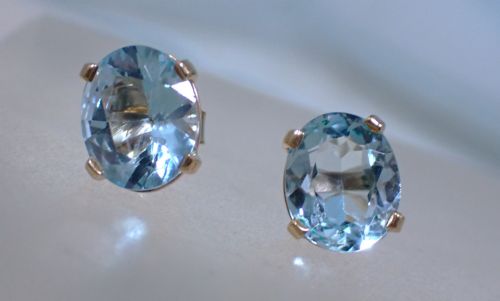
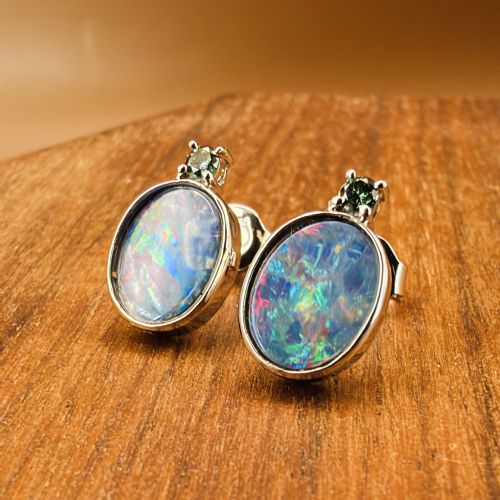
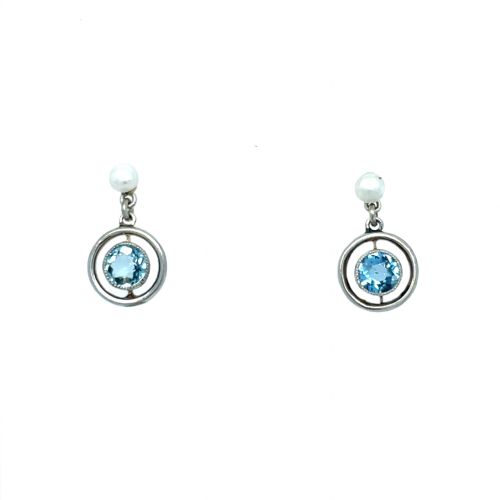
Blue and gold studs comprise earrings, drop stud earrings, and cufflinks spanning the Georgian period through the mid-twentieth century. The selection leans heavily towards twentieth-century examples, particularly from the 1950s and 1960s, alongside earlier Edwardian and Art Deco pieces.
Gemstone choices dominate the blue hues, featuring sapphires, aquamarines, blue zircons, lapis lazuli, turquoise, and blue enamel. These stones are set in mounts ranging from traditional yellow gold to white gold and platinum.
How they were made
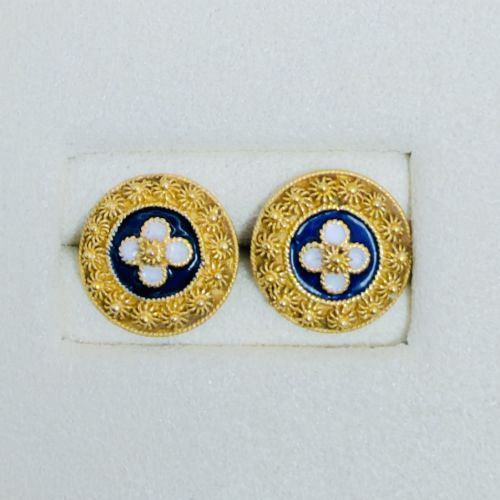
Goldsmiths utilised varying purities of gold, including 9ct, 14ct, 18ct, and higher content variations, matched with platinum settings for secure diamond and gemstone claw or cluster arrangements. Enamel work, such as guilloche, provides vibrant blue surfaces fused directly to the metal base.
Gemstones undergo diverse cutting techniques, from oval and pear cuts to larger boulders and doublets, paired with accent diamonds in cluster or drop configurations.
Blue and Gold Studs Retail Price Guide 2026
Typical asking prices for blue and gold studs among the pieces listed under this phrase on Sellingantiques today, from the lower quarter to the upper quarter. They describe what is for sale here now, not the wider market.
Listings feature 9ct, 14ct, 18ct, and 19.2ct gold alongside white gold and platinum settings.
What varies in quality
Quality rests in the depth of colour and clarity of the central blue stones, whether sapphire, aquamarine, or enamel, alongside the matching uniformity of surrounding diamonds and pearls. Heavier metal weight in the mountings and crispness of period hallmarks add distinction to individual pairs.
The precision of the stone setting and the complexity of cluster or filigree work separate standard production from finer workshop output.
The Blue and Gold Studs Glossary
- Doublet
- A composite gemstone made of two joined sections, often pairing a genuine face stone with a supportive base.
- Guilloche
- An intricate decorative technique where a precise pattern is mechanically engraved into a metal surface beneath translucent enamel.
- Cluster
- An arrangement of smaller gemstones clustered tightly around a larger central stone to magnify visual impact.
- Filigree
- Delicate wirework soldered into open, lace-like patterns, common in mid-century and vintage jewellery mounts.
- Zircon
- A natural silicate mineral occurring in various shades of blue, prized for high dispersion and brilliance in vintage settings.
Blue and Gold Studs: Frequently Asked Questions
How do I wear blue and gold studs?
These compact pieces suit everyday wear as well as formal occasions, depending on the scale of the cluster or drop. Earring styles sit close to the lobe or dangle slightly, while cufflinks provide a tailored finish to formal shirting.
Matching the gold tone of the mount with other accessories helps maintain a cohesive look when styling antique or vintage jewellery.
What periods do these pieces come from?
The selection ranges from Georgian and Edwardian antiques to Art Deco and mid-century modern designs. Twentieth-century decades are particularly well represented.
Each era brings distinct mounting styles, from early enamel work to later atomic-age or modernist cluster forms.
Are sapphires and aquamarines natural?
The listings encompass natural gemstones including sapphires, aquamarines, zircons, and turquoise, alongside composite stones like opals and doublets. Natural variations in tone and inclusions appear across different specimens.
Examining the depth of the blue coloration helps identify the specific mineral family utilised in each setting.
How should I clean my gold studs?
Gentle cleaning with warm soapy water and a soft brush removes everyday residue from the gemstone facets and gold settings. Avoid harsh chemical dips, particularly on pieces containing enamel, pearls, or softer stones like turquoise.
Store each pair separately in a lined box to prevent scratching between the harder diamonds and softer blue gems.