



Bleached Wood Chest
A bleached wood chest brings understated grain and pale tone to a room, offering practical storage with eighteenth and nineteenth-century character.
Bleached Wood Chest
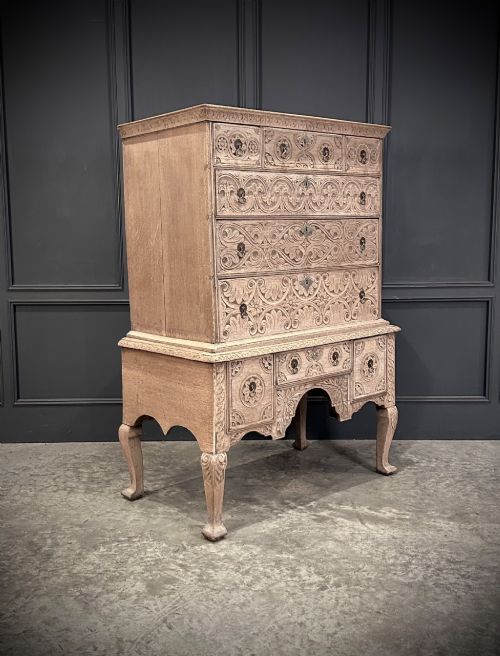
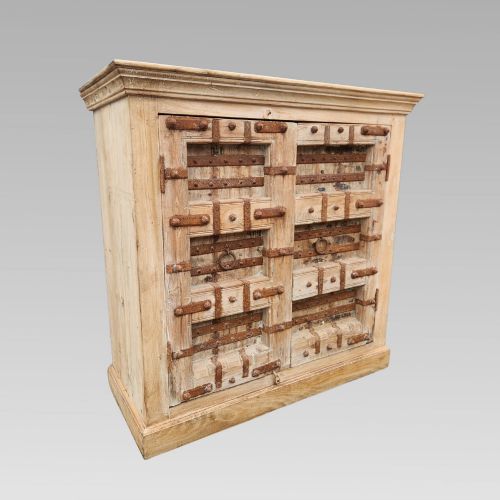
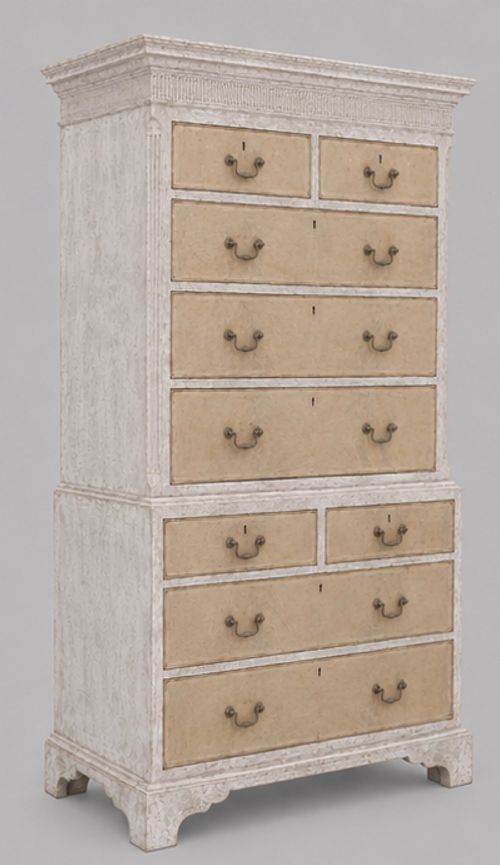
A bleached wood chest is a substantial storage piece finished to show a lighter, scrubbed surface rather than dark polished varnish. Buyers searching for a bleached wood chest typically encounter oak commodes, tall chests on stands, and chests on chests originating from eighteenth and nineteenth-century workshops.
The selection ranges from French provincial commodes and Austrian rococo pieces to Georgian chests and Dutch bombe forms. Oak forms the primary material, alongside walnut, mahogany, and teak, often finished with brass or iron hardware.
How they were made
Cabinetmakers constructed these pieces using solid timbers such as oak, walnut, and mahogany, joined with traditional framing methods. Drawer construction relied on dovetail joints to ensure durability under daily use.
Surfaces were stripped, scrubbed, or chemically lightened to achieve the characteristic pale appearance, while retaining original brass handles, escutcheons, and iron fittings.
Bleached Wood Chest Retail Price Guide 2026
Typical asking prices for bleached wood chest among the pieces listed under this phrase on Sellingantiques today, from the lower quarter to the upper quarter. They describe what is for sale here now, not the wider market.
Some chests wear their history proudly, retaining faint traces of old paint beneath the scrubbed oak surface.
What varies in quality
Quality rests in the integrity of the timber, the crispness of any carved detailing, and the proportion of the carcass. Pieces retaining original hardware and undisturbed interior construction stand apart from those altered later.
Regional cabinetry traditions dictate the fineness of the execution, from the fluid serpentine drawer fronts of French commodes to the restrained architectural lines of Georgian pieces.
The Bleached Wood Chest Glossary
- Commode
- A low chest of drawers, often with a decorative serpentine or bombe front, popular in eighteenth and nineteenth-century continental Europe.
- Chest on stand
- A taller storage unit comprising a main drawer section elevated on a separate supporting base with legs.
- Serpentine
- A curved furniture front characterised by a convex centre flanked by concave ends, creating a flowing wave shape.
- Bombe
- A swollen or bulging convex shape typical of continental baroque and rococo cabinetry, particularly Dutch and Austrian commodes.
- Scrubbed
- A finish achieved by vigorous cleaning and weathering of timber to expose the pale natural grain without heavy polish.
Bleached Wood Chest: Frequently Asked Questions
How do I date a bleached wood chest?
Dating relies on carcass construction, timber selection, and hardware styles. Eighteenth-century examples often feature hand-cut dovetails and pegged joints.
Later nineteenth-century pieces display machine-sawn elements and different handle fixings that help distinguish their period.
Are these chests made of solid oak?
Many listings feature solid oak or bleached oak timbers, while others utilise walnut, mahogany, or teak depending on the regional origin.
Continental and British makers selected hard timbers to ensure structural stability for large drawer chests.
What is the difference between a commode and a chest?
A commode typically refers to a continental European low chest of drawers, often featuring decorative shaping like serpentine or bombe curves.
Standard chests of drawers follow more rectilinear British or provincial designs intended for bedroom storage.
How do I care for a bleached wood surface?
Keep pale timber away from direct sunlight and excessive heat to prevent drying and fading of the scrubbed finish.
Dust with a dry cloth and avoid heavy waxes or silicones that darken the open grain.