

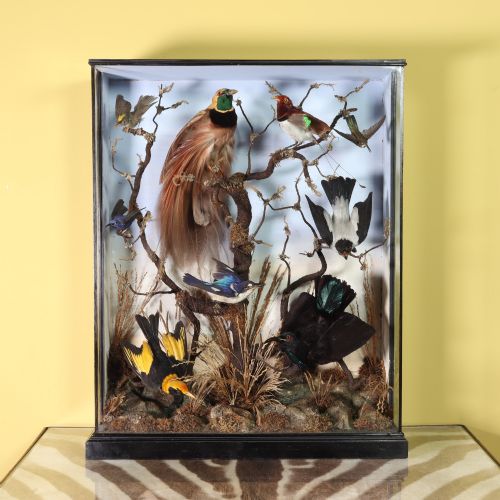
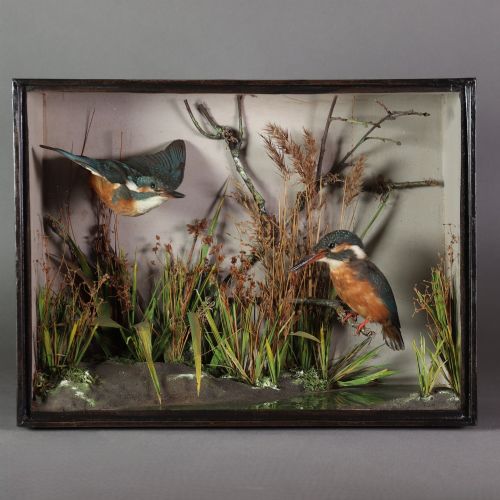


Black Wooden Taxidermy Case
These black wooden taxidermy cases bring Victorian natural history directly into a modern room, housing birds and specimens behind glass.
Black Wooden Taxidermy Case
A black wooden taxidermy case protects preserved specimens inside glazed wooden frames and domes, representing Victorian and Edwardian natural history. Most examples encountered here date from the late nineteenth century to the early twentieth century, showing periods such as Victorian and Edwardian.
The forms vary from upright wooden wall cases containing birds like ducks, kingfishers, and jackdaws to oval and wide glass specimen showcases and domes. These enclosures protect delicate fauna and flora from dust while offering a clear view from multiple angles.
How they were made
Makers constructed the outer frames and bases using wood, frequently applying an ebonised finish to create a uniform black surface that framed the contents. Glass panels or blown domes fit snugly into these wooden structures to seal the interior display.
Internal arrangements incorporate natural specimens alongside preserved flora, moss, and fabric backgrounds to simulate the natural habitat of the birds or animals. Taxidermists mounted the specimens carefully within these enclosed environments to preserve posture and detail.
Materials recorded across the listings include wood, ebonised wood, glass, fabric, natural specimens, preserved specimens, moss, and preserved flora.
What varies in quality
The standard of taxidermy work itself dictates the visual success of the piece, with recognised practitioners achieving lifelike postures and plumage arrangements. Cases bearing attribution to known workshops or taxidermists hold distinct standing over anonymous examples.
The complexity of the internal setting and the condition of the glass and ebonised wood frame influence the overall presentation. Intact original glazing and well-composed natural backdrops elevate the distinction of the entire assembly.
J Griffiths of Burford·T E Gunn·Hutchings of Aberystwyth·W F Homer London·Cooper and Sons
The Black Wooden Taxidermy Case Glossary
- Ebonised wood
- Timber treated with stain or polish to resemble ebony, providing a deep black finish common on Victorian display frames.
- Cloche
- A bell-shaped glass cover used to protect and display delicate specimens or botanical items on a wooden base.
- Taxidermy case
- A glazed wooden enclosure designed specifically to house and preserve mounted animal specimens in a simulated habitat.
- Natural specimens
- Preserved biological subjects, including birds, fish, and flora, prepared for scientific study or domestic display.
Black Wooden Taxidermy Case: Frequently Asked Questions
Where should I place a case?
Position the case away from direct sunlight and damp environments to prevent fading of plumage and deterioration of the internal organic materials.
Stable indoor temperatures help protect the wooden frames and the preserved specimens from structural stress over time.
Are the domes original to the bases?
Most period display domes and glass covers were fitted specifically to their wooden bases during assembly to ensure a secure enclosure for the fragile contents.
Examining the fit and the wear patterns on the wood helps confirm the unified origin of the glass and base.
How do I identify Victorian pieces?
Victorian examples often feature ebonised wood frames, hand-blown glass domes, and detailed naturalistic backgrounds incorporating moss and fabric.
Stylistic cues and construction methods from the late nineteenth century distinguish these pieces from later twentieth-century productions.