




Black Wooden Hall Rack
These black wooden hall rack designs combine practical storage with sculptural animal carvings to anchor an entrance hall.
Black Wooden Hall Rack
A black wooden hall rack serves as a combined furniture piece for coats, hats, sticks, and umbrellas in domestic entryways. The examples seen on this page span the Victorian era and the early twentieth century, showing substantial hallstands alongside wall-mounted coat racks.
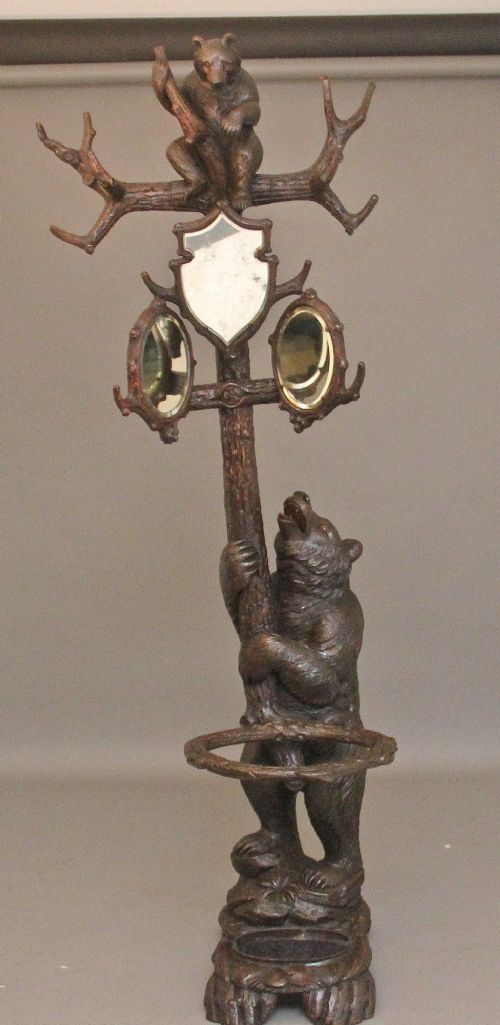
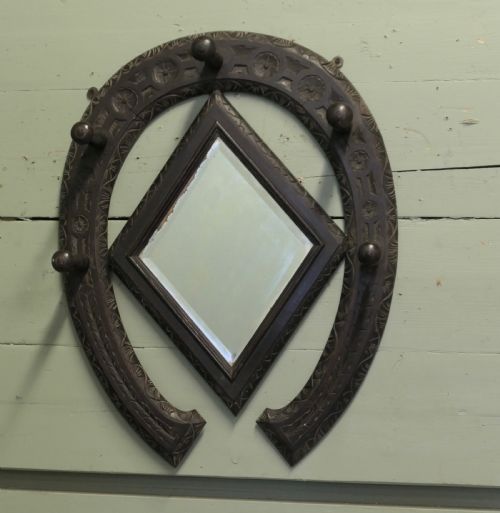
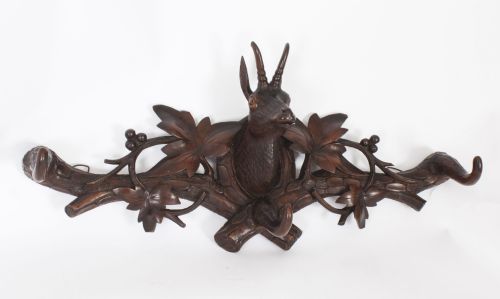
Most pieces encountered here originate from the Black Forest region, frequently taking the form of carved bears, chamois goats, foxes, and eagles. Alongside these figural works appear Gothic Revival pieces utilising mirror glass and metal hooks.
Makers fashioned these works primarily as multifunctional furniture for heavy outerwear and walking equipment. The forms range from standing hall furniture incorporating umbrella wells to compact wall brackets fitted with mirrors.
Materials and Technique
Carvers shaped these items from linden wood, oak, and carved hardwood, applying dark finishes to emphasise the sculptural detail. The construction integrates carved animal figures with structural backplates, coat hooks, and drip pans.
Mirrors and metal elements frequently appear inset into the wooden frames of coat racks and hall stands. These functional additions are combined with deep relief carving depicting woodland animals, rustic branches, and heraldic weapons.
Carved bears on these hall stands frequently hold card trays or umbrella loops in their paws, greeting guests with useful hospitality.
Judging Quality
Quality rests upon the depth, naturalism, and execution of the wood carving rather than the mere presence of decoration. Pieces featuring complex multi-animal subjects such as foxes, eagles, and bears display superior sculptural ambition compared to simpler architectural frameworks.
The integration of secondary materials like inset mirrors, original metal hooks, and metal drip pans defines the standard of a piece. Finer examples maintain crisp anatomical detail in the carved fauna and careful joinery in the structural framing.
The Black Wooden Hall Rack Glossary
- Black Forest
- A style of wood carving originating from the mountain region of central Europe. It is defined by highly detailed depictions of local wildlife, particularly bears.
- Hall Stand
- A substantial piece of entrance hall furniture incorporating hooks for garments, a mirror, and lower stands for walking sticks and umbrellas. These items organise entranceways.
- Gothic Revival
- An architectural and decorative style drawing inspiration from medieval forms. It utilises pointed arches, heavy timbers, and metal hardware.
- Ebonised
- Wood finished with a dark stain or paint to imitate ebony. This treatment creates a uniform black surface on decorative furniture.
- Halberd
- A two-handed pole weapon combining a spear point and a battle axe. Representations of these items occasionally form the structural framework of wall racks.
Black Wooden Hall Rack: Frequently Asked Questions
What is a black wooden hall rack used for?
These pieces serve as functional furniture for hanging coats, hats, and scarves in a hallway or entryway. They provide designated storage for outdoor garments while greeting visitors.
Many designs additionally incorporate umbrella stands and stick wells at the base, often paired with an integrated mirror. This combination concentrates daily hallway accessories into a single wooden structure.
How do I identify a Black Forest hall stand?
Black Forest pieces are characterised by intricate, three-dimensional wood carvings of animals such as bears, chamois goats, foxes, and eagles. The wood is typically dark-finished linden or hardwood.
These stands often feature naturalistic branches, rustic foliage, and integrated hooks shaped to match the woodland theme. The carving style prioritises expressive realism in the animal figures.
Are these hall racks suitable for modern homes?
Their strong vertical proportions allow them to fit into narrow hallways and entrance passages where floor space is limited. They offer practical hanging capacity for contemporary coats and bags.
The dark wood tones and sculptural animal forms also function as striking focal points in an interior scheme. They combine historical craftsmanship with everyday utility.
How do I date an antique hall stand?
Dating relies on stylistic indicators such as the presence of Gothic Revival motifs or nineteenth-century carving conventions. Construction methods and the type of mirror glass used also offer clues to the period of manufacture.
Victorian and early twentieth-century examples often feature registration marks, patinated metal hardware, or specific regional carving traits. Comparing the complexity of the woodwork helps establish the likely era.