


Black Wood Barometer
A black wood barometer is a striking scientific instrument combining utilitarian purpose with dark, richly carved timber.
Black Wood Barometer
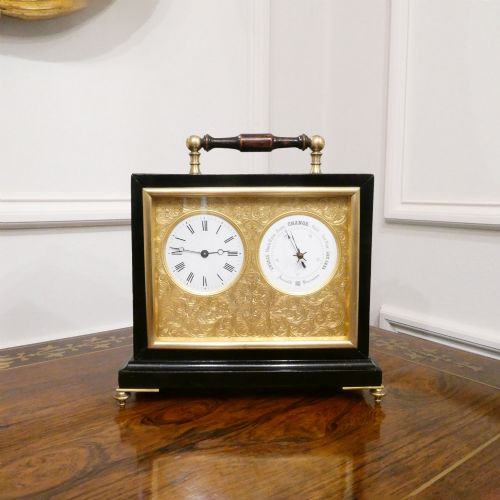
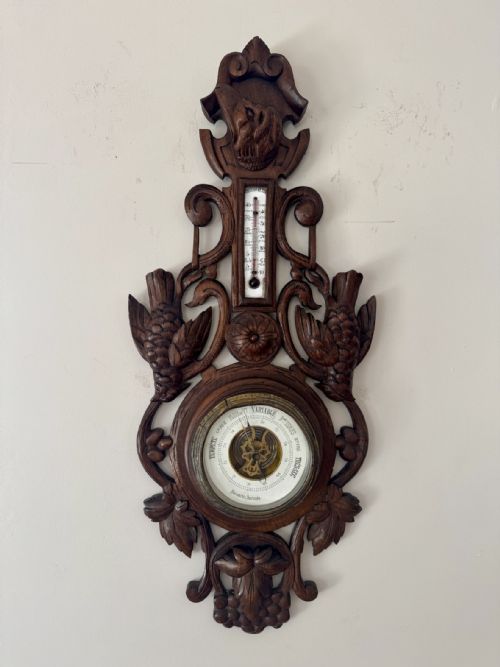
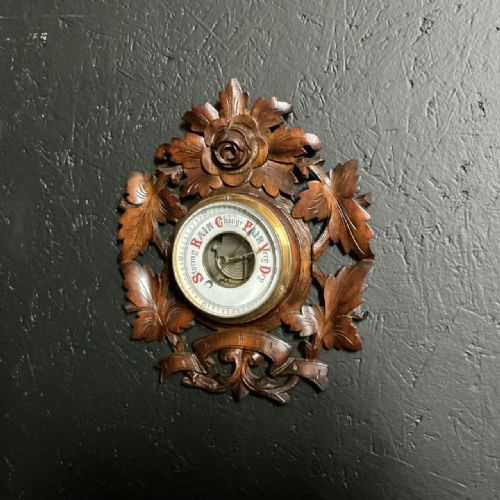
A black wood barometer combines domestic weather forecasting with dark, sculptural woodwork ranging from plain ebonised timber to deeply carved Alpine motifs. When you search for a black wood barometer, you encounter pieces designed to hang upon a wall or sit squarely upon a mantelpiece to measure atmospheric pressure.
The examples gathered here date from the nineteenth century into the Edwardian era, spanning Victorian interpretations and distinct Black Forest regional styles. Most pieces integrate functional scientific dials made of enamel or ceramic alongside exposed brass bezels and glass covers.
Beyond the standard wall barometers, related scientific instruments and mantel combinations appear within the selection, offering varied domestic utilities from the same eras. These objects reflect an age when domestic forecasting relied upon precise aneroid movements housed within decorative timber cases.
How they were made
The construction of these instruments relies upon dense timbers, primarily walnut and ebonised wood, shaped through traditional joinery and deep hand-carving. Carvers utilised regional styles to shape foliage, animals, and architectural flourishes directly into the wooden frames.
Makers set delicate aneroid barometer movements behind protective glass panes, framed by polished brass bezels that contrast sharply with the dark wood. Ceramic and enamel dials received crisp black lettering to record barometric pressure alongside decorative markers.
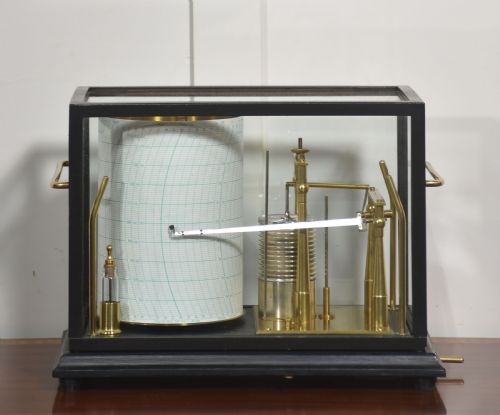
Internal mechanisms employ metal linkages sensitive to atmospheric changes, paired with recording drums or tipping buckets in more complex meteorological apparatus. The marriage of precision brass componentry with heavy wooden cabinetry defines the physical architecture of these pieces.
Object forms within this selection encompass traditional wall barometers, complex recording rain gauges, mantel clocks, and carved wooden frames.
What varies in quality
The depth and vigour of the timber carving separate standard production from superior craftsmanship, particularly visible in the undercut foliage and animal figures of Black Forest pieces. Crisp definition in the wood grain and clean execution of sculptural elements indicate a maker of higher skill.
The materials enclosing the dial - heavy bevelled glass and substantial cast brass bezels - distinguish better examples from simpler utilitarian models. Clear, undamaged ceramic or enamelled faces with legible typography further elevate the standard of the instrument.
The reputation and precision of the maker recorded on the dial plate influence the standing of an instrument, alongside the complexity of the movement housed within the dark wooden case. Well-preserved original surfaces on the ebonised or walnut timber retain the integrity sought by collectors.
Short and Mason·Callaghan and Co
The Black Wood Barometer Glossary
- Aneroid barometer
- A device that measures atmospheric pressure without liquids, using a flexible metal box that expands or contracts.
- Ebonised wood
- Timber stained or finished to resemble true ebony, commonly utilised in nineteenth-century furniture and instrument cases.
- Bezel
- The metal ring that holds the glass cover in place over the dial face of the instrument.
- Barograph
- A recording barometer that graphs barometric pressure over time onto a rotating paper drum.
- Tipping bucket
- A meteorological device that measures rainfall by repeatedly filling and tipping a small balanced container.
Black Wood Barometer: Frequently Asked Questions
How do I read a barometer dial?
Aneroid barometers display pressure changes on a circular dial, typically marked with weather descriptions like storm, rain, change, fair, and very dry. The moving needle points to current pressure, while a secondary manual pointer can be set over it to track whether pressure rises or falls.
Observing these shifts helps anticipate local weather patterns over the coming hours. Comparing the primary needle to your set marker provides an immediate visual guide to atmospheric movement.
Where should I hang a wall barometer?
Wall barometers require stable interior locations away from direct sunlight, radiators, and heavy vibrations from doors. Hanging them securely on a solid wall ensures accurate mechanical readings without interference from environmental extremes.
Placing the instrument at eye level in a hallway or study allows easy daily observation. Stable room temperatures protect both the delicate internal metal linkages and the exterior dark wood case.
How do I clean dark wood cases?
Maintain ebonised and walnut wooden frames by dusting them gently with a soft, dry cloth. Avoid chemical polishes or excessive moisture, which can damage the aged timber finish and seep into the mechanical movement.
If the wood requires cleaning, a slightly damp cloth followed immediately by a dry one removes surface grime safely. Preserving the original patina depends on minimal interference with the historic surface.