



Black Painted Hall Table
These black painted hall table pieces are practical hallway furniture items that combine robust timber construction with dark decorative surfaces to anchor an entranceway.
Black Painted Hall Table
When you search for a black painted hall table, you encounter a variety of forms designed primarily for placement in narrow corridors and entrance spaces. Console tables, side tables, and occasional tables dominate the selection, offering practical surface areas for everyday use.
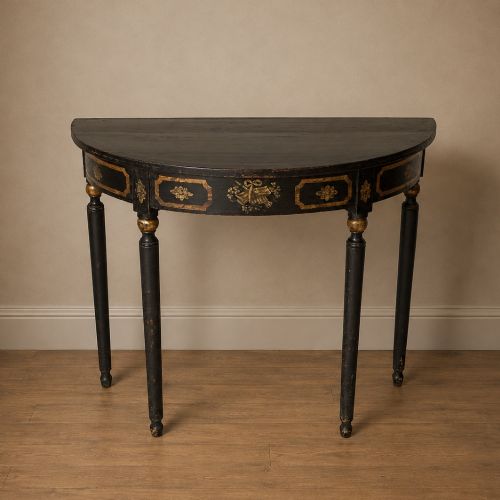
The pieces span multiple periods, ranging from the eighteenth century through the nineteenth century, including Georgian and Regency examples. You will frequently find demi-lune consoles, lamp tables, and lowboys among the offerings.
Origins vary widely, encompassing English, French, Chinese, and Dutch pieces that reflect different regional cabinet-making traditions. Materials range from solid oak and mahogany to lacquered wood and marble-topped surfaces.
How they were made
Construction relies on traditional timber framing methods utilising woods such as oak, mahogany, and general structural timber. Carpenters shaped these materials into sturdy legs, aprons, and table tops designed to withstand regular domestic traffic.
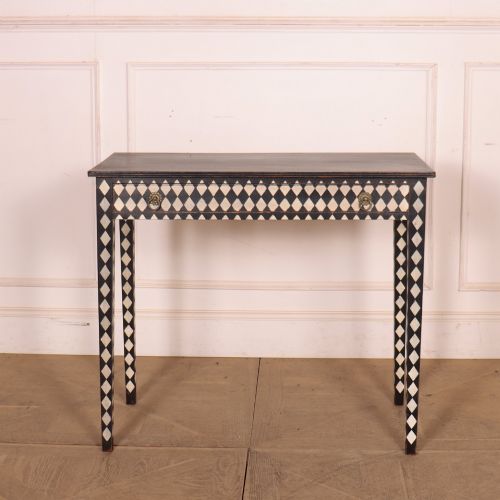
Surface decoration involves application of paint, lacquer, and occasionally parcel gilt or silvering details. Some examples incorporate hand-painted geometric tops or fine Chinoiserie motifs directly onto the wood.
Selected pieces integrate contrasting elements like marble tops or brass fittings, fixed securely to the painted wooden bases.
Black Painted Hall Table Retail Price Guide 2026
Typical asking prices for black painted hall table among the pieces listed under this phrase on Sellingantiques today, from the lower quarter to the upper quarter. They describe what is for sale here now, not the wider market.
Current listings demonstrate a prevalence of nineteenth-century pieces, alongside notable eighteenth-century examples featuring painted wood, marble, and lacquered surfaces.
What varies in quality
The standard of a black painted hall table depends heavily on the execution of the surface finish and the integrity of the underlying timber structure. Original period paint or lacquer work displays depth and wear consistent with age, whereas later refinishing changes the tactile character of the piece.
Proportion and joinery dictate the overall refinement, separating simple utility items from high-status furniture such as Regency console tables with parcel gilt details. Finer pieces demonstrate careful attention to edge profiles, leg turning, and the integration of secondary materials like marble tops.
The Black Painted Hall Table Glossary
- Demi-Lune
- A half-moon shape characteristic of console tables designed to sit flush against a hallway wall. This profile maximises floor space in narrow corridors.
- Lowboy
- A small table with drawers, typically standing on four legs, functioning as a compact side or hall unit. Eighteenth-century versions often feature understated cabriole or straight legs.
- Console Table
- A table supported against a wall by consoles or legs, frequently topped with marble or wood. These pieces serve as focal points in entrance halls.
- Parcel Gilt
- A decoration method where only specific portions of a surface receive a thin layer of gold leaf. This technique highlights carved details against a dark painted ground.
- Chinoiserie
- European decorative style reflecting Chinese artistic influences, often seen on lacquered furniture. It employs intricate motifs and painted scenes.
Black Painted Hall Table: Frequently Asked Questions
What is a black painted hall table used for?
These tables provide a convenient surface in entryways for placing keys, post, and decorative objects. Their narrow profiles allow them to fit into hallways without obstructing movement.
Historically, similar tables also served in reception rooms and drawing rooms for displaying lamps or holding card games.
How do I identify a Georgian period table?
Georgian pieces typically display proportions and joinery techniques characteristic of the eighteenth century. Look for traditional timber construction methods and period-appropriate hardware.
Stylistic markers such as neoclassical lines or specific leg turning help distinguish these earlier examples from nineteenth-century revivals.
Are marble tops original to these tables?
Marble tops appear on various console and side tables, particularly French and eighteenth-century designs. They provide a durable, cool surface that contrasts with painted wooden bases.
Evaluating the fit and the edge finish helps determine whether the stone top corresponds to the period of the base.
How do I care for a painted wooden surface?
Maintenance involves dusting with a soft, dry cloth and avoiding harsh chemical cleaners that can degrade aged paint or lacquer. Keeping the furniture away from direct heat sources prevents timber movement.
Wax polishing is suitable only for certain sealed finishes, while painted or lacquered surfaces generally require minimal moisture.