



Black Overmantle Mirror
A black overmantle mirror anchors a room with dark drama, offering substantial scale and striking contrast above a fireplace.
Black Overmantle Mirror
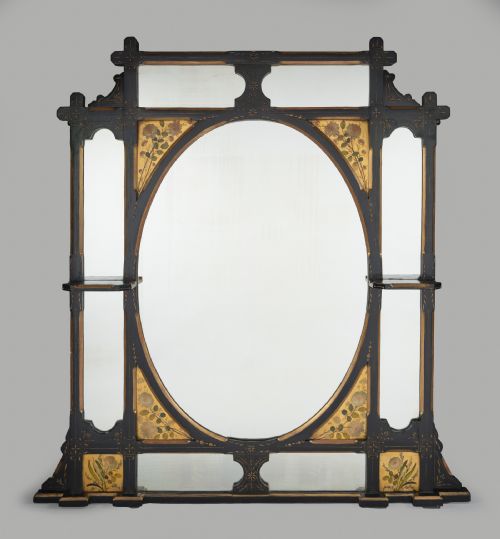
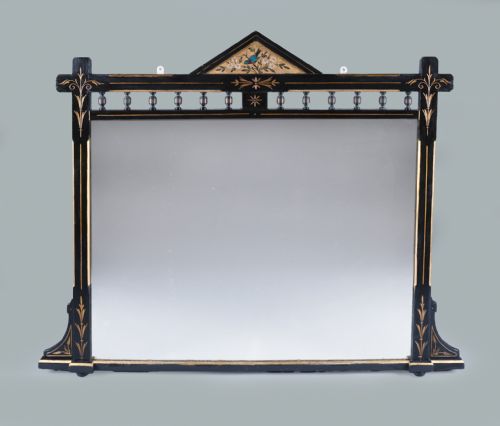
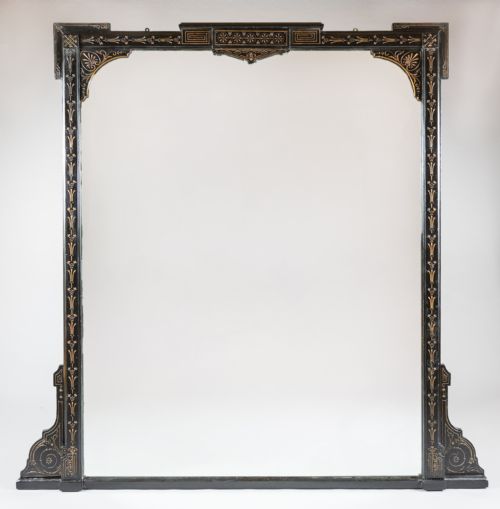
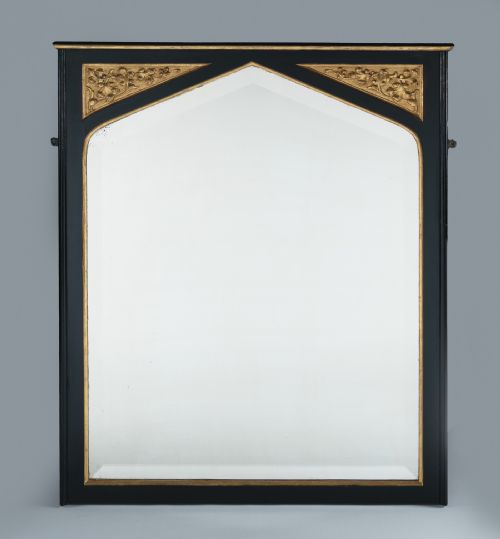
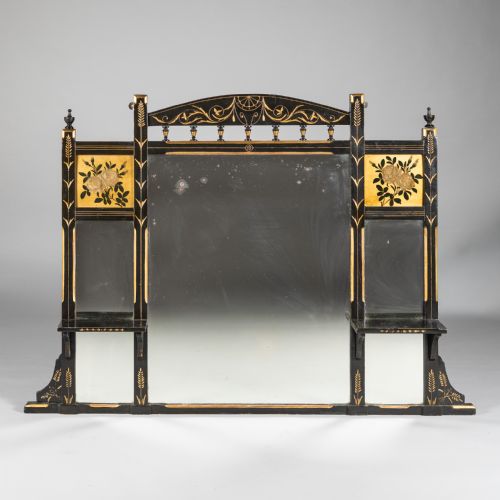
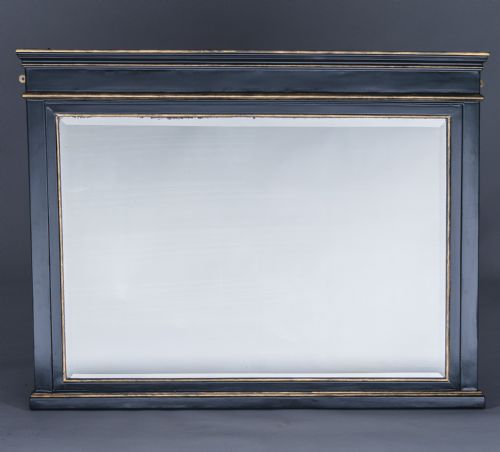
A black overmantle mirror sits comfortably above a mantelpiece, bringing architectural weight and a strong focal point to a fireplace wall. Most examples encountered here date from the nineteenth century, spanning Victorian, Aesthetic Movement, and Edwardian periods.
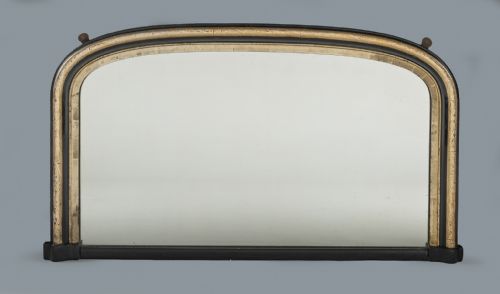
The prevalent design on this page is the large ebonised and gilt overmantle mirror, frequently accented with parcel-gilt details or painted highlights. These pieces range from simple rectangular frames to grand arch-top designs built to command high-ceilinged reception rooms.
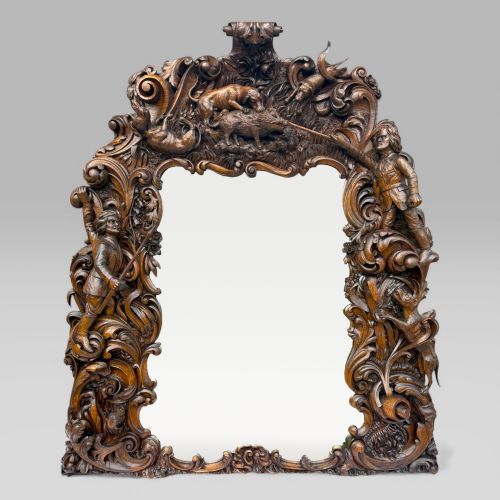
While the dark ebonised finish dominates, the selection also includes carved oak hunting lodge mirrors and Regency giltwood pieces. Buyers select these large wall mirrors to reflect light while introducing dark, grounding tones into traditional interiors.
Materials and construction
Frames are constructed from wood, gesso, and glass, utilising ebonised finishes to mimic costly ebony timber. Artisans applied successive layers of dark stain or paint to the wood before building up intricate gesso mouldings.
Gilding techniques introduce brilliant contrast through gold leaf or parcel-silvered highlights on carved details. Mirror glass is set securely within these heavy frames, often retaining original bevelling or silvering character developed over the centuries.
Black Overmantle Mirror Retail Price Guide 2026
Typical asking prices for black overmantle mirror among the pieces listed under this phrase on Sellingantiques today, from the lower quarter to the upper quarter. They describe what is for sale here now, not the wider market.
One hunting lodge mirror arrived bearing the weight of Bavarian history alongside decades of hearthside stories.
Judging quality
Quality rests in the crispness of the carved wood and gesso ornamentation, where deeper relief and sharper lines distinguish superior workshops. The application of parcel-gilt or silver highlights also reveals the maker's hand, separating meticulous gilding from flat application.
Scale and proportion drive the stature of these large frames, with substantial timber framing ensuring structural integrity across wide spans. The retention of original ebonised surfaces and authentic mirror glass preserves the integrity of the piece.
The Black Overmantle Mirror Glossary
- Ebonised wood
- Timber treated with stain, dye, or paint to imitate expensive ebony. This dark finish was especially popular during the Victorian and Aesthetic Movement eras.
- Gesso
- A plaster-like mixture applied to wood frames and carved into intricate decorative reliefs. It provides a smooth base for subsequent gilding or painting.
- Parcel-gilt
- A decorative technique where only specific raised portions or carved details of a frame are highlighted with gold leaf. This creates a striking contrast against the dark ebonised background.
- Overmantle mirror
- A large wall mirror designed specifically to hang on the wall directly above a fireplace mantel. These pieces were proportioned to match the width of the fireplace surround below.
- Arch top
- A mirror frame featuring a curved upper section. This classic nineteenth-century shape softens the heavy rectangular geometry of large wall mirrors.
Black Overmantle Mirror: Frequently Asked Questions
How do I hang a heavy overmantle mirror?
These large frames require secure fixing directly into wall studs or masonry using heavy-duty brackets. Professional installation is strongly recommended due to the substantial weight of the wood and glass.
Distributing the load evenly across the frame ensures the structure remains stable against the wall over time.
Where should I place an overmantle mirror?
Traditionally positioned directly above a fireplace, these mirrors work equally well mounted over a grand sideboard or low console table. Their generous scale allows them to anchor large wall spaces in principal reception rooms.
Placement should consider what the glass reflects from opposing windows to maximise natural light in the room.
How do I clean an antique ebonised frame?
Dust the ebonised wood gently with a soft, dry cloth to prevent accumulation without disturbing the finish. Avoid abrasive cleaning products or excess moisture that could damage delicate gesso and gilding.
Glass surfaces can be wiped using a mild glass cleaner applied to a cloth rather than sprayed directly onto the mirror.
Are these mirrors suitable for modern interiors?
The dark ebonised surfaces and clean architectural lines blend seamlessly into contemporary minimalist or industrial schemes. They provide historic contrast and dramatic vertical scale in rooms with neutral colour palettes.
Pairing a nineteenth-century frame with modern furnishings creates a balanced interior rooted in texture and craftsmanship.