

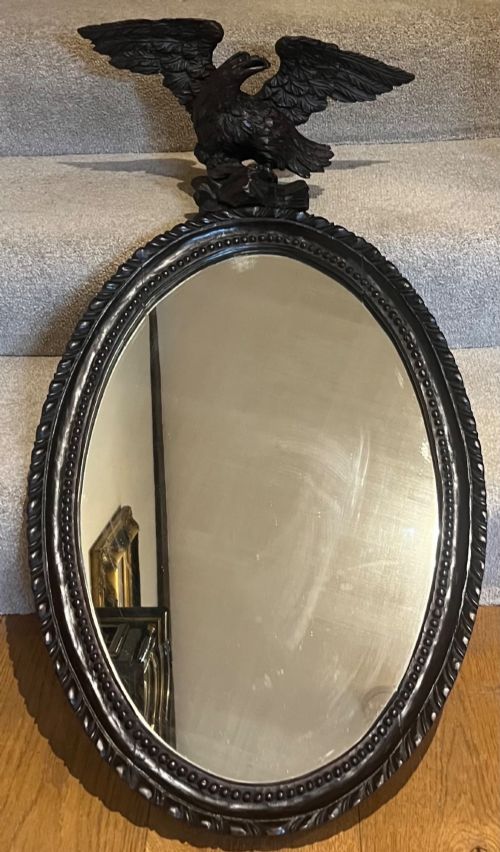


Black Oak Wall Mirror
A black oak wall mirror brings dark, figured grain and heavy relief carving to a room, offering both practical reflection and striking historical presence.
Black Oak Wall Mirror
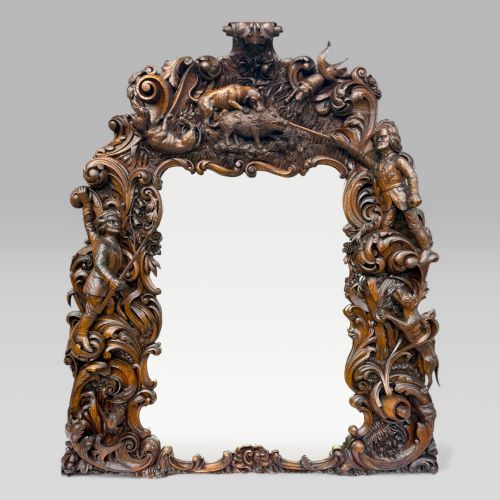
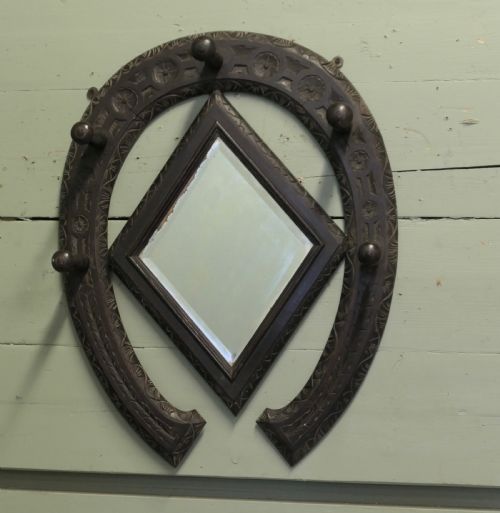
A black oak wall mirror unites heavy timber frames with reflective glass, appearing across nineteenth century and early twentieth century examples. These pieces emerge in diverse forms, from domestic wall mirrors to large hunting lodge overmantles and complex hall stands incorporating coat racks.
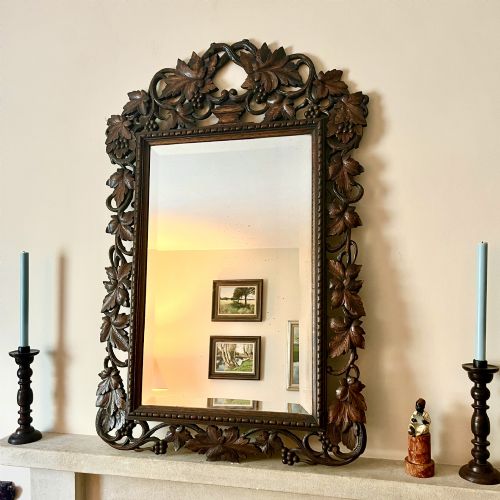
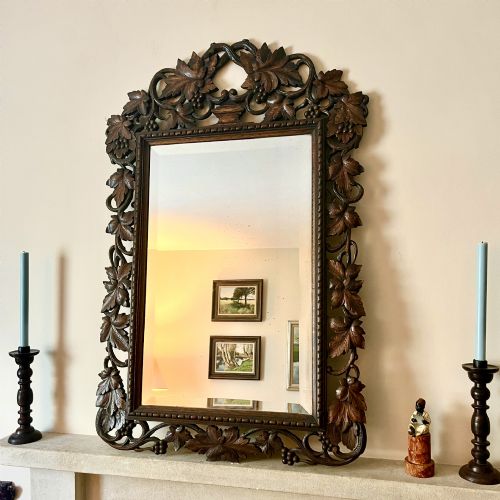
The aesthetic draws heavily on Victorian, Gothic Revival, and Black Forest traditions, often displaying deep carving of natural motifs, eagles, or serpents. Buyers encounter both restrained ebonised finishes and rich dark oak surfaces shaped by historic woodworking techniques.
Most entries on this page represent the nineteenth century, ranging from standard domestic wall hangings to architectural overmantles. Regional variations include German historicism and British Gothic styles, each employing robust timber and bevelled or flat mirror glass.
Materials and construction
Makers built these frames using solid oak and ebonised wood, frequently applying deep relief carving directly into the timber. The heavy wooden structures support fragile mirror glass, requiring sturdy corner joints and substantial backing boards to endure wall mounting.
Surface treatment relies on natural grain darkening, ebonising, or specialised staining to achieve the characteristic deep black tone. Carved details such as eagles, snakes, and natural foliage show hand-chisel work rather than mass-produced uniformity.
Assessing quality and execution
Superior examples display crisp, deeply undercut carving where animal forms or foliage retain sharp anatomical detail and expressive depth. Lesser pieces rely on shallow stamping or repetitive machine routing that lacks the vitality of hand-chiselled work.
The integrity of the timber frame and the clarity of the original mirror glass determine the overall archaeological and aesthetic value. Heavier architectural pieces, such as large hunting lodge overmantles, demand exceptional structural joinery to support their immense scale.
The Black Oak Wall Mirror Glossary
- Black Forest
- A nineteenth century style originating in the mountainous region of Germany and Switzerland, noted for naturalistic carved wood figures of animals and foliage. This tradition produced distinctive mirrors and hall stands featuring bears, eagles, and deer.
- Ebonised Wood
- Timber treated with chemical stains or dark pigments to imitate expensive ebony. Victorian cabinet makers frequently utilised this finish on oak to achieve a dramatic, sombre appearance.
- Gothic Revival
- An architectural and decorative style drawing on medieval ecclesiastical forms, prevalent during the nineteenth century. Pieces often incorporate pointed arches, tracery, and heavy iron hooks.
- Overmantle
- A large mirror designed to hang specifically above a fireplace mantelpiece. These grand items frequently span significant widths and feature architectural framing.
- Mirror Glass
- The reflective glass plate fitted within the wooden frame, which may show historic foxing or distortion. Original plates add authenticity to nineteenth century pieces.
Black Oak Wall Mirror: Frequently Asked Questions
What periods do these mirrors come from?
The available selection primarily spans the nineteenth century, including Victorian interpretations and German historicism, alongside early twentieth century pieces dated around 1920.
Craftsmen during these eras drew on Gothic Revival and Black Forest styles, ensuring each piece reflects the prevailing historicist tastes of its decade.
How were these mirrors used historically?
These pieces served practical and decorative functions in domestic interiors, ranging from hallway placement for final checks before departure to grand reception room centrepieces.
Many examples incorporated functional elements such as coat racks, tack pegs, or umbrella stands, doubling as essential entryway furniture.
How do I hang a heavy oak mirror safely?
Given the substantial weight of solid oak and glass, secure wall mounting requires heavy-duty fixings anchored directly into wall studs or solid masonry.
Professional installation is strongly advised for large overmantle mirrors and hall stands to prevent structural failure and protect the antique timber.
How do I identify Black Forest carvings?
Black Forest pieces are characterised by highly realistic, three-dimensional carvings of animals, birds, and natural woodland elements rendered in dark timber.
Common motifs include eagles, stags, and intertwined foliage, often executed with deep relief work that creates strong shadows across the frame.