




Black Marble Lamps
Black marble lamps bring striking neoclassical presence and rich historical weight into a room.
Black Marble Lamps
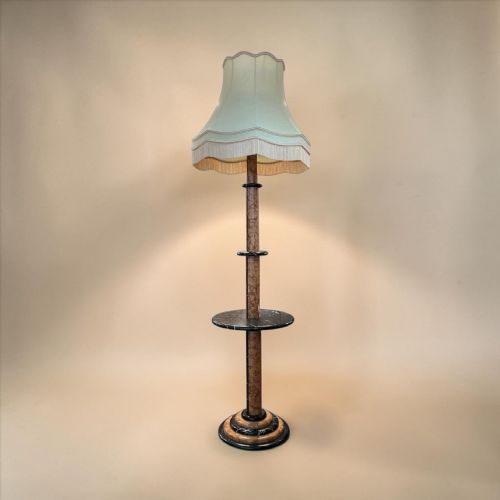
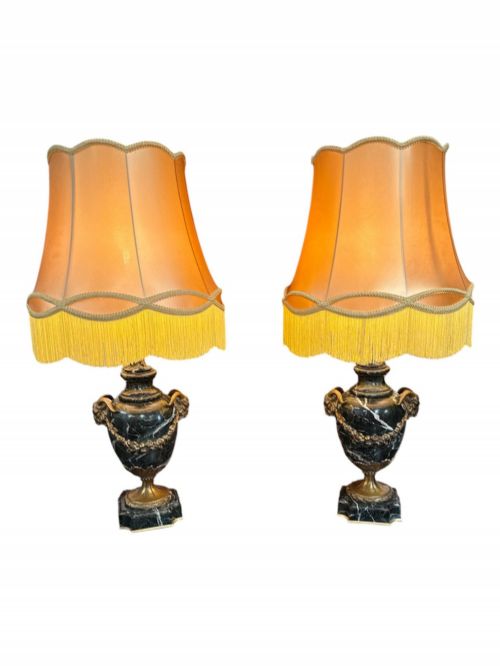
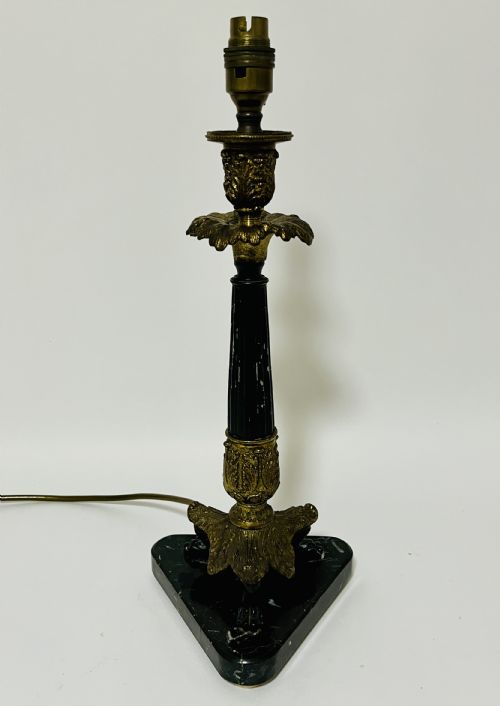
When you search for black marble lamps, you are looking at substantial lighting pieces grounded in heavy stone bases and columns. The selection ranges from French Empire and Art Deco designs to 19th-century urns and figural mounts.
The version you are most likely to meet on this page combines dark stone with contrasting metal elements like brass, bronze, or gilt. Many examples integrate lighting directly into forms that double as small tables or urns, drawing on Victorian and continental traditions.
How they were made
The physical construction relies heavily on turned or carved stone paired with cast metal components. Brass, gilt bronze, and spelter frequently mount directly onto the heavy stone plinths to support the lighting fixtures.
Makers incorporated diverse decorative accents, utilising fabric shades, wood elements, and painted toleware alongside the primary stone and metal structures. The integration of bronze and gilt highlights the classical architectural origins of these pieces.
Black Marble Lamps Retail Price Guide 2026
Typical asking prices for black marble lamps among the pieces listed under this phrase on Sellingantiques today, from the lower quarter to the upper quarter. They describe what is for sale here now, not the wider market.
An accordion-playing Pierrot made of spelter sits atop one marble base, proving that even heavy stone lighting could embrace theatrical charm.
What varies in quality
The standard of execution is judged by the depth of the stone polishing and the crispness of the metal mounts. Pieces displaying refined French Empire or Art Deco casting show superior attention to detail in the figural and architectural elements.
Proportion and material integration distinguish the finer examples from standard production. The harmony between the heavy stone base and the accompanying bronze, brass, or gilt work dictates the overall visual success of the piece.
The Black Marble Lamps Glossary
- Spelter
- A zinc alloy commonly used as a substitute for bronze in decorative figures and mounts. It often received a bronze-like finish to emulate higher-value materials.
- Toleware
- Painted or enamelled sheet metal utilised for shades and decorative canisters. This technique added durable colour and functional contrast to stone and metal lamp bodies.
- Guéridon
- A small pedestal table that French makers frequently adapted for lighting purposes. These pieces provide a stable stone surface beneath the central column.
- Empire
- A neoclassical design style marked by heavy classical motifs and military symbolism. This aesthetic heavily influenced the proportions and mountings of continental lighting.
Black Marble Lamps: Frequently Asked Questions
What periods do these lamps come from?
The pieces span the Victorian and Edwardian eras, alongside 19th-century French production and 1920 to 1930 Art Deco designs. This variety reflects changing domestic tastes across more than half a century.
Earlier examples often lean towards classical urn and figural formats, while later 20th-century items embrace streamlined geometric forms or integrated table structures.
How were these lamps used historically?
They served as prominent interior lighting sources on side tables, mantels, and dedicated guéridons within formal rooms. Many combined illumination with functional surface space for reading materials or display objects.
Some smaller configurations functioned as night lights or accent lighting in bedrooms, utilising weighted stone bases to support delicate metal figures and glass components.
How do I live with a heavy stone lamp?
Place these substantial pieces on sturdy furniture or direct floor areas where their weight provides secure stability. The dark stone tones anchor surrounding upholstery and wooden finishes effectively.
Keep the polished stone surfaces free of dust using a soft dry cloth, and protect the underlying wood furniture from heavy stone bases with appropriate padding.
How can I tell different styles apart?
Art Deco examples feature clean geometric lines and streamlined profiles typical of the 1930s. In contrast, 19th-century French Empire and Neoclassical pieces display rich gilt mounts, urn shapes, and classical figural elements.
Victorian and Edwardian versions often incorporate eclectic revival details, blending heavy stone plinths with lacquered finishes, chinoiserie touches, or patinated metal work.