





Black Framed Armchair
A black framed armchair brings dark wood and striking silhouette together, offering a seat of distinction for any room.
Black Framed Armchair
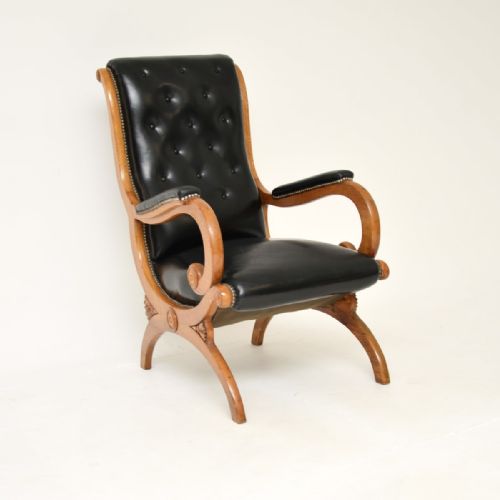
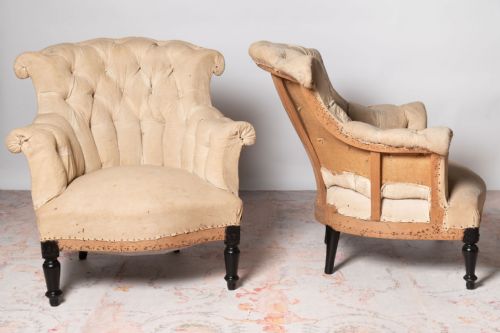
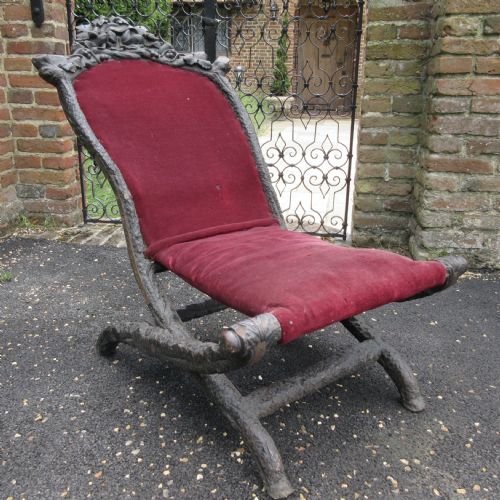
A black framed armchair encompasses dark timber and ebonised finishes spanning from the Regency period through to mid-century modern design. These seats appear in forms ranging from country house styles and library armchairs to salon pairs and reclining chairs.
The most common examples on this page date from the nineteenth century, utilising ebonised beech, ebony, and mahogany frameworks. Many feature traditional upholstery, ranging from black calico to hessian and patterned fabric.
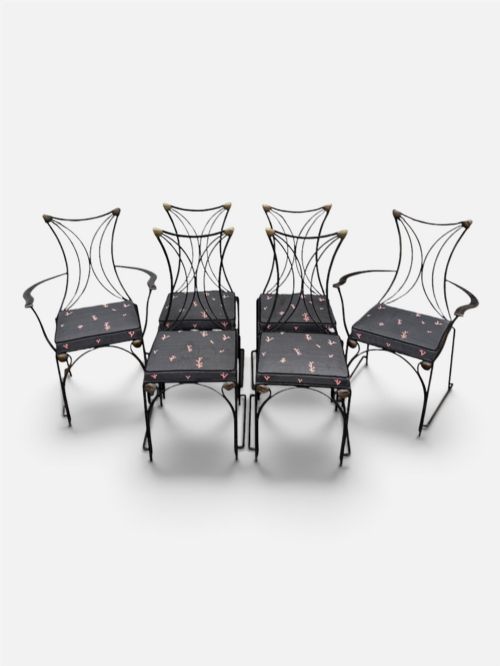
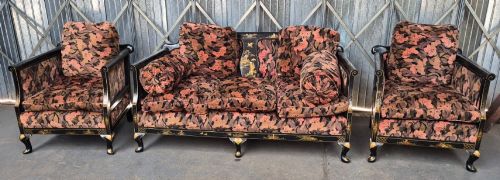
Buyers also encounter specialised seating such as folding chairs, desk chairs, tub chairs, and complete three-piece suites. Origins stretch across English, French, and Anglo-Indian traditions, reflecting diverse period revivals.
How they were made
The framework relies on dense hardwoods such as mahogany, beech, and ebony, frequently treated with an ebonised finish to achieve a deep black appearance. Some examples incorporate brass details or gilt legs to accent the dark timber.
Upholstery techniques utilise materials like hessian, fabric, and calico to pad and cover the seating structures. Carving appears on specific pieces, notably in Black Forest folding chairs and French revival frames.
Black Framed Armchair Retail Price Guide 2026
Typical asking prices for black framed armchair among the pieces listed under this phrase on Sellingantiques today, from the lower quarter to the upper quarter. They describe what is for sale here now, not the wider market.
What varies in quality
The sophistication of the timber work and carving defines the upper tier of these armchairs. Crisp detailing on ebonised or carved surfaces separates finer workshop production from simpler output.
The integrity of the original frame construction and the quality of the supporting materials, whether cane, leather, or textile upholstery, dictate the enduring stability of the piece.
The Black Framed Armchair Glossary
- Ebonised
- Wood finished to resemble ebony through staining or painting. This treatment was popular across Victorian and revival furniture.
- Bridgewater style
- A traditional armchair design characterised by low arms and a relaxed seat. These pieces prioritise comfort and domestic utility.
- Chinoiserie
- European decorative style reflecting Chinese artistic influences. This aesthetic appears on Edwardian frames within this selection.
- Tub chair
- An upholstered seat with a curved, continuous back and armrest structure. This compact form offers enclosing support.
- Louis XVI Revival
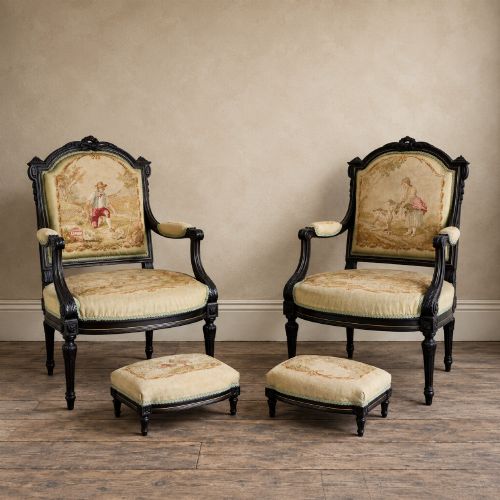
- A nineteenth-century French style drawing on neoclassical motifs. Pieces display restrained ornamentation and classical proportions.
Black Framed Armchair: Frequently Asked Questions
What periods do these armchairs come from?
The selection spans several eras, starting from the Regency period and moving through Victorian times into the early twentieth century.
Later examples include traditional 1930s designs and French mid-century pieces, showing how dark frames endured across generations.
Which woods are used for the dark frames?
Makers utilised dense timbers such as mahogany and beech, often applying an ebonised finish to darken the surface.
Solid ebony also appears on certain Regency examples, while brass fittings and gilt details sometimes accent the dark wood.
How do I identify a French revival armchair?
French revival pieces often incorporate ebonised beech frames with classical lines, sometimes accompanied by matching footstools.
Detailing like shell motifs and refined carving points towards continental workshop traditions from the nineteenth century.
Are these chairs suitable for daily use?
Many styles, including library armchairs, desk chairs, and country house seating, were built for practical seating.
Upholstery materials like leather, calico, and fabric support everyday sitting, though fragile antique frames require thoughtful placement.