
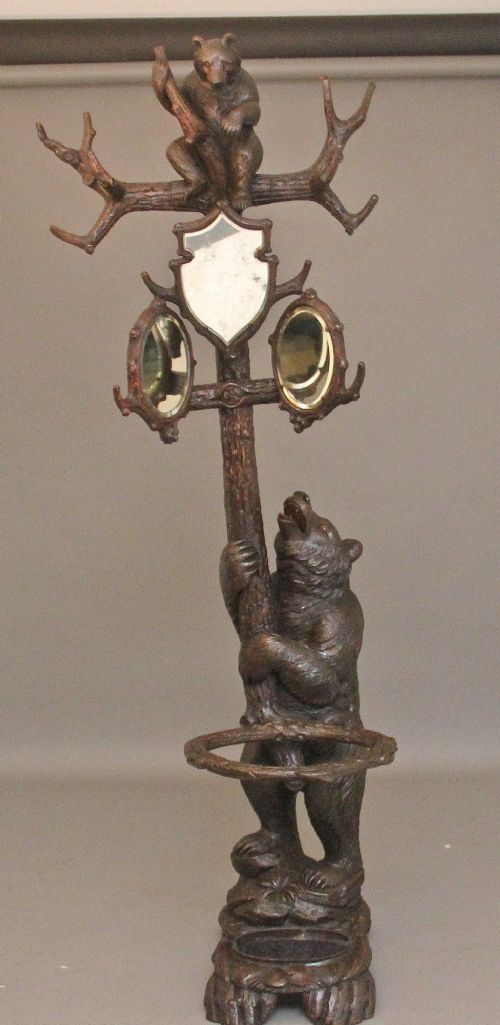
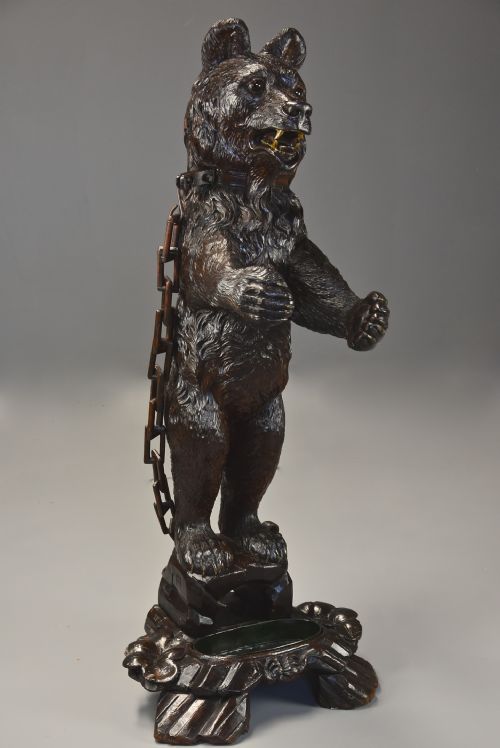


Black Forest Hall Tree
A black forest hall tree brings distinctive nineteenth-century woodcarving into the hallway, combining practical furniture with elaborate animal forms.
Black Forest Hall Tree
A black forest hall tree serves as an imposing entranceway furnishing designed for hanging coats, hats, and umbrellas. The pieces available in this category span the nineteenth and early twentieth centuries, capturing the height of Swiss and South German woodcarving traditions.
The form typically incorporates sculptural animal figures alongside hooks and stands, with bears standing as the most frequent subject. Other versions feature foxes and eagles or configurations built from deer antler, horn, and linden wood.
Makers produced these hall stands in various formats, ranging from substantial freestanding tree designs to wall-hanging hat and coat racks. The structural framework often integrates carved wood, mirrors, and metal components to hold walking sticks.
Materials and Construction
The construction relies primarily on carved wood, with linden wood and lindenwood appearing frequently due to the soft texture that suits intricate hand-carving. Craftsmen also utilised carved hardwood and oak to build the robust core structures needed to support heavy garments.
Natural materials form key structural and decorative elements, incorporating animal horns, deer antlers, and glass inset components. Metal elements often provide secure hanging points and drip trays for umbrellas beneath the carved wooden branches.
Listings feature items from the nineteenth century up to nineteen-twenty, predominantly constructed from linden wood, carved hardwood, and deer antler.
Judging Quality and Execution
Quality separates ordinary production pieces from exceptional works through the depth and anatomical precision of the carving. Master carvers rendered fur, facial expressions, and natural textures with lifelike fidelity, whereas lesser examples appear stiff and generalized.
The ambition of the composition dictates the standing of the piece, moving from standard bear stands to complex multi-animal scenes involving foxes, eagles, and integrated antler work. The integration of functional elements like mirrors and metal trays with the organic wood sculpture marks superior craftsmanship.
The Black Forest Hall Tree Glossary
- Linden wood
- A pale timber native to Europe favoured by nineteenth-century carvers for its fine grain and ease of shaping. This wood allowed artisans to achieve deep undercut details without splintering.
- Hall stand
- A piece of hallway furniture combining coat hooks, a mirror, and umbrella storage. These items greeted visitors in grand entrance halls.
- Antler
- Shed deer horn utilised structurally in specific regional wall-hanging coat racks. Artisans joined these organic materials to wooden backplates.
- Carved hardwood
- Dense timber shaped by hand chisels to withstand structural weight. Such material added necessary heft to freestanding hall trees.
Black Forest Hall Tree: Frequently Asked Questions
What is a black forest hall tree?
A black forest hall tree is a nineteenth-century hallway furnishing carved from wood to represent natural forms like trees, branches, and animals. They function as practical stands for coats, hats, and umbrellas while serving as sculptural decoration.
Most examples feature carved bears or deer elements originating from the woodcarving centres of Switzerland and Germany during the eighteen-hundreds.
How were these hall stands used?
These pieces stood in entrance halls and foyers of large homes to receive outdoor garments and walking accessories. Guests hung hats and coats on the projecting wooden branches or antler tines.
Umbrellas and sticks rested in the lower metal trays or wooden wells built into the base, keeping the hallway tidy.
What woods do makers use?
Carvers utilised linden wood extensively because the soft timber permits intricate and deep sculptural detail. Hardwoods and oak also appear in the main structural frames to provide stability.
Secondary materials include natural deer antlers, animal horns, and glass mirrors inserted into the wooden framework.
How do you date these pieces?
Dating relies on stylistic markers, construction methods, and the historical period associated with nineteenth-century European woodcarving. Pieces span from the early eighteen-hundreds through to the nineteen-twenties.
Archival examples and exhibition pieces from the mid-to-late nineteenth century often display more complex animal groupings and finer chisel work than later productions.