





Black and Gold Earrings
Black and gold earrings are striking jewels of contrasting tones that combine dark stones or enamel with warm yellow and silver settings.
Black and Gold Earrings
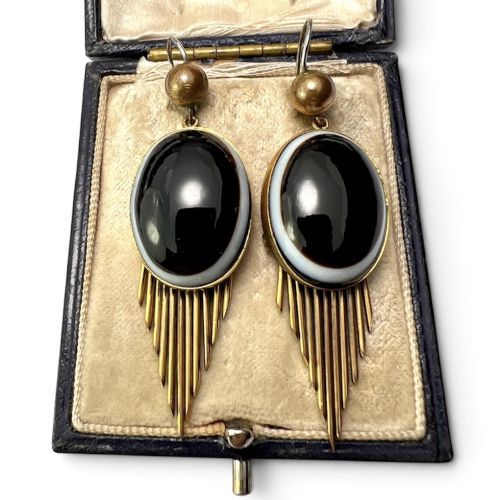
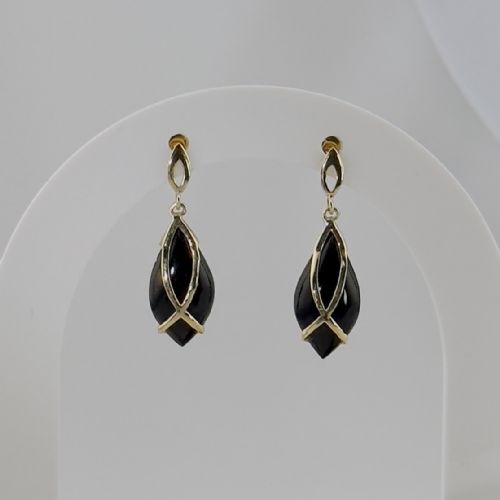
The periods represented stretch from the Georgian era through the Victorian and Edwardian periods into the mid-twentieth century, including pieces dated to eighteen-eighty, nineteen-fifty, and nineteen-sixty. Mid-century onyx teardrop and boulder opal stud earrings sit alongside earlier classical cameo tassel and micro mosaic dove earrings.
Materials and construction methods
These pieces are constructed using nine-carat, fourteen-carat, fifteen-carat, and eighteen-carat gold, often paired with silver settings particularly in Georgian and Edwardian diamond-set examples. Metals are worked into hinged mountings, foxtail tassels, and delicate wire fittings.
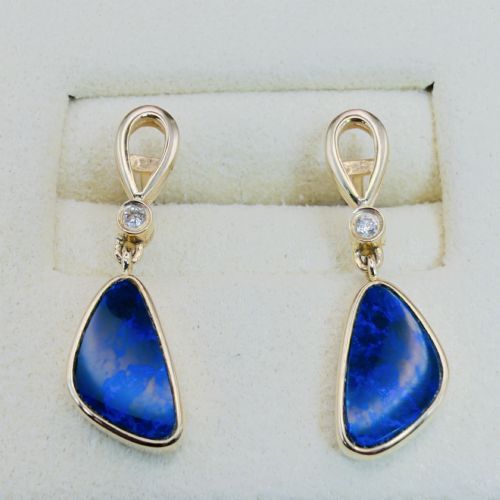
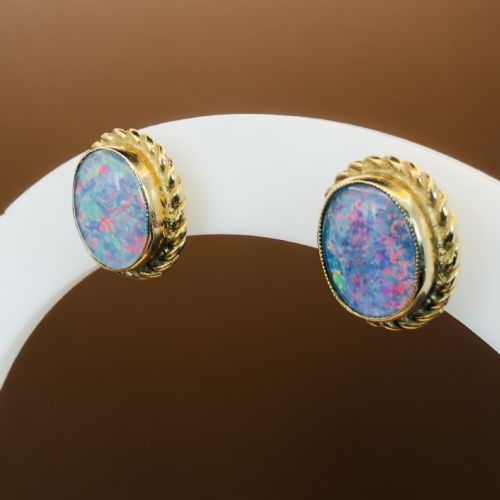
The dark elements comprise natural stones and organic materials such as black onyx, banded agate, Whitby jet, boulder opal, and black enamel, alongside black dot paste. Diamonds, pearls, and rose-cut diamonds are set as accents to punctuate the dark fields.
Black and Gold Earrings Retail Price Guide 2026
Typical asking prices for black and gold earrings among the pieces listed under this phrase on Sellingantiques today, from the lower quarter to the upper quarter. They describe what is for sale here now, not the wider market.
Listings feature nine-carat, fourteen-carat, fifteen-carat, and eighteen-carat gold, paired with silver, diamonds, onyx, opal, jet, and enamel.
Distinctions in craftsmanship
The refinement of the metalwork and the precision of the stone setting dictate the distinction between standard and superior pieces. Hand-cut stones, intricate silver-topped gold work, and delicate pavé diamond arrangements represent higher tiers of execution.
The integration of contrasting components, such as overlapping gold studs or articulated drop sections, demonstrates the level of thought given to the design and overall balance of the jewel.
The Black and Gold Earrings Glossary
- Drop earrings
- Earrings designed to hang below the earlobe rather than sit directly against it. They often incorporate articulated joints for movement.
- Whitby jet
- A dense, hard black lignite fossil found in Yorkshire, highly polished and carved into mourning and decorative jewellery during the Victorian period.
- Micro mosaic
- A technique utilising tiny coloured glass tesserae assembled to form intricate pictorial scenes. These are frequently set into gold frames.
- Banded agate
- A chalcedony quartz variety displaying natural parallel bands of contrasting colour. It offers distinctive linear patterns in jewellery.
Black and Gold Earrings: Frequently Asked Questions
What periods do these earrings cover?
The selection spans several historical periods, starting from the Georgian era and moving through Victorian and Edwardian times. Mid-century examples from the nineteen-fifties and nineteen-sixties also appear.
Each era brings distinct material choices and construction styles, from Whitby jet and micro mosaic to clean mid-century onyx and opal designs.
What materials create the black colour?
Makers used a variety of natural stones and applied finishes to achieve dark tones. These include black onyx, banded agate, Whitby jet, boulder opal, and black enamel.
In earlier pieces, black dot paste or dark foil backs provide the contrasting dark element against gold and silver settings.
Are these earrings for pierced ears?
The listings include drop studs and hinged earrings with specific wire fittings or post elements. Many are structured for standard pierced ears.
Buyers should inspect the individual descriptions for details regarding wires, posts, and hanging mechanisms.
How do Victorian and Edwardian pairs differ?
Victorian examples often feature substantive carved materials like jet, elaborate micro mosaics, or classical revival motifs such as tassels and doves. Edwardian pieces tend to lean towards lighter silver and gold combinations set with diamonds and black enamel.
Both periods utilise high-carat gold and silver, but the overall aesthetic shifts from the heavier, symbolic Victorian designs to refined Edwardian lace-like work.