


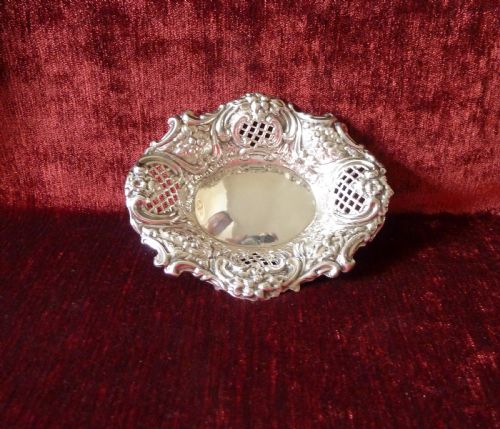


Birmingham Silver Rings
Birmingham silver rings bring together regional assay craftsmanship and domestic utility across the Victorian, Edwardian, and George V periods.
Birmingham Silver Rings
When you search for birmingham silver rings, you are looking at small personal silver objects and tableware originating from the Midlands assay office. The selection spans distinct forms, most commonly featuring napkin rings, trinket boxes, and pill ring boxes from the late nineteenth and early twentieth centuries. These pieces reflect the steady output of Birmingham silversmiths working through the Victorian, Edwardian, and George V eras.
Napkin rings appear frequently on this page, often found as single items, pairs, or matched sets bearing clear hallmarks. Alongside them, small pill boxes and dressing table ring boxes lined with velvet or silk provide alternative examples of Birmingham silversmithing. These items demonstrate how domestic silver served both utilitarian and decorative purposes in homes of the period.
Materials and Construction
The objects recorded here rely primarily on sterling silver formed into functional shapes through traditional metalworking techniques. Artisans utilised hammering methods on certain pieces, leaving visible texture across the surface of the silver. Hallmarks stamped directly into the metal record the assay office, standard of silver, and date letter for the year of manufacture.
Internal components of the boxes incorporate soft textiles such as velvet, silk, and fabric to cushion small items. These materials line the interiors of pill boxes and trinket containers, contrasting with the rigid exterior metalwork. The combination of solid sterling silver and fitted textile linings defines the physical construction of these pieces.
Birmingham Silver Rings Retail Price Guide 2026
Typical asking prices for birmingham silver rings among the pieces listed under this phrase on Sellingantiques today, from the lower quarter to the upper quarter. They describe what is for sale here now, not the wider market.
Listings feature sterling silver objects from Birmingham assay sources across Victorian, Edwardian, Arts and Crafts, and Art Deco styles.
Judging Quality and Execution
Quality in these items rests upon the clarity of the Birmingham hallmarks and the crispness of any applied surface decoration. Pieces displaying well-preserved hammered textures or precise maker's marks demonstrate higher standard execution by identifiable silversmiths. The crispness of hinges and the secure closure of lids on boxes further separate standard output from finer examples.
The condition of internal textile linings, including velvet and silk inserts within dressing table boxes, influences the overall integrity of the piece. Intact original linings combined with unpolished or lightly worn exterior silver represent the better-preserved survivals from the period. Conversely, heavy wear to the silver or replacement interior fabrics alter the original state of the object.
Albert Edward Jones·C.T. Burrows and Sons·Henry Williamson Ltd
The Birmingham Silver Rings Glossary
- Hallmark
- A series of official marks stamped onto precious metals to guarantee the purity of the silver, the assay office of origin, and the year of manufacture. Birmingham pieces display the anchor symbol alongside other identifying punches.
- Sterling Silver
- An alloy of silver containing ninety-two point five percent pure silver and seven point five percent other metals, usually copper, chosen for durability in tableware and small objects.
- Napkin Ring
- A small ring used to identify individual table napkins at meals, frequently produced in matched sets or pairs by silversmiths during the Victorian and George V periods.
- Pill Ring Box
- A small container designed for holding pills or keepsakes, often featuring a hinged lid and an interior lined with velvet or silk fabric.
- Trinket Box
- A small container utilised on dressing tables to store rings, pins, and personal ornaments, typically manufactured in sterling silver with textile interiors.
Birmingham Silver Rings: Frequently Asked Questions
What periods do these silver items date from?
The pieces span the Victorian, Edwardian, and George V eras, covering dates from the late nineteenth century through to the 1930s.
Official hallmarks stamped on each item provide specific year letters to confirm the exact period of production.
How were dressing table ring boxes used?
These small boxes served as secure storage on dressing tables for rings, pins, and other small personal jewellery items.
Their interior linings of velvet or silk protected delicate pieces from scratching against the solid sterling silver exterior.
Are napkin rings found as sets?
Napkin rings appear as individual pieces as well as in matched pairs and larger sets numbering up to six items.
Matching sets typically share identical decorative styles and hallmarks corresponding to the same year of manufacture.
How do I identify a Birmingham hallmark?
Birmingham silver bears an anchor symbol amongst the stamped punches to indicate the origin assay office.
Additional marks include the lion passating for sterling silver alongside maker's initials and date letters.