






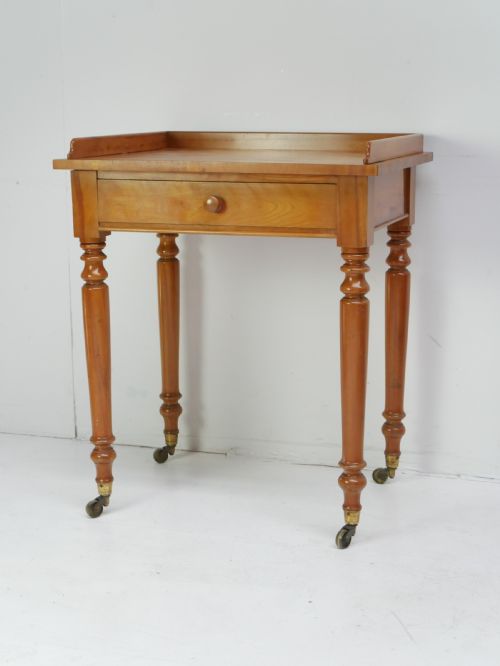

Birch Bedroom Drawers
Birch bedroom drawers bring pale, figured timber and robust nineteenth-century proportions to domestic spaces.
Birch Bedroom Drawers
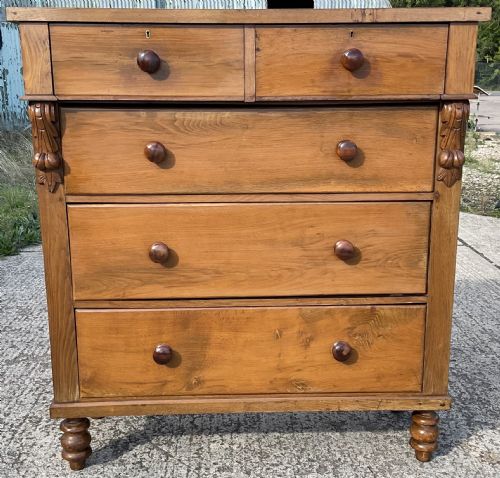
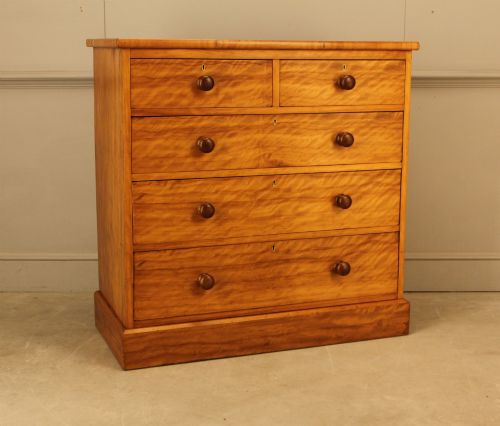
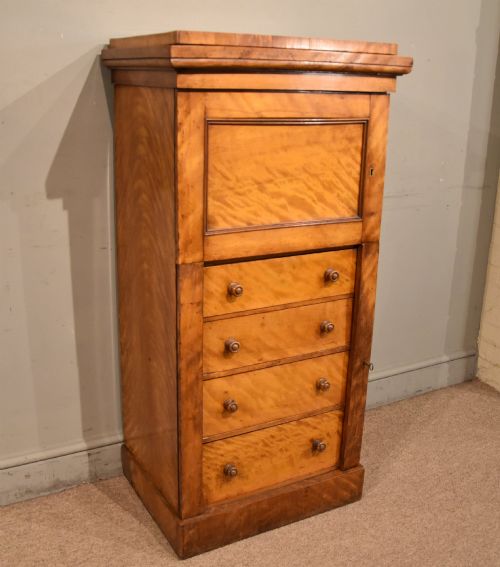
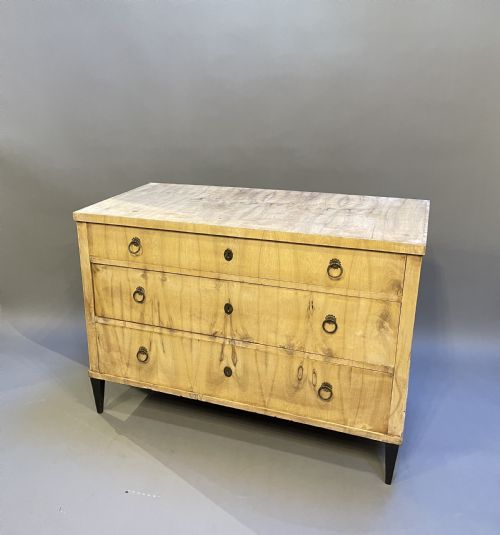
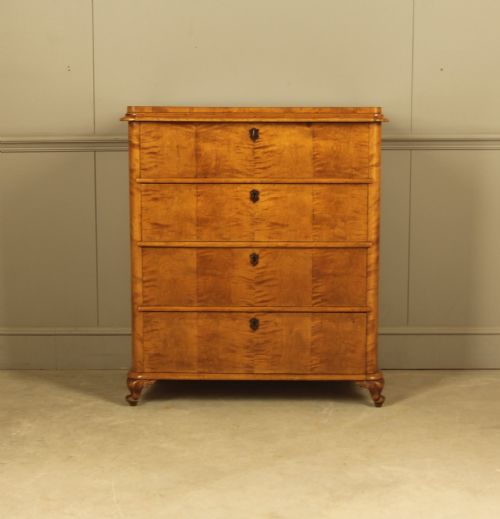
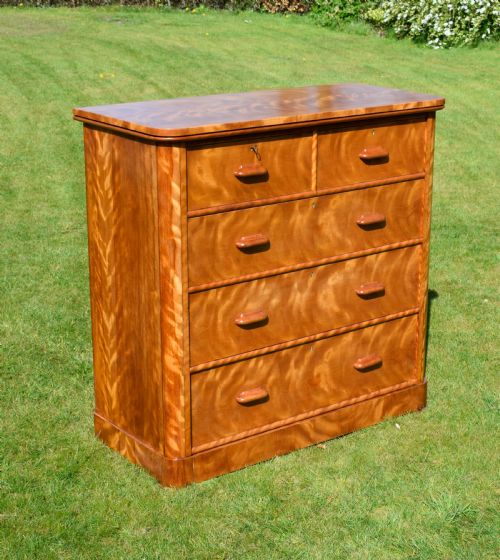
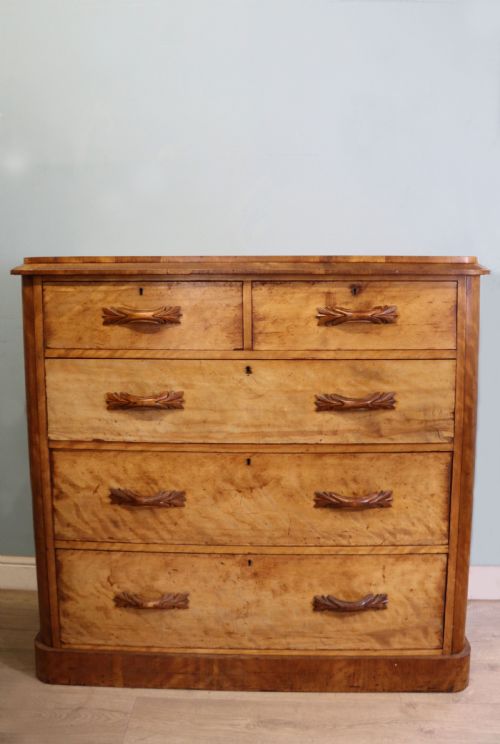
When you search for birch bedroom drawers, you encounter a selection of nineteenth-century case furniture built primarily from birch, satin birch, flame birch, tiger birch, and stained birch. The forms span chests of drawers, Wellington chests, commodes, linen presses, dressing tables, and bedside tables.
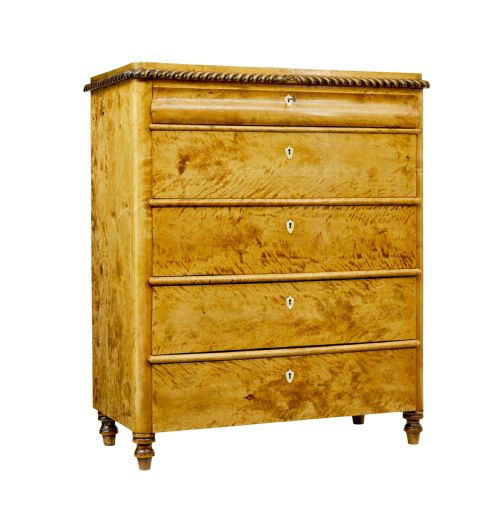
The dominant aesthetic draws heavily on Victorian workshops and Scandinavian Biedermeier or Empire Revival traditions. These pieces range from simple English domestic chests to highly figured continental commodes featuring distinctive grain patterns and warm honey tones.
How they were made
Cabinetmakers utilised solid timbers alongside carefully selected veneers applied to supportive secondary woods such as pine. Surface enrichment relied on natural grain figures like flame and tiger patterns, occasionally enhanced with ebonised wood details or brass hardware.
Structural integrity depended on traditional joinery methods suited to heavy case pieces, while secondary elements incorporate glass mirrors, metal brackets, and candle sconces where dressing tables or linen presses demand functional fittings.
Birch Bedroom Drawers Retail Price Guide 2026
Typical asking prices for birch bedroom drawers among the pieces listed under this phrase on Sellingantiques today, from the lower quarter to the upper quarter. They describe what is for sale here now, not the wider market.
Certain nineteenth-century dressing chests preserve original candle sconces, ready for the evening illumination of a Victorian dressing room.
What varies in quality
The degree of figuring in the timber largely dictates the visual impact, distinguishing plain stained surfaces from intensely patterned flame or tiger birch veneers. Selection of high-grade logs and symmetrical veneer matching separate standard utility items from more ambitious cabinet work.
Design complexity and regional origin also influence standing, particularly where continental Scandinavian workshops employ carved elements, column supports, or specialised caddy tops alongside fitted interior compartments.
Holland & Sons
The Birch Bedroom Drawers Glossary
- Satin birch
- A term denoting birch timber with a lustrous, light-reflecting grain finish. It appears frequently on nineteenth-century Victorian and continental case pieces.
- Tiger birch
- Timber displaying strong, contrasting horizontal stripes reminiscent of tiger markings. It provides a highly dramatic surface on nineteenth-century chests.
- Wellington chest
- A tall, narrow chest of drawers secured by a hinged locking stile on one side. This form occurs in Victorian satin birch.
- Caddy top
- A raised, stepped border framing the top surface of a chest of drawers. It adds a distinct architectural profile to nineteenth-century pieces.
Birch Bedroom Drawers: Frequently Asked Questions
How do I clean satin birch furniture?
Dust surfaces regularly with a soft, dry cloth to prevent grit accumulation on the polished timber. Avoid modern silicone sprays that build up residue and dull the natural grain.
Feed the wood periodically with appropriate wax to nourish the finish and maintain the characteristic pale lustre of nineteenth-century pieces.
Are these drawers suitable for daily use?
Nineteenth-century case furniture is robustly constructed from solid timber and sturdy veneers, making it entirely practical for contemporary storage needs. Drawers operate on traditional wooden runners that benefit from occasional waxing for smooth sliding.
Care should be taken to maintain stable room humidity to protect antique timber and veneer from extreme environmental shifts.
What is the difference between Victorian and Biedermeier styles?
Victorian pieces often emphasise upright practicality, utility, and domestic English forms such as Wellington chests and linen presses. They utilise stained or satin birch within traditional nineteenth-century room layouts.
Scandinavian Biedermeier focuses heavily on unadorned surfaces that showcase dramatic flame or tiger birch veneers, often paired with architectural columns and commode proportions.
How can I date a birch chest?
Dating relies on construction methods, drawer linings, hardware styles, and overall stylistic markers recorded across the nineteenth century. Details like ebonised accents, brass handles, and specific regional revival traits help narrow the period of manufacture.
Comparative analysis of documented nineteenth-century workshop practices provides the primary framework for establishing an approximate decade.