





Billiards and Snooker
These billiards and snooker pieces are the functional furnishings and room accessories that equipped traditional games rooms.
Billiards and Snooker
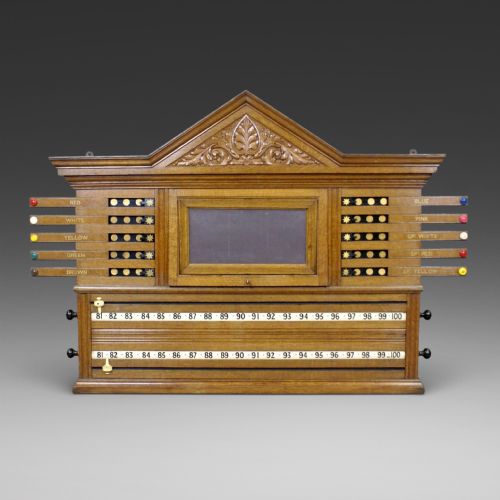
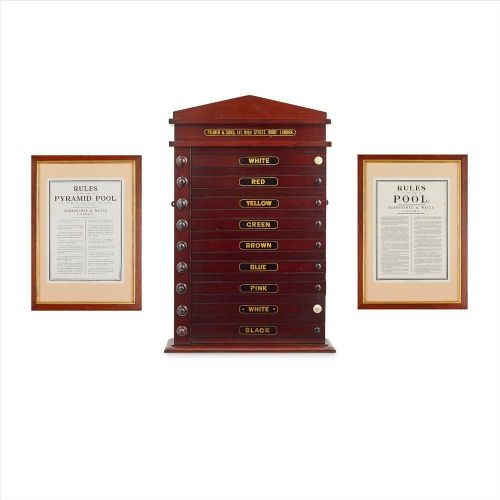
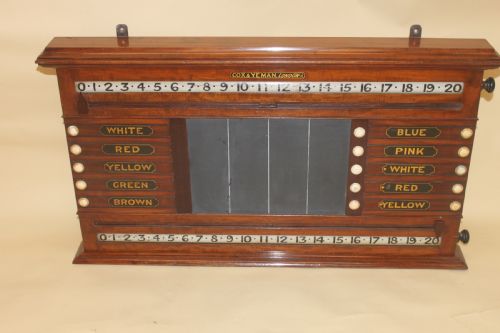
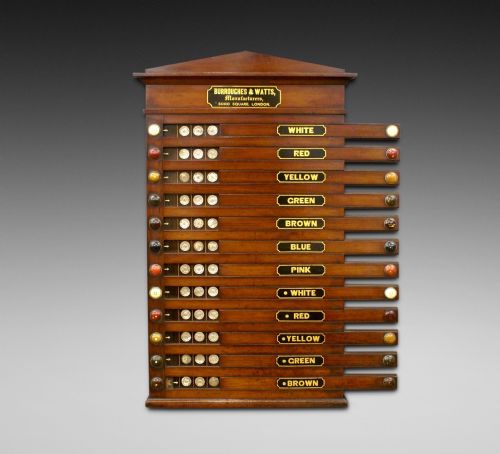
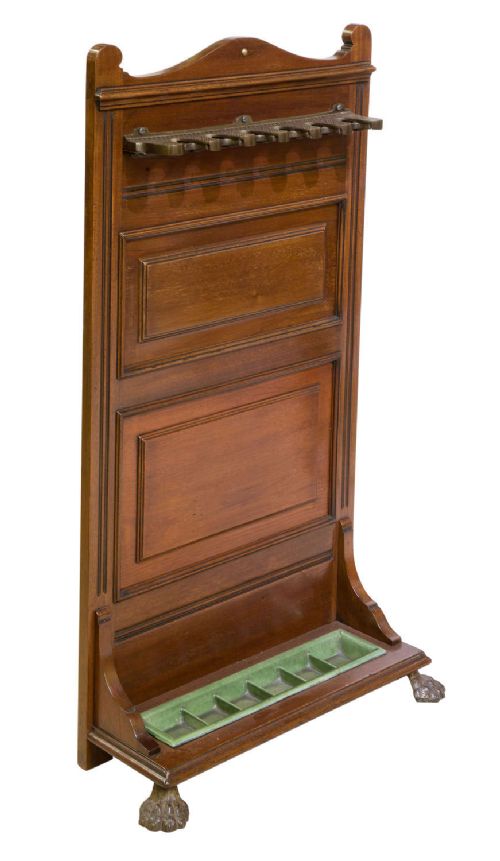
Billiards and snooker items comprise the scoreboards, cue stands and ceiling lights built to serve the game. Most pieces encountered here stem from the nineteenth century and the Victorian and Edwardian periods.
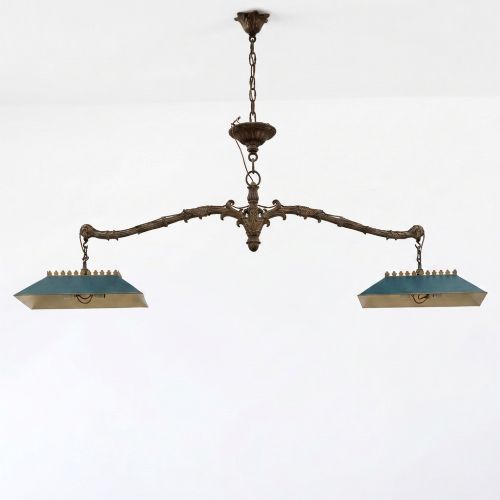
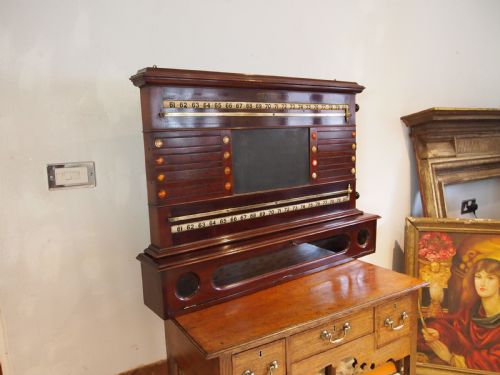
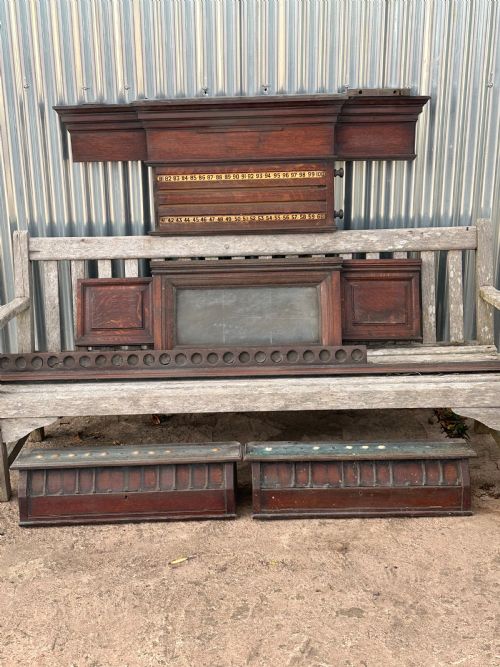
Scoreboards form the largest group, ranging from simple mahogany boards to large oak and walnut score cabinets. Lighting fixtures include multi-branch ceiling lights designed to illuminate the table evenly.
Accessories also extend to framed paintings and engravings depicting matches. Oak and mahogany dominate the woodwork, while brass and glass appear on the lighting fixtures.
Materials and technique
Makers utilised dense timbers like mahogany, oak and English walnut to construct durable scoreboards and cue stands. These woods were often polished to display a deep grain.
Brass fittings and mechanical slides operated the scoring markers within the wooden frames. Slate, bone and glass supplemented the construction of related accessories and games room items.
Billiards and Snooker Retail Price Guide 2026
Typical asking prices for billiards and snooker among the pieces listed under this phrase on Sellingantiques today, from the lower quarter to the upper quarter. They describe what is for sale here now, not the wider market.
The listings span the 18th, 19th and 20th centuries, featuring materials such as mahogany, oak, brass, slate and glass.
Distinctions in quality
Quality rests in the solidity of the timber and the precision of the mechanical scoring mechanisms. Maker attribution also separates standard boards from works by established specialists.
The complexity of the cabinetry, from plain mahogany panels to large score cabinets with decorative details, marks the difference in tier. Surviving original brass fixtures and undamaged glass shades elevate individual pieces.
Orme and Sons Manchester·Thurston and Co of London·Cox and Yeman London·Burroughes and Watts
The Billiards and Snooker Glossary
- Scoreboard
- A wall-mounted wooden board featuring sliding markers or dials to keep tally during a game. These units often accommodate billiards, snooker and pool on a single board.
- Cue stand
- A floor-standing or wall-mounted rack designed to hold cue sticks upright when not in use. They prevent warping and organise room accessories.
- Billiard light
- A multi-branch hanging fixture designed to cast uniform light across the playing surface. Brass and glass are typical components of these period fittings.
- Stipple engraving
- A printmaking technique using dots to create tonal gradations, seen in framed works depicting matches. These prints were frequently hand-coloured.
Billiards and Snooker: Frequently Asked Questions
How do I mount a heavy scoreboard?
Heavy mahogany and oak scoreboards require secure fixing into wall studs or masonry using appropriate wall anchors. Because these cabinets carry significant weight from timber and internal mechanisms, professional installation is advised.
Ensure the wall can bear the load before hanging, and check that the sliding markers operate freely once the board is level on the wall.
Can these ceiling lights take modern bulbs?
Many nineteenth-century multi-branch billiard lights have been adapted to accept standard modern electrical fittings by professional electricians. You should consult a qualified electrician to inspect the internal wiring before installation.
Original brass and glass components can usually be retained while updating the internal electrical safety standards for domestic use.
How do I care for the mahogany woodwork?
Maintain the timber by dusting regularly with a soft, dry cloth and applying a traditional beeswax polish sparingly to nourish the grain. Avoid placing scoreboards or cue stands in direct sunlight or near heat sources to prevent the wood from splitting.
Keep brass markers and hinges clean using appropriate metal cleaners that will not stain the surrounding wood surface.
How are Victorian and Edwardian boards told apart?
Victorian scoreboards often display heavier proportions and rich mahogany or walnut construction with traditional mechanical markers. Edwardian pieces frequently utilise paler oak and cleaner, less ornate architectural lines.
Maker signatures and patent dates marked on the brass sliding components also help determine the specific period of manufacture.