



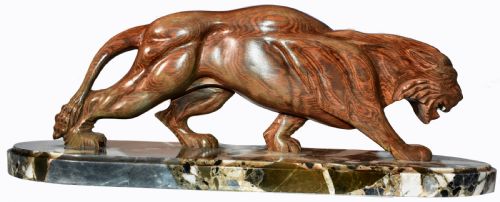
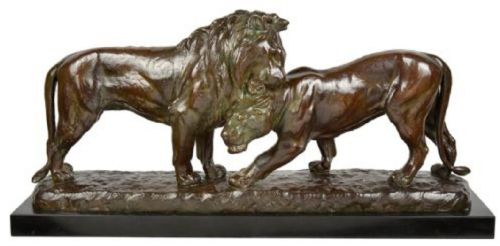


Big Cat Figurine
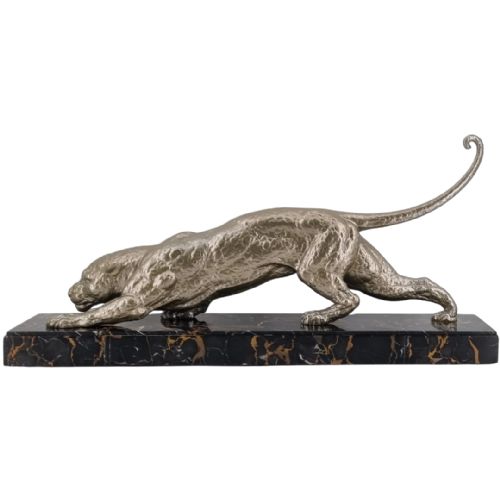
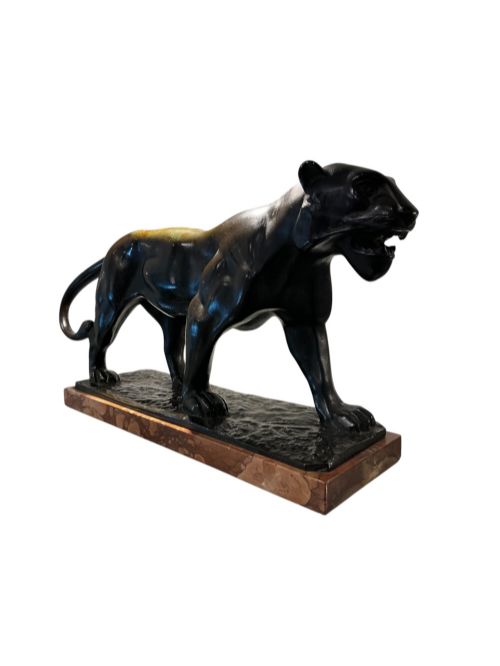
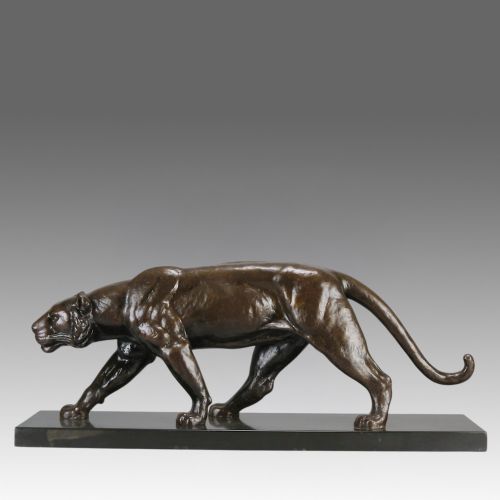
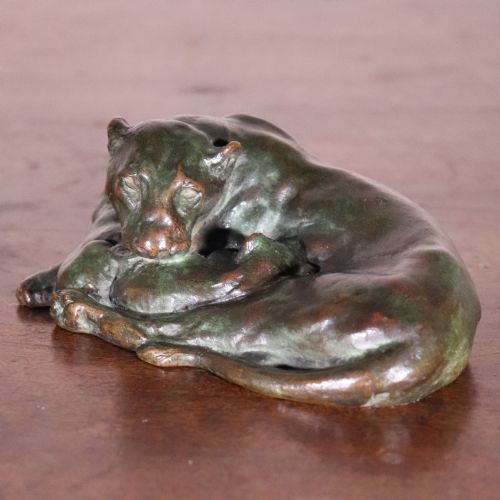
A big cat figurine captures the raw power of predators through the focused lens of nineteenth and twentieth-century animalier art.
Big Cat Figurine
A big cat figurine brings the tension of the wild into domestic interiors through studies of panthers, leopards, lions, tigers, and jaguars. These sculptural pieces range from nineteenth-century academic bronzes to sleek Art Deco interpretations.
Most examples encountered here embody the French Animalier movement or later twentieth-century decorative styles. Sculptures frequently capture prowling, hunting, or resting beasts with intense physical realism.
Makers utilised various scales, from cabinet-sized porcelain figures to substantial bronze groups mounted on heavy marble bases. Collectors choose these objects for their dynamic portrayal of feline musculature and movement.
Assessing Quality and Execution
Quality rests entirely upon anatomical conviction and the crispness of the casting or carving. Superior examples capture the underlying skeletal structure and tension of the animal rather than relying on generic feline shapes.
The integration of the figure with its base distinguishes superior work. Heavy marble plinths should be properly fitted to the bronze paws, and patination should show subtle tonal variation rather than flat, uniform paint.
Signed editions by documented artists command greater attention due to the precision of their modelling. The vitality of the pose separates routine decorative items from masterworks of animal sculpture.
Big Cat Figurine Retail Price Guide 2026
Typical asking prices for big cat figurine among the pieces listed under this phrase on Sellingantiques today, from the lower quarter to the upper quarter. They describe what is for sale here now, not the wider market.
Even the most ferocious bronze panther is frequently accompanied by a remarkably cooperative python beneath its paws.
D. H. Chiparus·Alexandre Ouline·Georges Gardet·Clovis Masson·Michel Decoux·E. Drouot
The Big Cat Figurine Glossary
- Animalier
- A nineteenth-century artistic movement dedicated to the realistic portrayal of animals, particularly predators in motion. Practitioners mastered dynamic anatomy through close study of captive and wild specimens.
- Cold-painted bronze
- A technique where bronze objects are painted with cold enamel colours rather than fired in a kiln. This delicate finish requires careful preservation to prevent chipping.
- Patination
- The chemical or natural coloration applied to the surface of bronze sculpture over time. It enhances depth and simulates natural weathering.
- Spelter
- A zinc alloy frequently utilised as a cost-effective alternative to bronze in decorative figures. It is often given a bronze-toned finish to mimic more expensive metalwork.
- Portoro marble
- A distinct black limestone featuring vibrant gold and yellow veins. It is commonly selected for high-end sculptural bases.
Big Cat Figurine: Frequently Asked Questions
What is an animalier sculpture?
An animalier sculpture focuses specifically on the naturalistic portrayal of animals, particularly wild beasts in dynamic poses. These works gained immense popularity in Europe during the nineteenth century.
Artists studied live animals in menageries to ensure anatomical accuracy in bronze, marble, and porcelain.
How do I care for bronze figures?
Bronze requires minimal maintenance beyond gentle dusting with a soft, dry cloth. Avoid using chemical polishes that can strip the original patina.
Keep pieces away from direct moisture and extreme temperature fluctuations to preserve the metal surface.
What distinguishes Art Deco big cats?
Art Deco big cat figures emphasise stylised geometry, sleek lines, and dramatic postures over strict zoological realism. Panthers and jaguars were especially favoured for their association with modern luxury and speed.
These pieces often pair dark patinated metal with contrasting marble bases.
Are these figures solid bronze?
Many sculptures are cast using the traditional lost-wax method, resulting in hollow bronze forms with substantial wall thickness. Some larger figures utilise spelter or other metal alloys.
Weight, surface temperature, and interior examination help determine the primary metal used.