



Biedermeier Sofa
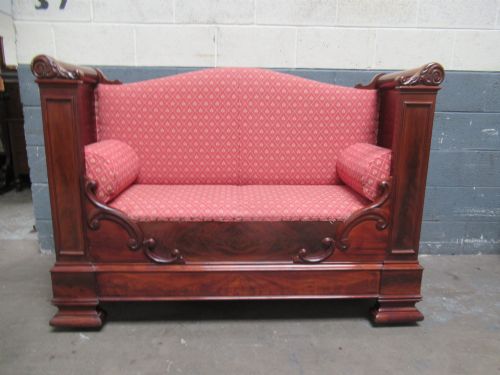
A biedermeier sofa is a practical and restrained seating form from the nineteenth century, prized for clean architectural lines and figured wood grain.
Biedermeier Sofa
A biedermeier sofa represents the domestic seating of the nineteenth century, favouring comfort and visual warmth over elaborate decoration. When you search for a biedermeier sofa, you meet pieces built with scrolled arms, straight frames, and exposed timber of striking grain.
The versions most commonly found on this page include nineteenth century birch and burr birch settees, alongside Swedish empire revival examples. These seating forms range from compact two-seater benches to larger three-seater sofas reflecting continental neoclassical tastes.
Makers shaped these frames from native and imported timbers, pairing structural integrity with figured veneers. The resulting settees sit comfortably in modern or traditional interiors without dominating a room.
How they were made
Cabinetmakers built these frames using solid hardwoods such as mahogany and birch as a structural carcass. They applied thin veneers of burr birch, flame mahogany, or figured walnut to the primary surfaces to create dramatic patterns across the wood.
Upholstery fabric was secured over traditional stuffing and webbing to provide firm support for daily use. Surviving pieces sometimes retain brass mounts or ebonised wood details that accent the pale or dark timber tones.
Biedermeier Sofa Retail Price Guide 2026
Typical asking prices for biedermeier sofa among the pieces listed under this phrase on Sellingantiques today, from the lower quarter to the upper quarter. They describe what is for sale here now, not the wider market.
Burr birch veneers were matched so carefully across long sofa frames that the wood grain appears to ripple like running water.
What varies in quality
The selection of veneer determines much of the visual impact, with symmetrical burr patterns marking out superior examples. Poorer specimens rely on plain timber without the careful book-matching seen on finer frames.
Joinery execution and the crispness of carved or applied mouldings separate standard workshop output from exceptional pieces. The retention of original surface finishes and harmonious proportions further distinguishes the range.
The Biedermeier Sofa Glossary
- Burr birch
- A woody growth on the birch tree that produces swirling, intricate grain patterns when sliced into veneer. Cabinetmakers prized this timber for its decorative surface movement.
- Flame mahogany
- A veneer cut from the fork of the mahogany tree where the branch meets the trunk. It creates a distinctive flickering flame pattern across flat panels.
- Ebonised wood
- Timber treated with a dark stain or finish to imitate ebony. It provided sharp contrast against lighter birch or mahogany frames.
- Ormolu
- Gilt bronze mounts applied to furniture for decorative accent. These metal details catch the light and complement the polished timber surfaces.
Biedermeier Sofa: Frequently Asked Questions
What is a biedermeier sofa?
A biedermeier sofa is a nineteenth-century seating form originating in central Europe, characterised by clean lines and figured wood veneers.
These pieces prioritise domestic comfort and architectural simplicity over the heavy ornamentation of earlier neoclassical styles.
How do I date a biedermeier sofa?
Dating relies on timber choice, construction methods, and stylistic markers recorded across the nineteenth century. Birch and burr birch veneers often point towards Scandinavian or continental workshops.
Later empire revival pieces from the twentieth century reproduce these earlier nineteenth-century proportions and aesthetic details.
How were these sofas used?
These settees served as primary seating in nineteenth-century parlours and drawing rooms. Their sturdy construction supported daily domestic life.
They function equally well today as living room seating or statement pieces in hallways and studies.
How do I care for wood veneer?
Protect the thin timber surfaces from direct sunlight and excessive moisture to prevent fading and veneer lifting. Regular dusting with a soft cloth preserves the polished finish.
Avoid placing these sofas near direct heat sources that can dry out the historic timber.