






Beige Woven Tapestry Panel
A beige woven tapestry panel brings warmth and historical texture to a room, offering centuries of textile artistry for interior display.
Beige Woven Tapestry Panel
A beige woven tapestry panel is a textile artwork designed for wall display, encompassing formats from wall hangings to framed panels and fragments. When you search for a beige woven tapestry panel, you encounter works spanning from the sixteenth century through to the twentieth century.
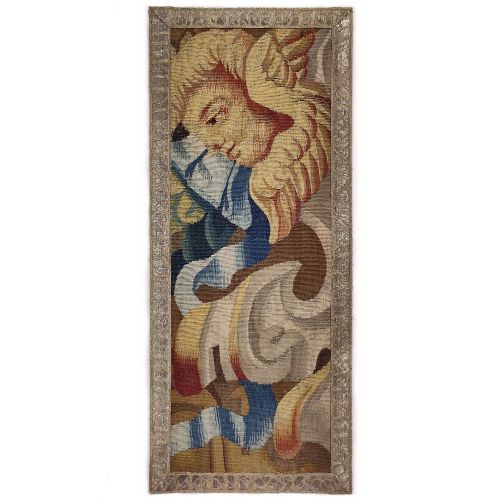
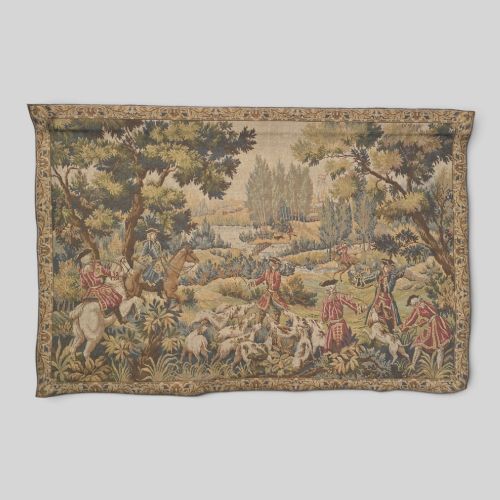
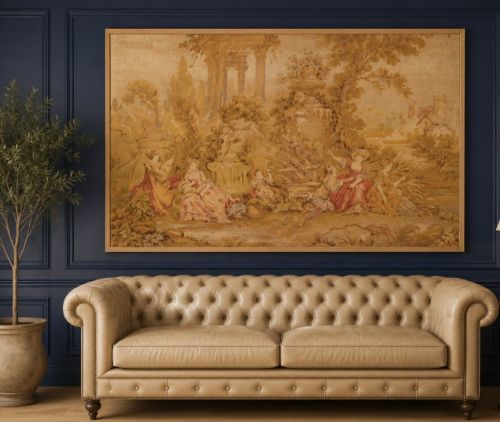
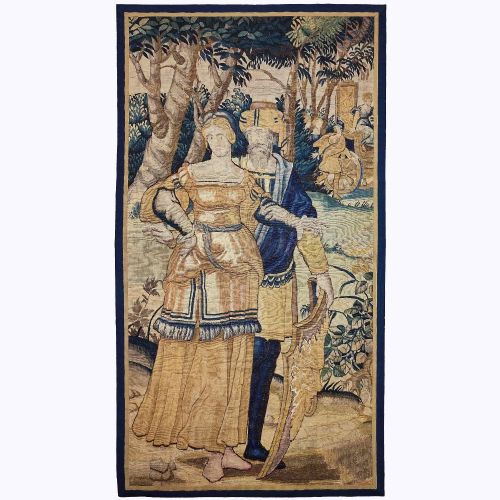
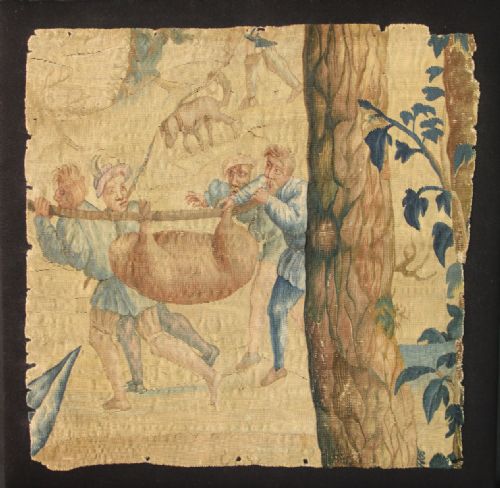
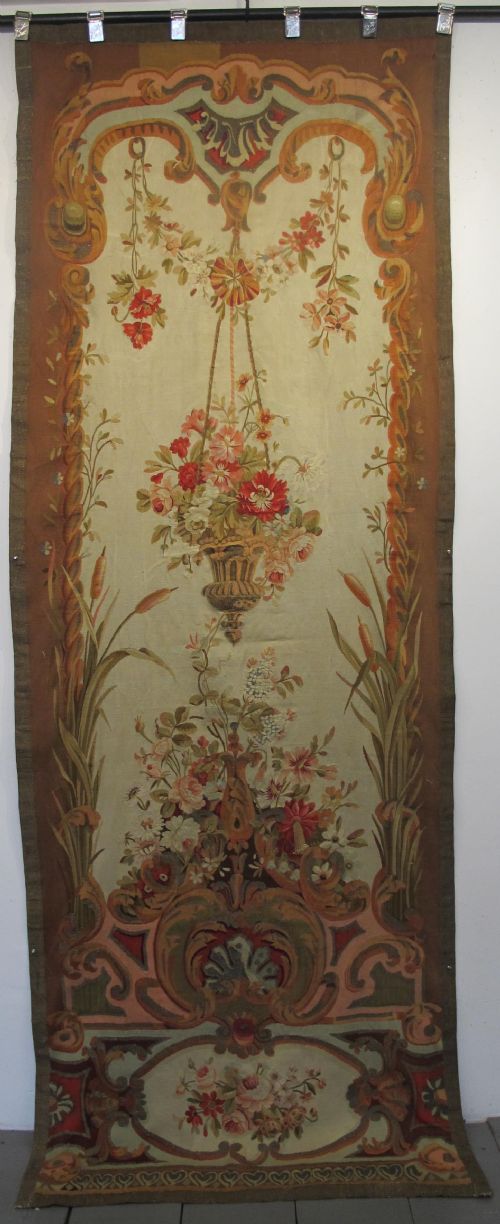
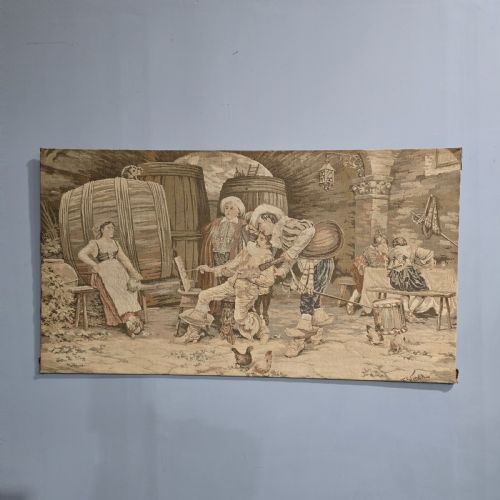
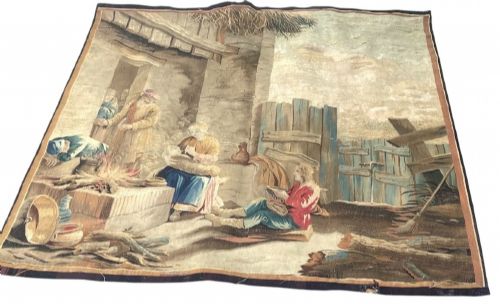
The selections on this page range from grand eighteenth-century French framed works and seventeenth-century Flemish fragments to late nineteenth-century long panels and pastoral scenes. These textiles often depict classical figures, pastoral landscapes, or architectural views within muted colour palettes.
French and Flemish origins dominate the selection, with regional workshops producing both large room-scale hangings and narrow entre-fenêtre panels intended for spaces between windows. Pieces appear either as flexible wall hangings or mounted securely on timber frames, wood boards, or walnut frames.
How they were made
The primary construction relies on woven textile techniques using materials such as wool, silk, and cotton to build complex pictorial surfaces by hand. Artisans interlaced warp and weft threads to create dense, durable pictorial planes with varied textural depth.
Many panels incorporate structural supports, ranging from simple timber frames and wood boards to polished walnut frames. Some later nineteenth-century and early twentieth-century examples integrate framing elements that protect the fragile textile edges and facilitate wall mounting.
Beige Woven Tapestry Panel Retail Price Guide 2026
Typical asking prices for beige woven tapestry panel among the pieces listed under this phrase on Sellingantiques today, from the lower quarter to the upper quarter. They describe what is for sale here now, not the wider market.
The listings span from the sixteenth century to the twentieth century, utilising wool, silk, cotton, timber frames, wood boards, and walnut.
What varies in quality
Quality in a beige woven tapestry panel rests on the density of the weave and the fineness of the materials, particularly the balance of wool and silk threads. Earlier Flemish and seventeenth-century works often display intricate pictorial composition and sophisticated dye stability compared to later productions.
The integrity of the textile substrate and the presence of original framing, such as walnut or timber board mounts, influence the character of each piece. Fragmentary survivals demonstrate the historical weight of early workshops, while complete nineteenth-century panels offer decorative scale and unified composition.
The Beige Woven Tapestry Panel Glossary
- Warp
- The vertical threads held in tension on a loom before the horizontal weft is passed through. This forms the foundational grid of the textile.
- Weft
- The horizontal threads passed back and forth through the warp to build up the visible pattern and image. Silk and wool yarns provide colour and texture in these areas.
- Entre-fenetre
- A tall, narrow tapestry panel specifically proportioned to hang on the wall space between two windows. These pieces often feature vertical motifs such as urns or cascading foliage.
- Fragment
- A surviving portion of a larger historical tapestry, often mounted or preserved as an independent artwork. These pieces retain the workmanship of earlier centuries despite the loss of the original composition.
Beige Woven Tapestry Panel: Frequently Asked Questions
How do I hang a tapestry panel?
Tapestry panels require careful support to distribute weight evenly across the textile without straining the fibres. Many pieces arrive mounted on wood boards or walnut frames designed for direct wall hanging.
Flexible textile hangings typically use a hidden sleeve or discreet mounting loops attached to the upper reverse edge. A sturdy rod or flat batten distributes the tension evenly along the top edge of the fabric.
How do I clean an antique tapestry?
Antique tapestries require gentle maintenance to preserve fragile historical fibres like silk and wool. Regular light surface dusting with a soft brush or low-suction vacuum through a protective mesh screen prevents particulate buildup.
Water or chemical cleaning agents risk damaging the dyed threads and historical structure of the weave. Professional textile conservators should handle any deep cleaning or structural stabilisation.
How do I tell an older tapestry from a newer one?
Distinguishing periods involves examining the weave density, material wear patterns, and stylistic conventions of the imagery. Sixteenth and seventeenth-century Flemish pieces often exhibit complex hand-weaving techniques and distinct colour palettes derived from natural dyes.
Nineteenth-century and later French revivals frequently display more uniform mechanical consistency and standardised decorative motifs. Framing materials, such as heavy walnut or simple timber boards, also provide clues regarding the period of mounting.