





Beige Turkish Rug
These beige turkish rug examples are woven floor coverings and cushions from Anatolia, offering muted tones and traditional motifs that ground a room.
Beige Turkish Rug
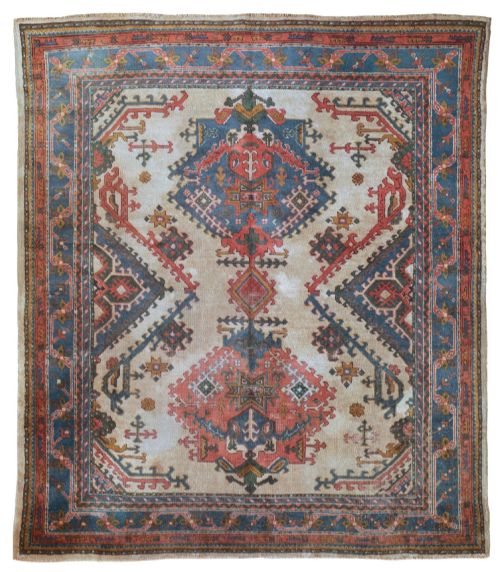
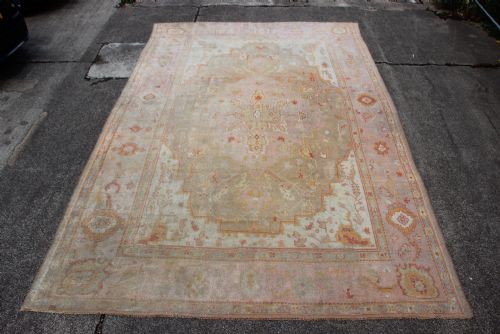
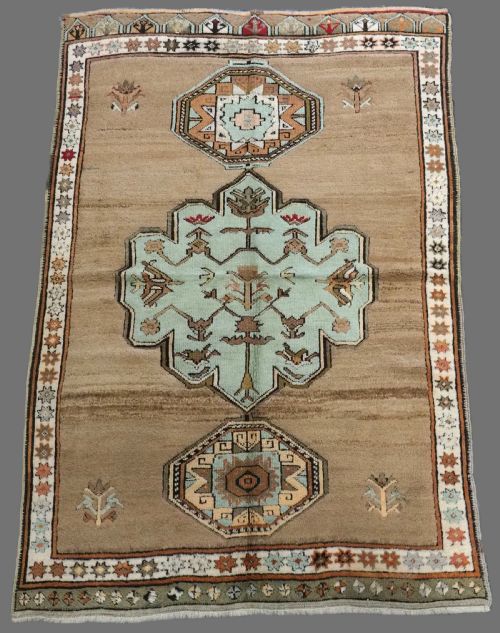
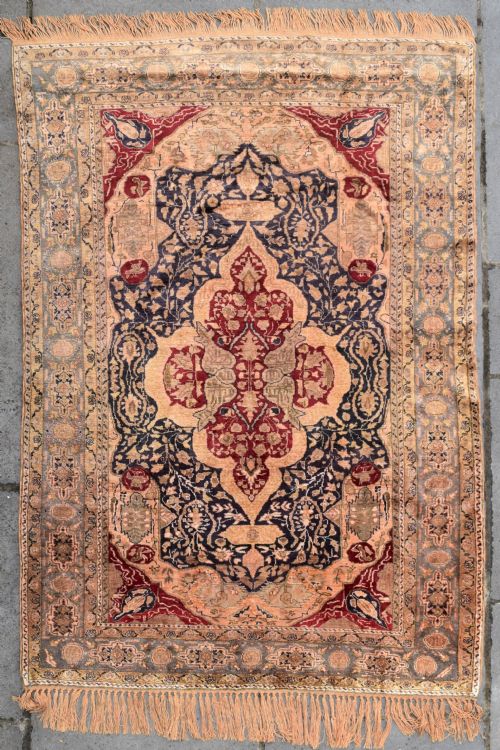
A beige turkish rug encompasses floor coverings and cushions originating from Anatolia, spanning large carpets down to smaller village formats and scatter rugs. These pieces often feature soft palettes with pale grounds, anchored by traditional motifs inherited from regional weaving centres.
The versions most commonly met on this page include antique Oushak carpets and village rugs from the late nineteenth and early twentieth centuries. Alongside these large formats, the selection contains smaller Anatolian tribal rugs and Kilim cushions utilising traditional flatweave and knotted techniques.
Materials and construction
Makers constructed these rugs using natural textile fibres, predominantly wool, cotton, and occasionally silk or camel wool. Hand-spun wool forms the durable foundation for many village and tribal carpets, while finer pieces incorporate floss silk.
Weavers employed hand-knotted pile and flatweave techniques on vertical looms. The inclusion of materials like camel wool and hand-spun wool contributes to the varied tactile qualities seen across these Anatolian pieces.
Beige Turkish Rug Retail Price Guide 2026
Typical asking prices for beige turkish rug among the pieces listed under this phrase on Sellingantiques today, from the lower quarter to the upper quarter. They describe what is for sale here now, not the wider market.
Listings span periods from 1850 to 1920, featuring wool, cotton, silk, camel wool, and floss silk.
Indicators of quality
Quality in these textiles rests upon the fineness of the knotting and the integrity of the materials employed. Hand-spun wool and genuine silk denote a higher grade of production than standard commercial equivalents.
The sophistication of the palette and the execution of regional designs further separate standard pieces from finer works. Oushak and Kayseri productions demonstrate distinct levels of refinement in their handling of traditional motifs.
The Beige Turkish Rug Glossary
- Kilim
- A flatwoven carpet or cushion produced without a pile. These pieces rely on interlocking warp and weft threads to create geometric patterns.
- Oushak
- A significant carpet-weaving centre in western Anatolia known for large-scale floral designs and muted, pale colourways. Carpets from this town often feature finely knotted wool on a cotton foundation.
- Prayer rug
- A textile featuring a Mihrab design indicating the direction of Mecca, typically used for personal devotion. Kayseri and Panderma workshops frequently produced these smaller formats.
- Anatolian
- Pertaining to the region of Asia Minor that constitutes modern Turkey. This geographical term covers diverse tribal and village weaving traditions.
- Floss silk
- Unspun or loosely twisted silk fibres used to impart a distinct sheen to the pile. Rugs from Sivas frequently utilise this material for enhanced light reflection.
Beige Turkish Rug: Frequently Asked Questions
How do I clean a fragile antique rug?
Surface dust should be removed gently using a soft brush rather than a heavy vacuum cleaner. Professional textile conservators should handle any wet cleaning to protect natural dyes and delicate fibres.
Water exposure must be kept to a minimum to prevent dye bleeding or foundation distortion. Regular rotation helps distribute foot traffic evenly across the surface.
Can I place these rugs in heavy traffic areas?
Sturdier wool carpets handle moderate foot traffic well when supported by a quality underlay. Silk and delicate flatweaves suit low-traffic rooms or decorative wall placement.
Placing fragile pieces away from direct sunlight preserves the muted natural tones of the wool and silk.
How are different regional styles identified?
Regional attributions rely on specific structural characteristics, knot counts, and characteristic motifs. Oushak designs typically display large-scale floral patterns, while village rugs from Ghiordes or Konya exhibit geometric field arrangements.
Examining the selvedges and fringe construction provides additional clues regarding the specific Anatolian district of origin.
What underlay works best on hardwood floors?
A breathable, natural rubber or felt underlay prevents slipping while protecting the wool and cotton foundation from abrasion. Avoid plastic-backed grips that trap moisture and damage delicate antique fibres.
The underlay should be slightly smaller than the rug perimeter to allow the edges to rest flat.