
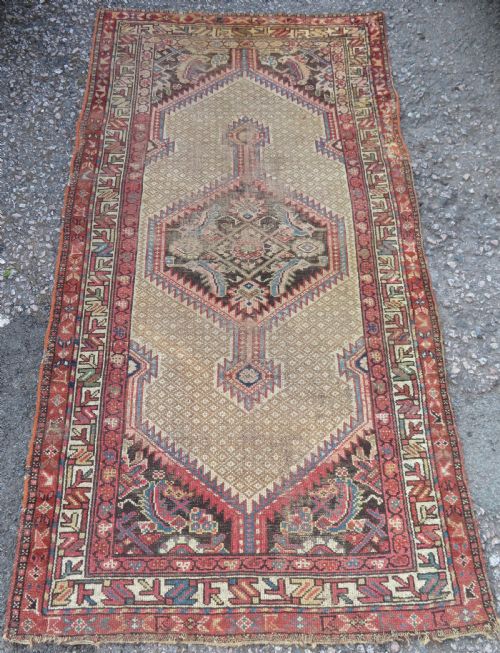
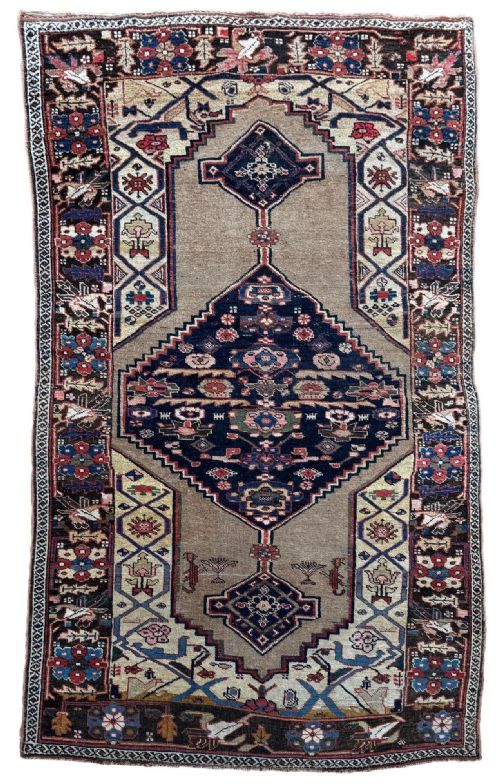
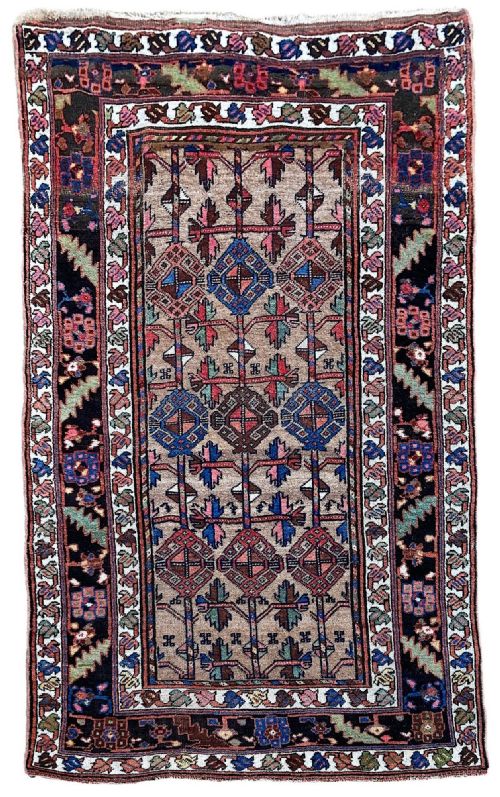


Beige Tribal Rug Runner
These beige tribal rug runner examples bring warmth and pattern to long corridors through nomadic weaving traditions.
Beige Tribal Rug Runner
A beige tribal rug runner provides a practical, elongated path of wool and cotton underfoot, woven in village and nomadic traditions across Persia, Anatolia, and the Caucasus. These pieces span from the late nineteenth century through to the early decades of the twentieth century, bringing historic pattern into narrow spaces.
The format most frequently encountered in this selection is the narrow runner, often originating from regions like Serab or the broader Kurdish and Baluch tribal territories. They combine muted, neutral camel hair and wool grounds with geometric motifs designed for hallways and galleries.
How they were made
These textiles rely principally on hand-spun wool and cotton foundations, paired with camel hair for natural, undyed neutral tones. Weavers knotted these materials by hand on upright looms, producing durable structures suited to heavy domestic traffic.
The construction utilises traditional village techniques from Persian and Anatolian workshops, where dense knotting secures the pile against wear. Natural dyes create the soft, muted colours characteristic of these older tribal pieces.
Nomadic weavers often included small intentional irregularities in their geometric patterns to ward off the evil eye.
What varies in quality
The fineness of the weave and the consistency of the hand-spun wool distinguish the more accomplished examples from standard village work. A tighter knot count allows sharper geometric definition within the tribal designs.
The purity and preservation of the camel ground or natural dye palette also elevate a piece. Greater integrity in the wool foundation indicates superior original materials and careful preservation over the decades.
The Beige Tribal Rug Runner Glossary
- Camel Hair
- Undyed fibre taken from camels, frequently used in tribal rugs to provide a soft, durable beige ground. It ages with a characteristic warm patina.
- Runner
- A long, narrow carpet format specifically proportioned for hallways, corridors, and staircases. These pieces balance decorative impact with spatial practicality.
- Hand-Spun Wool
- Wool yarn processed manually on a drop spindle or spinning wheel rather than by industrial machinery. This method creates subtle variations in thickness and texture along the pile.
- Tribal Rug
- A textile woven by nomadic or village communities rather than urban manufactories. The designs typically rely on traditional geometric memory patterns rather than printed cartoons.
Beige Tribal Rug Runner: Frequently Asked Questions
Where should I place a runner?
These narrow formats work best in hallways, corridors, and entrance spaces where length is required without overwhelming the floor area.
Ensure you use a suitable underlay to keep the piece stable on hard flooring and to protect the antique foundation from friction.
How do I clean an antique runner?
Gentle surface brushing and occasional professional specialist cleaning are best for maintaining the wool pile.
Avoid soaking the cotton foundation or using harsh chemical detergents that can strip the natural dyes from the wool.
Are these runners durable for hallways?
The dense hand-knotted wool construction makes these historical textiles surprisingly resilient for everyday domestic use.
Placing them in moderate-traffic areas allows you to enjoy the historic craftsmanship while preventing excessive local wear.
How do I identify a Serab runner?
Serab pieces frequently feature camel hair grounds in soft beige tones paired with understated geometric lattice or medallion designs.
Their characteristic narrow proportions and fine village weave set them apart from wider carpet formats.