





Beech Windsor Kitchen Chairs
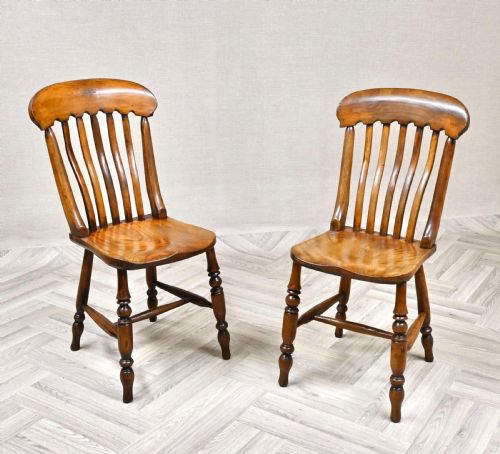
Beech windsor kitchen chairs are sturdy country seating built for domestic service, combining turned wooden spindles with sculpted wooden seats.
Beech Windsor Kitchen Chairs
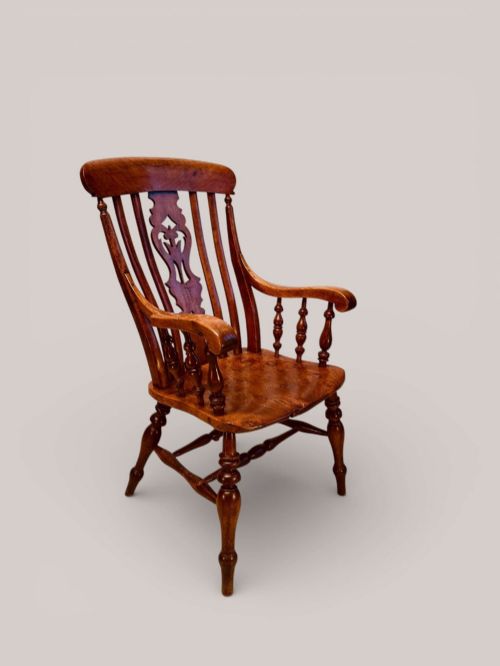
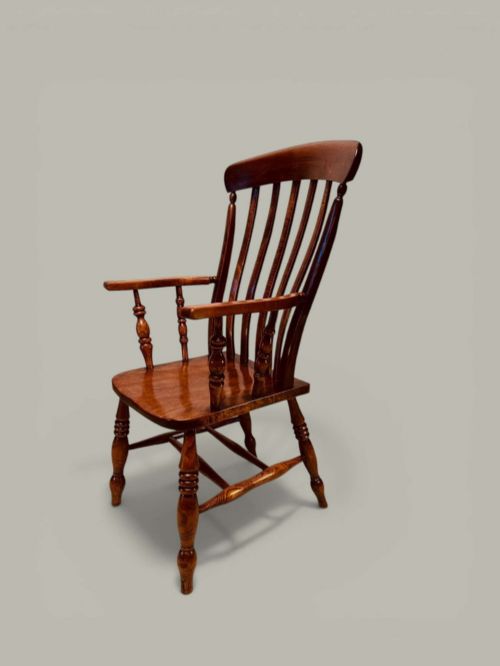
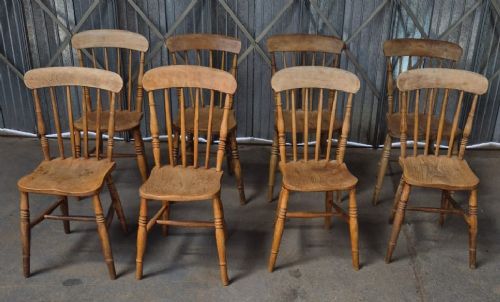
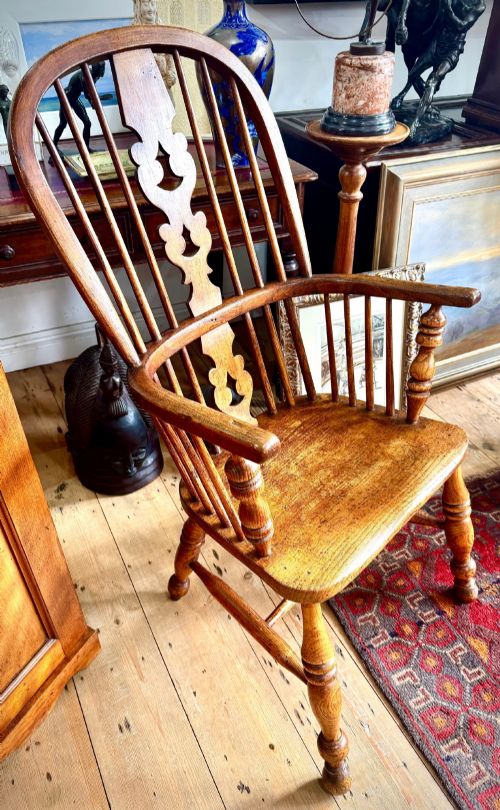
Beech windsor kitchen chairs appear primarily in nineteenth-century and early twentieth-century formats, ranging from single items to large dining sets. These pieces include both standard dining chairs and larger carver armchairs designed for daily domestic use.
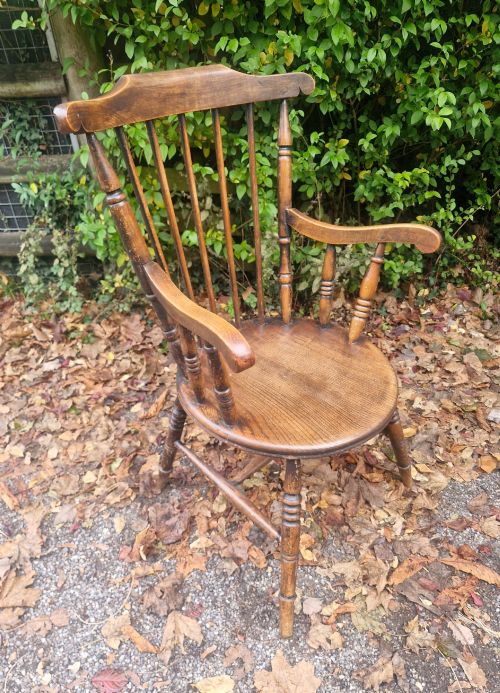
The regional styles vary from Thames Valley stick backs to wheel backs, lath backs, and Oxford bar backs. Most examples pair a beech framework with a shaped elm seat for stability and comfort.
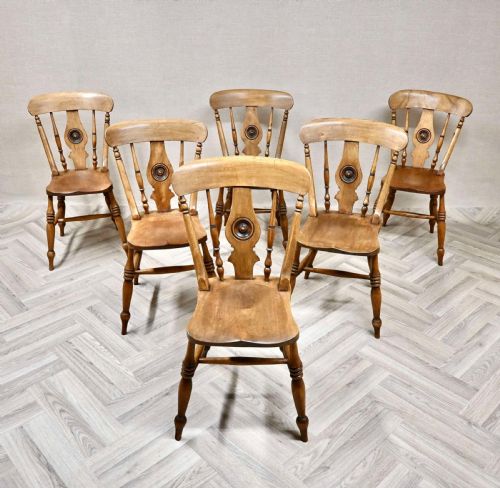
Makers produced these chairs for farmhouse and village kitchens across English country settings, utilising practical forms that survived heavy household use. Sets often arrive as harlequin groupings gathered over time rather than original single-workshop batches.
Judging quality and proportion
Quality rests in the depth of the seat sculpture and the crispness of the spindle turnings. Superior examples maintain balanced proportions between the height of the back and the width of the elm base.
The integrity of the timber joints determines structural durability, as chairs subjected to decades of kitchen use often show replacement parts or tightened wedging. Uniformity across a matched set elevates the standing of the pieces compared to mixed harlequin assemblies.
Beech Windsor Kitchen Chairs Retail Price Guide 2026
Typical asking prices for beech windsor kitchen chairs among the pieces listed under this phrase on Sellingantiques today, from the lower quarter to the upper quarter. They describe what is for sale here now, not the wider market.
Listings feature nineteenth-century and early twentieth-century examples constructed from beech, elm, and ash in various stick back, hoop back, and wheel back forms.
The Beech Windsor Kitchen Chairs Glossary
- Wheel back
- A Windsor chair variation featuring a pierced splat shaped like a cartwheel centred in the backrest. This decorative element became common in nineteenth-century farmhouse seating.
- Stick back
- A chair design where multiple plain turned spindles connect the seat to the top rail without a central wooden splat. This simpler construction is typical of early country forms.
- Lath back
- A backrest style constructed from a flat horizontal wooden slat supported by vertical spindles. It provides rigid upper back support for daily kitchen use.
- Harlequin set
- A collection of dining chairs sharing similar styles and materials but assembled from different sources over time. These groupings often match by general form rather than a single workshop origin.
- Carver
- An armchair featuring structural armrests integrated into the back frame and spindle arrangement. These pieces typically served as head-of-table seating in farmhouse kitchens.
Beech Windsor Kitchen Chairs: Frequently Asked Questions
How do I care for a beech windsor kitchen chair?
Clean wooden surfaces using a damp cloth and nourish the grain periodically with traditional beeswax rather than modern silicone polishes. Keep the chairs away from direct heat sources and radiators to prevent the dry beech and elm timbers from splitting.
Check the wedged leg joints occasionally to ensure the components remain tight within the seat plate. Regular gentle maintenance preserves the original surface patina accumulated through generations of domestic use.
Can I use these chairs around a modern dining table?
These country chairs suit contemporary dining spaces because their neutral timber tones and varied back designs blend easily with modern interiors. The ergonomic saddle seats offer practical comfort for daily meals.
Consider the seat height and arm clearance when pairing armchairs with modern table aprons. Mixing individual styles creates an informal dining atmosphere reminiscent of traditional farmhouse kitchens.
What is the difference between a stick back and a hoop back?
Stick back chairs feature vertical spindles rising straight from the seat to a top rail, offering a clean and linear appearance. Hoop back chairs incorporate a continuous steam-bent wooden bow that forms both the armrests and the upper backrest frame.
Both configurations utilise beech and ash for the uprights while depending on a solid elm seat for structural anchorage. Hoop backs generally provide enclosed side support, whereas stick backs offer an open framework.
Why are beech and elm used together in these chairs?
Makers paired beech and elm because each timber provides specific mechanical properties suited to chair construction. Beech turns cleanly on a lathe for spindles and resists bending under load, making it ideal for legs and uprights.
Elm possesses an interlocking grain that resists splitting when nails or wedges are driven into the seat block. This deliberate combination of woods ensured the chairs could withstand heavy household strain over decades.