



Beech Captains Chair
A beech captains chair combines robust country seating with the sturdy armrests required for long hours at a desk.
Beech Captains Chair
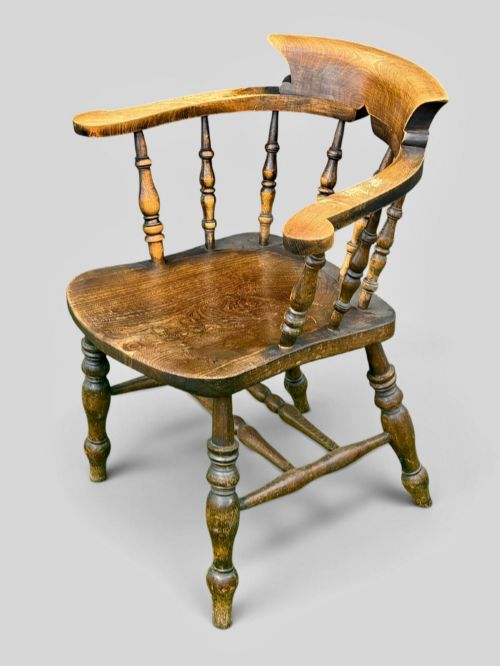
A beech captains chair is a sturdy low-backed armchair traditionally used for office work, library reading or smoking, featuring a rounded spindle back that joins a continuous armrail. These pieces emerge primarily from the Victorian and Edwardian periods, carrying the solid proportions and functional design of English country furniture.
The version most commonly found on this page pairs a turned beech frame with a shaped elm seat, offering a combination of pale timber and rich grain. Makers often built these chairs as office or desk seating, giving buyers a practical antique that handles daily use.
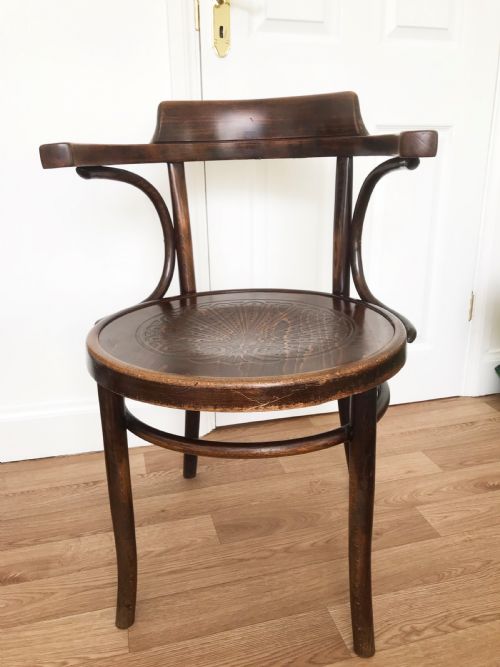
Design variations include the low-slung smokers bow, revolving office chairs with swivel mechanisms, and occasional bentwood forms. Each type retains the characteristic low profile and wraparound arms that define the form.
What varies in quality
Quality separates along the harmony of the timber selection and the crispness of the turned components on the arms and legs. Superior examples display carefully matched elm seats with strong grain patterns paired with evenly turned beech spindles that show no excessive wear.
The integrity of the structural joints and the original height of the seat determine the overall handling of the piece. Chairs that retain their original swivel mechanisms, brass fittings or leather upholstery hold a distinct advantage over heavily altered examples.
Beech Captains Chair Retail Price Guide 2026
Typical asking prices for beech captains chair among the pieces listed under this phrase on Sellingantiques today, from the lower quarter to the upper quarter. They describe what is for sale here now, not the wider market.
Several chairs bear the scars of nineteenth-century ink spills, proving that previous owners were just as messy at their desks as we are.
The Beech Captains Chair Glossary
- Smokers bow
- A low-backed Windsor-style armchair with a continuous curved armrail, closely related to the captains chair. These chairs often feature generous elm seats and turned beech spindles.
- Bentwood
- Wood softened by steam and bent into curved shapes, commonly associated with Thonet production methods seen in later desk chairs. This technique created lightweight, durable frames.
- Saddle seat
- A wooden seat scooped and shaped by hand to fit the contours of the body. Craftsmen carved these from thick slabs of elm to ensure comfort during long periods of sitting.
- Spindle
- A slender, turned wooden rod used to support the backrest or arms of the chair. These uprights provide structural rigidity while keeping the upper section light in appearance.
Beech Captains Chair: Frequently Asked Questions
What is a captains chair?
A captains chair is a low-backed wooden armchair designed for office or desk use, featuring a rounded armrail supported by turned spindles.
These chairs developed from traditional Windsor forms, offering sturdy armrests and a comfortable, saddle-shaped seat for everyday seating.
How do I date a beech captains chair?
Dating relies on examining the turning style of the legs, the method of construction, and the wear patterns on the wooden seat. Victorian examples often display heavier turnings and darker patination than later Edwardian or interwar office variants.
Checking for hand-cut joinery and original finish helps separate nineteenth-century pieces from twentieth-century reproductions or office conversions.
Are these chairs comfortable for daily desk work?
Many buyers use these chairs daily because the shaped elm seat and supportive curved back offer natural ergonomic support.
Revolving swivel versions and padded variants provide additional comfort for modern workspaces while maintaining period character.
What woods were used to make them?
Makers predominantly used beech for the turned legs, stretchers and arm bows due to its strength and flexibility. Elm was the preferred choice for the solid saddle seat because of its tough, interlocked grain.
Some examples also incorporate oak, alder, ash and leather or brass components depending on the specific workshop and date.