
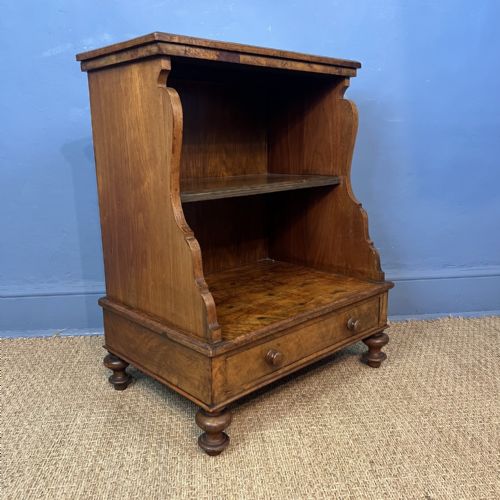


Bedside Storage Units
These bedside storage units offer practical nighttime organisation in timber forms ranging from Victorian mahogany chests to mid-century teak cabinets.
Bedside Storage Units
Bedside storage units combine the compact footprint of bedroom furniture with timber construction from periods such as the Edwardian era, 1920, and the mid-century modern style. Buyers searching for bedside storage units encounter various forms designed to hold personal items near a bed, including narrow chests of drawers, pedestal cabinets, open bookcases, and small cupboards.
The pieces listed on this page span several decades of design, featuring styles like Victorian, Edwardian, Arts and Crafts, Art Deco, and Jacobean Revival. These items function as bedside tables or side cabinets, providing surfaces for lamps and enclosed spaces for nighttime necessities.
Makers and retailers such as Denby and Spinks and Simpson Halifax appear alongside unmarked pieces in oak, mahogany, walnut, and pine. The selection emphasises timber craftsmanship adapted for domestic use across different centuries.
How they were made
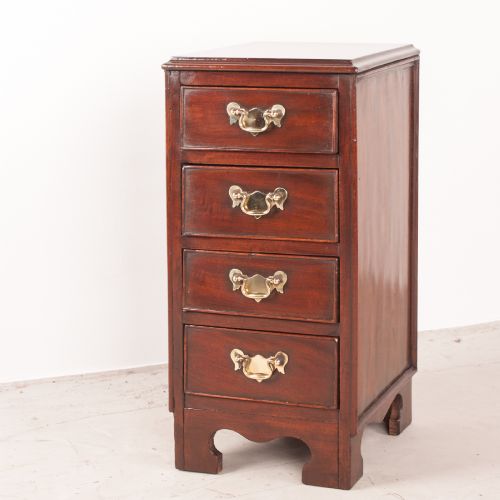
Makers constructed these storage units primarily using solid timbers and veneers, specifically oak, mahogany, walnut, burr walnut, teak, and pine. Structural elements often incorporate brass handles or fittings, while polished finishes highlight the natural grain of the wood.
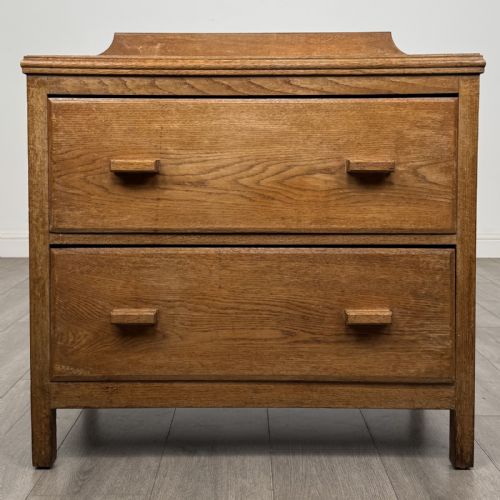
Construction techniques visible across the pieces include raised galleries on drawer tops, open shelving configurations, and panelled cabinet doors. Workshops employed traditional joinery methods to build narrow chests, standing cupboards, and pedestal cabinets of small proportions.
The listings feature oak, mahogany, teak, walnut, and pine across periods from 1850 to the mid-twentieth century.
What varies in quality
Quality in these units rests upon the selection of timber figures, such as burr walnut or figured mahogany, and the precision of the cabinetmaker's joinery. Finer pieces demonstrate careful attention to proportion, particularly in narrow designs and small-scale chests.
Hardware choice and surface finishing also distinguish the work, with polished surfaces and original brass fittings indicating higher standards of production from workshops and makers.
Denby and Spinks·Simpson Halifax
The Bedside Storage Units Glossary
- Pedestal cabinet
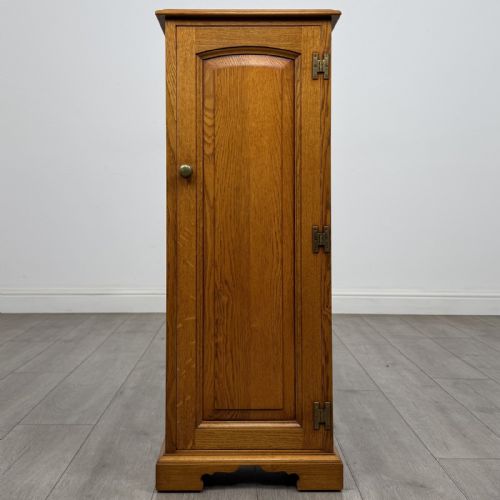
- A freestanding single-door cupboard designed to stand beside a bed or desk. These units provide enclosed storage within a compact vertical footprint.
- Raised gallery
- A low decorative railing fitted around the top surface of a chest or cabinet. This feature prevents items from sliding off the edge.
- Burr walnut
- Timber taken from a growth deformation on a walnut tree, yielding complex swirling grain patterns. Cabinetmakers use burr walnut veneers on high-status furniture fronts.
- Open shelf
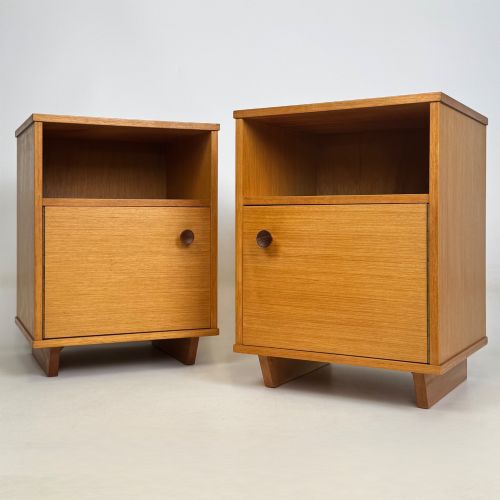
- A storage compartment without a door or drawer front, allowing direct access to books or objects. Mid-century and later designs frequently incorporate this feature.
Bedside Storage Units: Frequently Asked Questions
What styles are common?
The available pieces encompass Victorian, Edwardian, Arts and Crafts, Art Deco, and mid-century modern designs. These styles reflect changing domestic tastes across the nineteenth and twentieth centuries.
Craftsmen adapted traditional forms like chests of drawers and cupboards into smaller proportions suitable for bedroom use during these different periods.
How were small cabinets used?
These small cabinets and chests served to keep personal belongings, books, and night-time essentials close to the bed. Their compact dimensions suited the bedroom layouts of Victorian and Edwardian homes.
Many designs combined open shelving with enclosed cupboards or drawers to accommodate different types of bedside storage.
What timbers do makers use?
Makers constructed these storage units using oak, mahogany, walnut, burr walnut, teak, pine, and brass fittings. Solid oak and mahogany appear frequently across the different periods.
Finishes range from polished oak surfaces to figured walnut veneers that highlight the natural grain of the wood.
How do I identify periods?
Period identification relies on observing the combination of timber, construction methods, and stylistic details such as raised galleries or panelled doors. Pieces span from mid-nineteenth-century Victorian designs to mid-century teak cabinets.
Comparing the proportions and hardware helps distinguish Edwardian and 1920s pieces from earlier Victorian examples.