

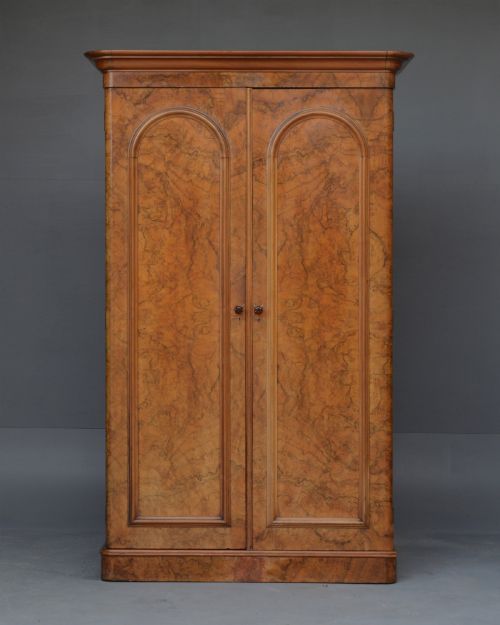
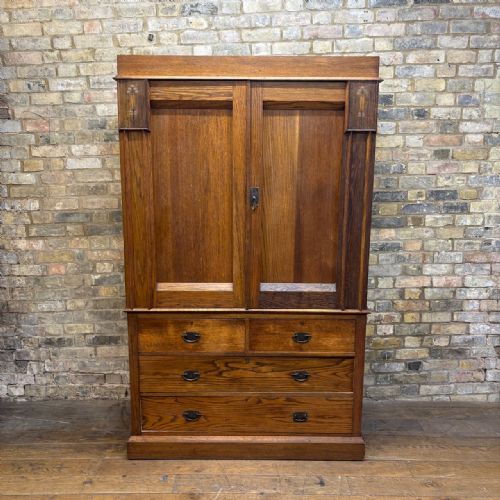
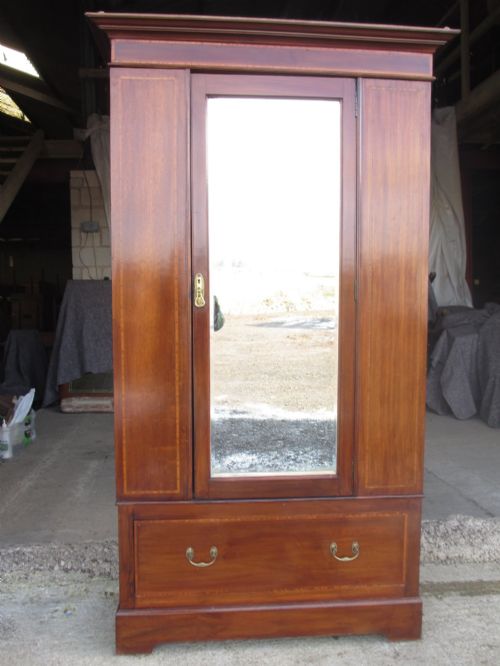
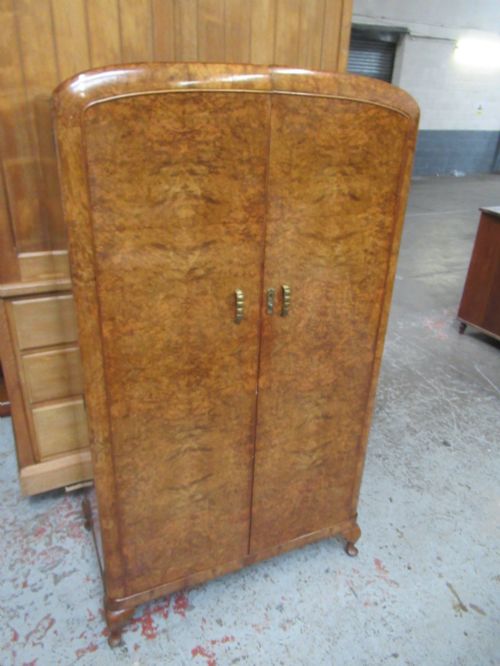
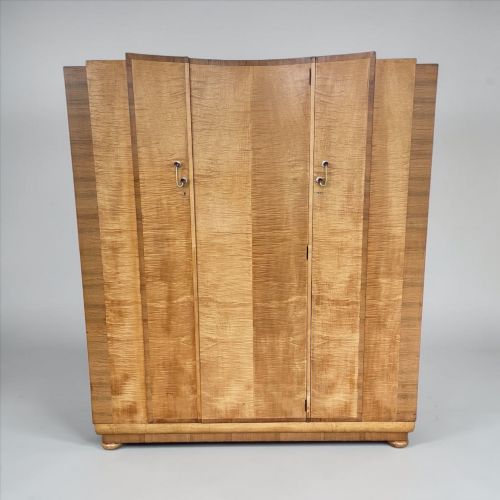
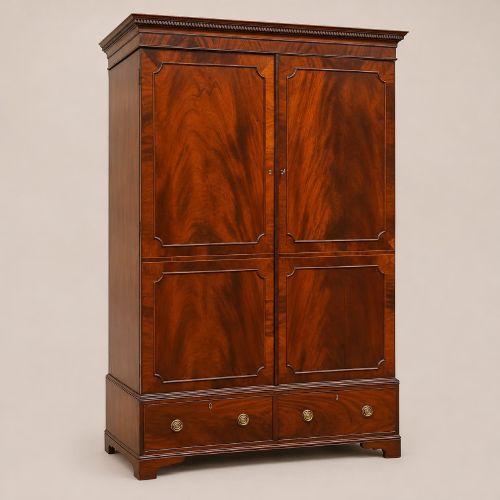
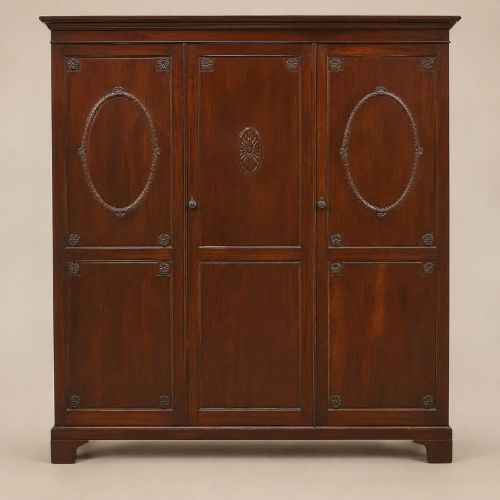
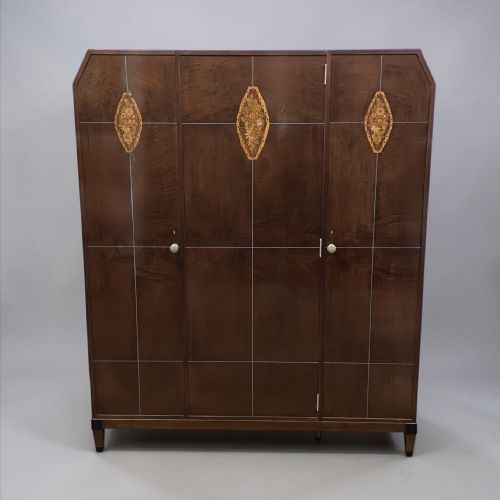
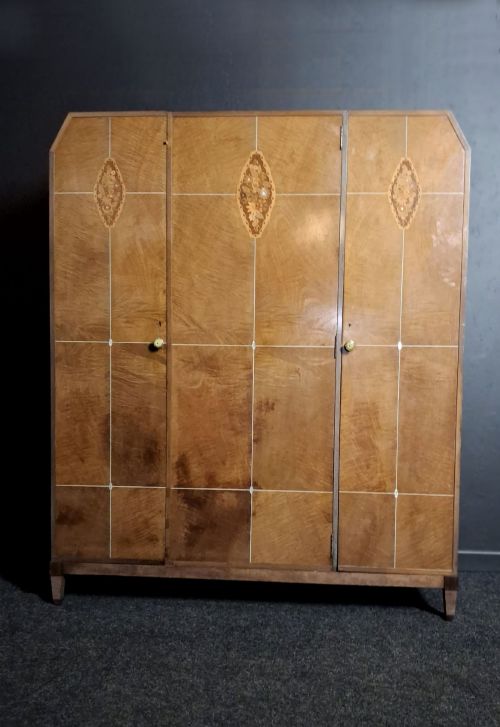
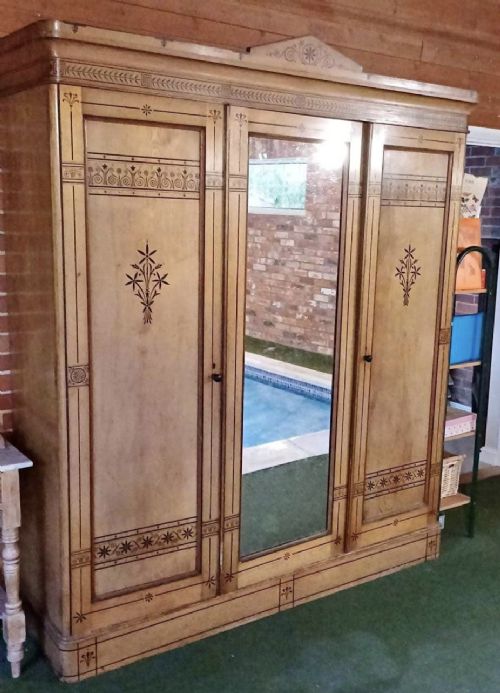
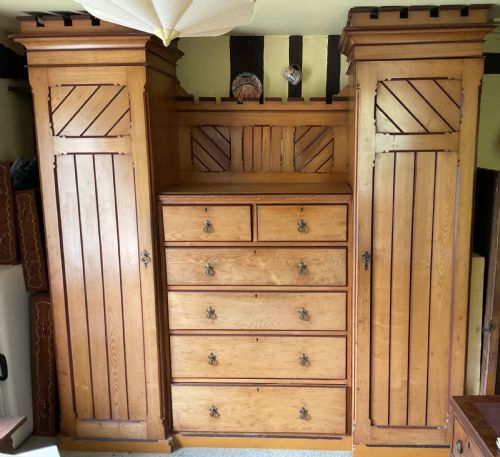
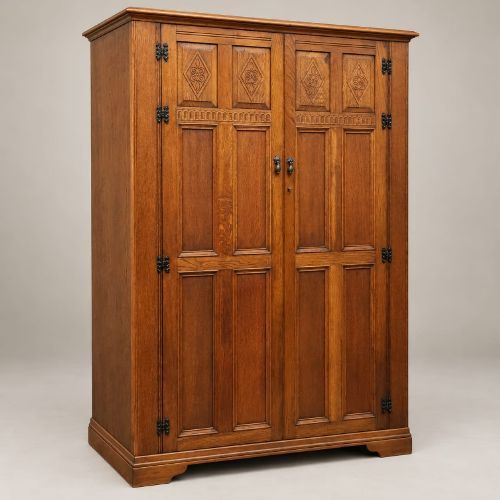
Bedroom Clothes Armoire
A bedroom clothes armoire provides substantial timber storage for garments while anchoring a period interior with architectural presence.
Bedroom Clothes Armoire
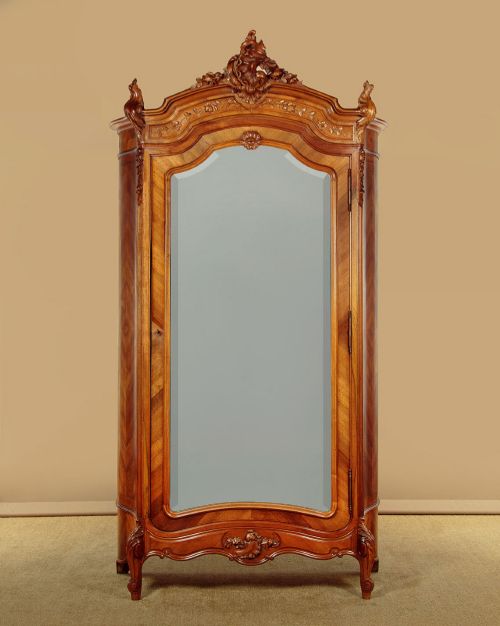
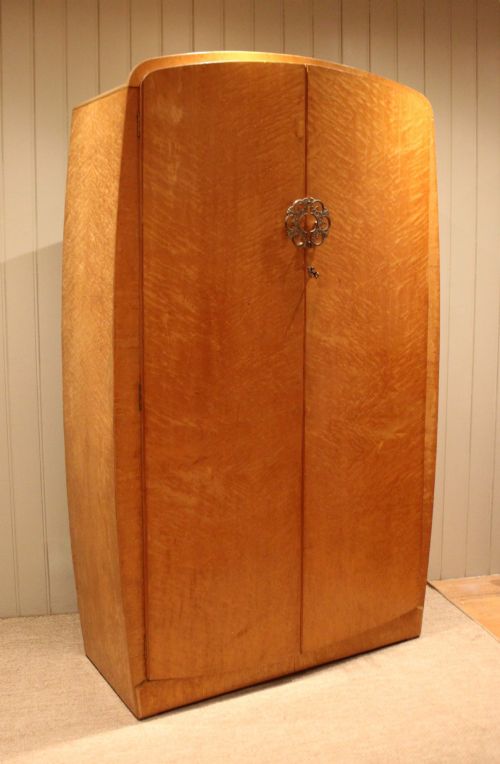
When you search for a bedroom clothes armoire, you encounter substantial timber storage furniture spanning Georgian elegance through to Art Deco geometric forms. These pieces serve to house garments and linen, utilising substantial internal hanging space, shelving and drawers.
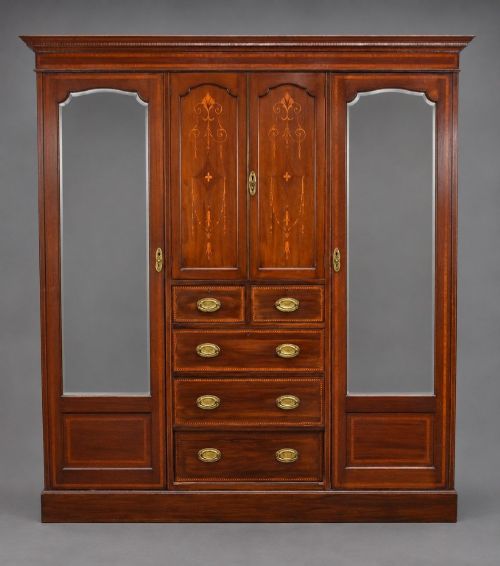
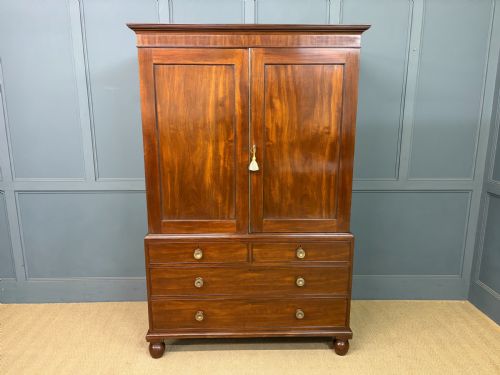
The versions you meet most frequently on this page belong to the Victorian and Edwardian periods, constructed in mahogany, walnut and oak. Many examples take the form of linen presses, combination wardrobes and triple door configurations designed for domestic utility.
Makers such as Shapland & Petter, Hille for Harrods and Heal of London appear among the offerings, representing notable workshops and retailers. Pieces range from modest single compartments to large breakfront constructions intended for expansive sleeping chambers.
Indicators of craftsmanship
The distinction between standard utility pieces and superior examples lies in the selection of timber veneers, such as matching burr walnut or flame mahogany grains across multiple doors. Depth of carving, hand-cut dovetails and the integration of original brass fittings indicate higher workshop standards.
Internal configuration also separates basic storage from finer cabinets, with fitted drawers, sliding linen trays and English ash framing showing greater consideration for domestic organisation. Untouched patination and intact original mirrors further distinguish exceptional survivals.
Bedroom Clothes Armoire Retail Price Guide 2026
Typical asking prices for bedroom clothes armoire among the pieces listed under this phrase on Sellingantiques today, from the lower quarter to the upper quarter. They describe what is for sale here now, not the wider market.
Listings feature woods including mahogany, walnut, burr walnut, oak, satinwood, ash and pine across Victorian, Edwardian, Georgian and Art Deco styles.
Shapland & Petter·Heal Of London·Hille for Harrods·Crown Furniture·Maple & Co
The Bedroom Clothes Armoire Glossary
- Linen Press
- A tall storage piece comprising upper sliding trays or shelves enclosed by doors, positioned above a chest base with multiple drawers. This form evolved to store household textiles flat before hanging wardrobes became standard.
- Compactum
- A fitted wardrobe designed to maximise internal storage by combining hanging space, sliding trays and small drawers within a single carcass. These multifunctional units appeared frequently during the Edwardian and Art Deco eras.
- Chinoiserie
- A decorative style employing lacquered surfaces and oriental motifs popularised during specific periods of revival. These finishes transform standard timber surfaces into striking pictorial panels.
- Breakfront
- A cabinetry design where the central section projects forward from flanking wings. This architectural arrangement creates depth and shadow across large multi-door wardrobes.
- Linenfold
- A carved wood panel motif resembling folded parchment or linen cloth. This technique appears frequently on Tudor revival and Edwardian oak furniture.
Bedroom Clothes Armoire: Frequently Asked Questions
What is a bedroom clothes armoire?
A bedroom clothes armoire is a large freestanding timber cabinet designed for hanging garments, storing folded textiles and organising personal belongings. These pieces often feature panelled doors enclosing hanging rails, shelves and interior drawers.
Historically serving the function of a modern fitted wardrobe, they provide significant storage capacity while introducing architectural character to a bedroom. Configurations range from compact single door cupboards to expansive four door architectural presses.
How do I date a wooden wardrobe?
Dating a wardrobe involves examining timber choices, construction techniques and stylistic motifs such as Georgian mahogany framing or Art Deco geometric veneers. Secondary timbers inside drawers and the presence of hand-cut dovetails offer clues to the period of manufacture.
Hardware styles, lock mechanisms and manufacturer stamps further assist in narrowing the decade of origin. Comparing the decorative carving and overall proportions against documented design periods clarifies the timeline.
Can these wardrobes be dismantled?
Many large antique wardrobes and linen presses were constructed to be dismantled into sections for transport and installation in domestic rooms. This modular construction typically involves a separate cornice, base, and side panels secured with internal bolts or pegs.
Certain Georgian and Victorian examples incorporate flat pack designs intended for ease of movement between properties. Checking the internal joints and structural dismantling points determines how a specific piece separates.
How do I maintain burr walnut furniture?
Maintaining burr walnut involves keeping timber surfaces away from direct heat sources and strong sunlight to prevent veneer drying or fading. Regular dusting with a soft, dry cloth preserves the polished finish without introducing moisture.
Applying occasional appropriate wax polish nourishes the grain and protects the figured surface from environmental wear. Avoid harsh chemical cleaners that can degrade antique shellac or French polished finishes.