

Beaded Gold Jewellery
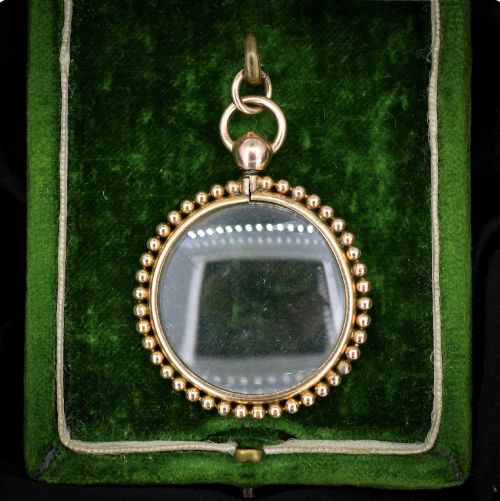
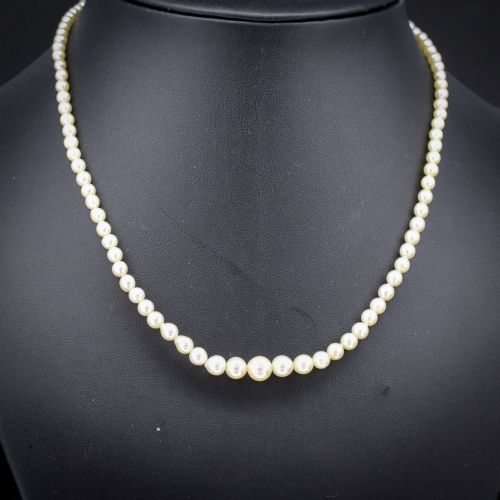
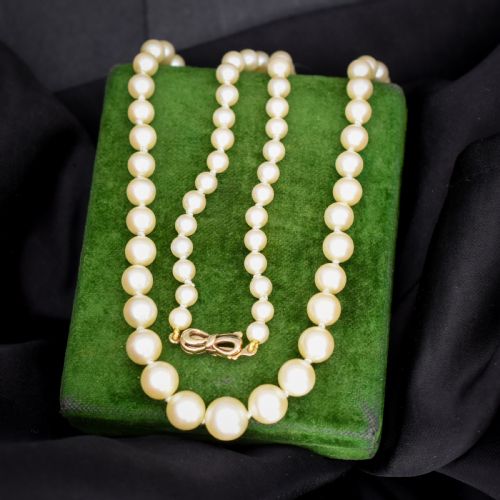
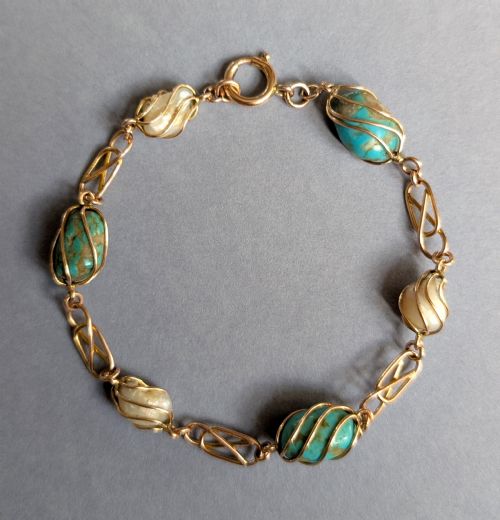
Beaded gold jewellery brings together precious metals and pearls, coral, or gemstones to create wearable pieces spanning the Victorian era to the mid-century.
Beaded Gold Jewellery
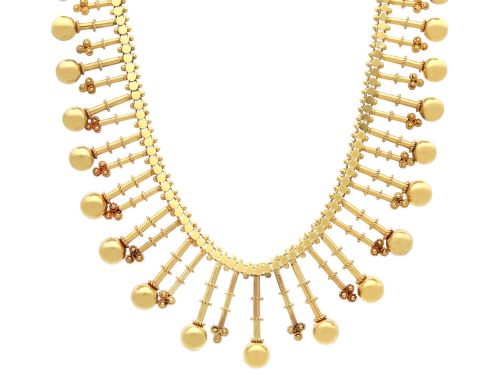
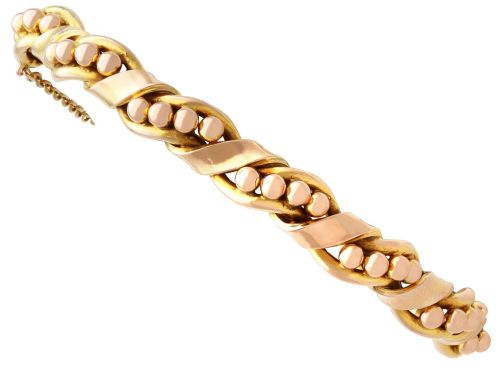
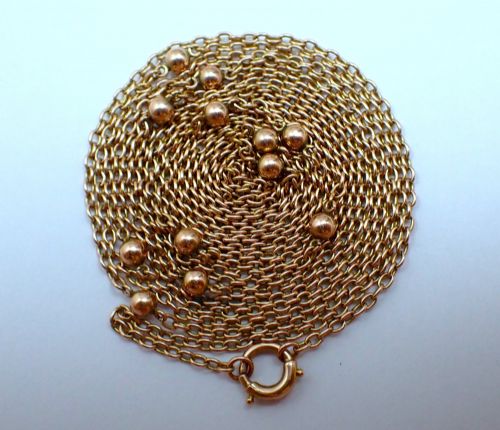
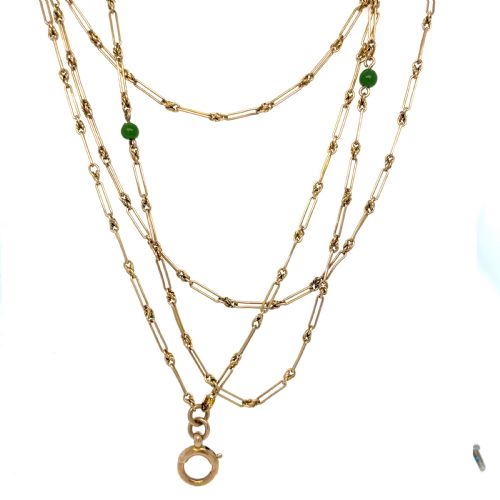
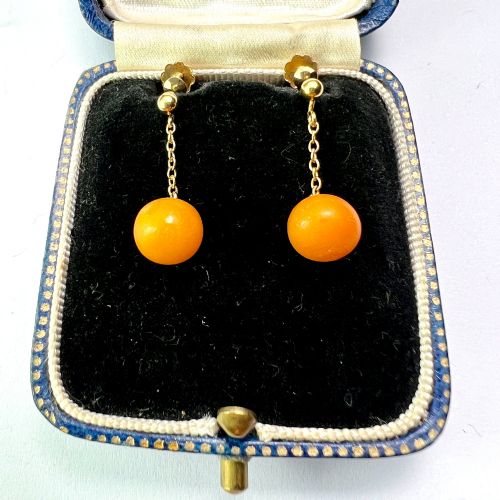
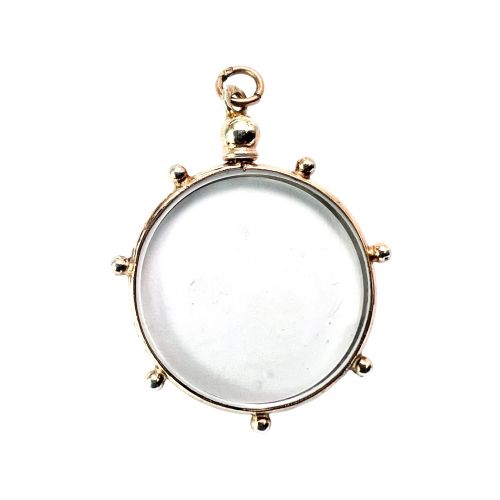
Beaded gold jewellery spans necklaces, bracelets, earrings, and rings, drawing on materials from pearls and coral to turquoise and amethyst. Pieces range from long guard chains and fringe necklaces to drop earrings and cocktail rings.
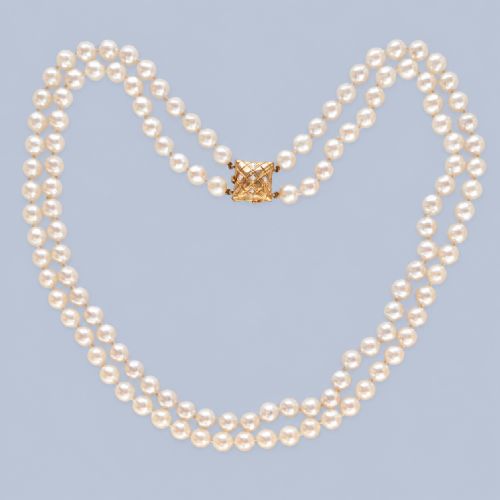
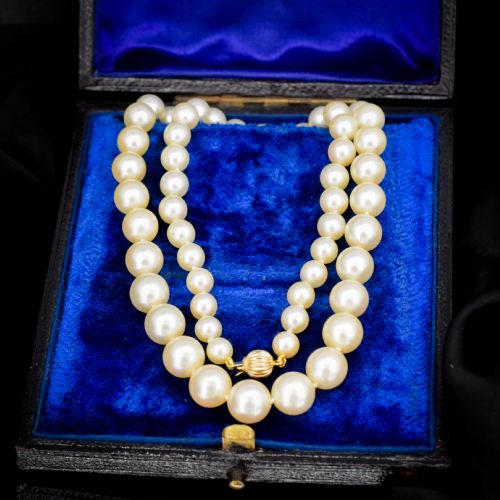
Victorian and Edwardian examples sit alongside mid-century designs, reflecting shifts in taste across the nineteenth and twentieth centuries. Pearls paired with gold clasps and coral bead necklaces appear frequently.
Makers utilised various purities of gold, including 9ct, 14ct, 15ct, and 18ct, combining them with gemstones such as diamonds, emeralds, sapphires, and garnets.
How they were made
Goldsmiths shaped yellow, rose, and white gold into chains, settings, and clasps, often incorporating granulation or wirework techniques seen in revival styles. Metal components paired with drilled pearls, coral, amber, and glass beads, threaded securely or linked by hand.
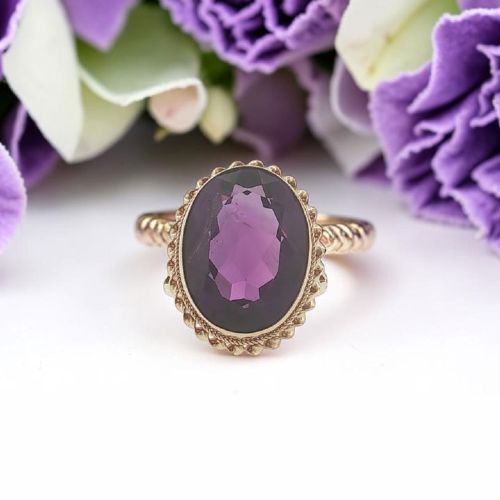
Gemstones such as turquoise, amethyst, garnet, and diamond received facet cuts or cabochon polishing before integration into rings, pendants, and drops. Secure findings, including screw backs, spring rings, and bespoke clasps, held complex multi-strand layouts together.
Beaded Gold Jewellery Retail Price Guide 2026
Typical asking prices for beaded gold jewellery among the pieces listed under this phrase on Sellingantiques today, from the lower quarter to the upper quarter. They describe what is for sale here now, not the wider market.
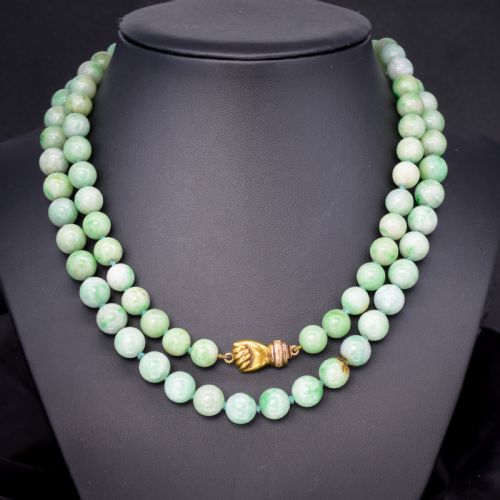
A figa hand clasp on a long jade bead necklace provides a traditional talismanic gesture right at the back of the neck.
What varies in quality
Quality rests in the uniformity and lustre of the natural materials, such as matched pearls and evenly coloured coral, alongside the weight and purity of the gold. Finer pieces demonstrate precise stone setting and considered proportions between beads and metal mounts.
Construction integrity defines longevity, visible in robust stringing, secure bezels or claws, and original clasps that integrate harmoniously with the main design.
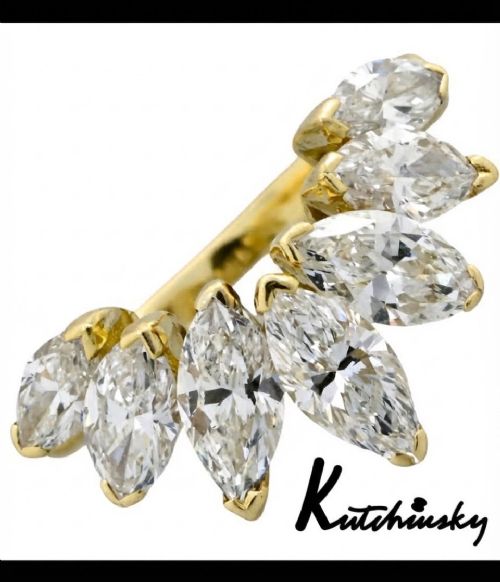
Kutchinsky
The Beaded Gold Jewellery Glossary
- Guard chain
- A very long chain originally designed to secure a pocket watch or locket, worn doubled or tripled around the neck. These versatile pieces often measure over sixty inches.
- Cabochon
- A gemstone shaped and polished with a smooth, convex surface rather than faceted. This cut suits opaque stones like turquoise, coral, and amber.
- Fringe necklace
- A necklace featuring graduated pendants or drops suspended along the lower edge of the chain. This style gained popularity during the Victorian period.
- Seed pearl
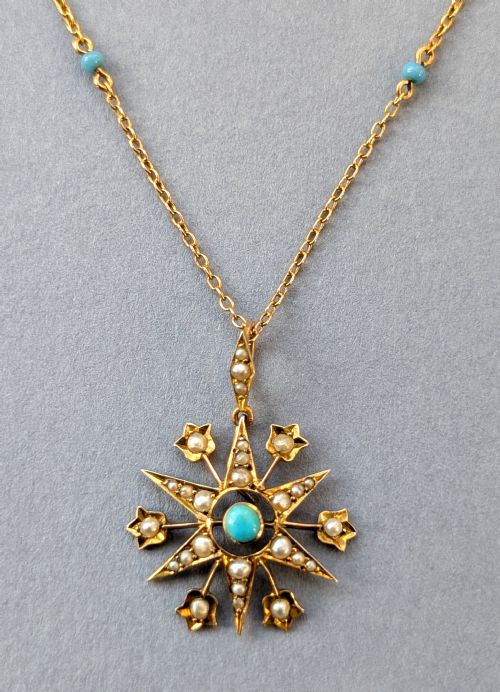
- A very small, naturally formed pearl, often drilled and used in clusters or strung in multi-strand configurations. They frequently accent antique turquoise and coral jewellery.
- Screwback
- An earring fastening mechanism utilising a threaded post and a small screw nut to adjust pressure on the earlobe. This fitting predominated before the invention of modern clips and posts.
Beaded Gold Jewellery: Frequently Asked Questions
What is the difference between a guard chain and a standard necklace?
Guard chains are exceptionally long chains designed originally for practical security purposes, allowing them to wrap multiple times around the neck.
Standard necklaces rest at fixed collar, choker, or opera lengths with specific clasps meant for single-strand wear.
How can I tell Victorian bead work from mid-century pieces?
Victorian and Edwardian pieces frequently employ higher or unusual gold purities like 15ct alongside hand-carved coral, turquoise, and seed pearls.
Mid-century designs often feature cultured pearls, 14ct or 18ct gold, and cleaner modernist lines or retro cocktail aesthetics.
Can multi-strand pearl necklaces be shortened safely?
A professional jeweller can alter the length of multi-strand pearl necklaces by removing beads and resetting the clasp.
Ensure the restringing uses appropriate silk thread and traditional knotting between each bead for structural security.