


Beaded Glass Ceiling Pendant
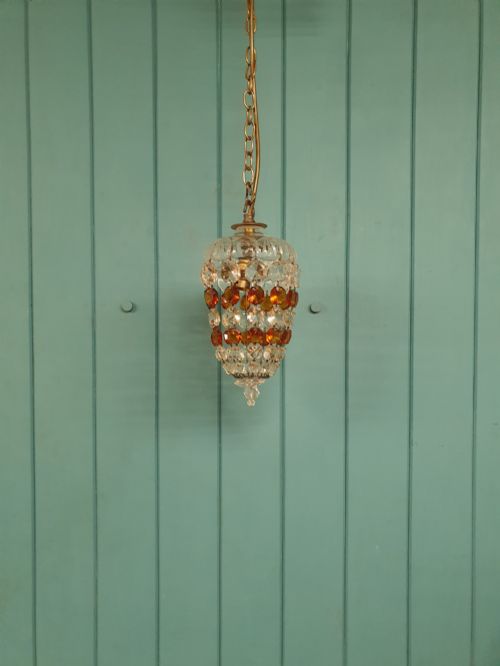
A beaded glass ceiling pendant brings light through gathered strands of crystal drops, amber beads, and metal frames.
Beaded Glass Ceiling Pendant
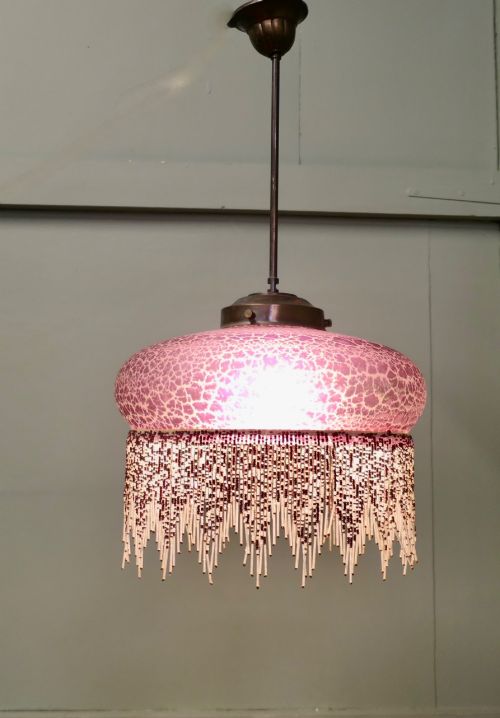
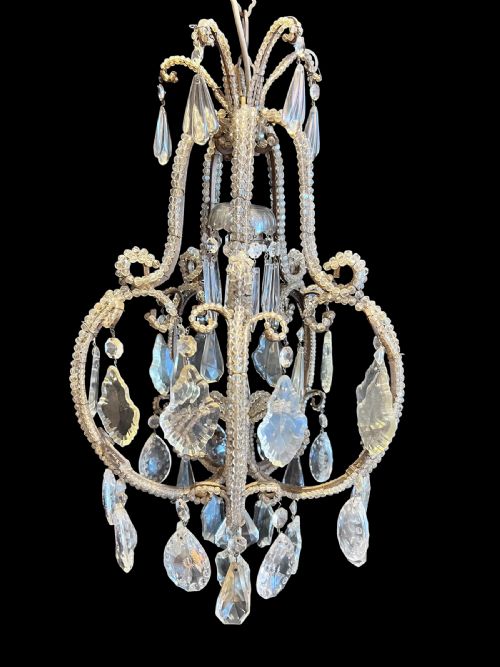
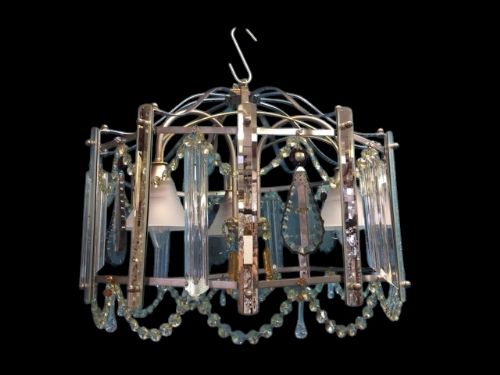
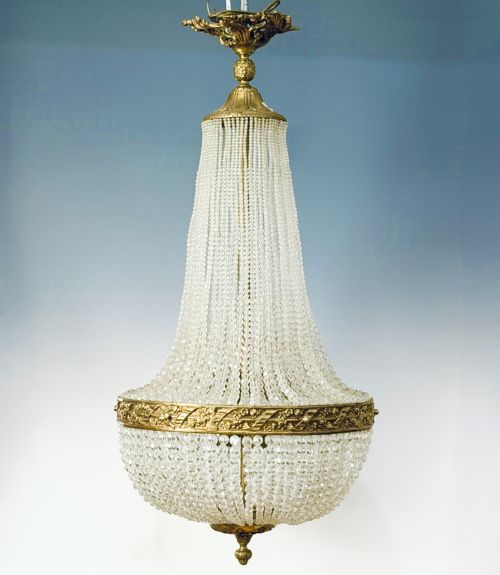
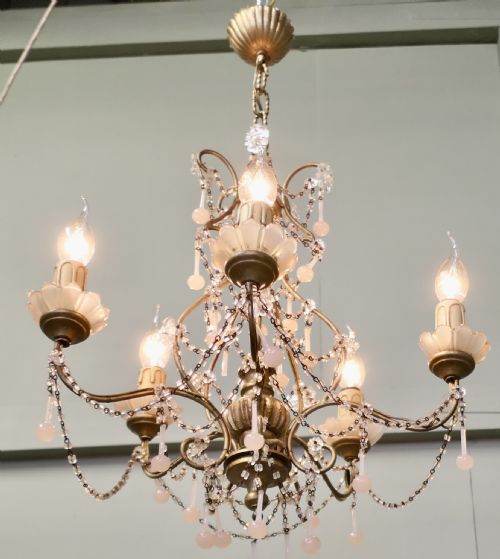
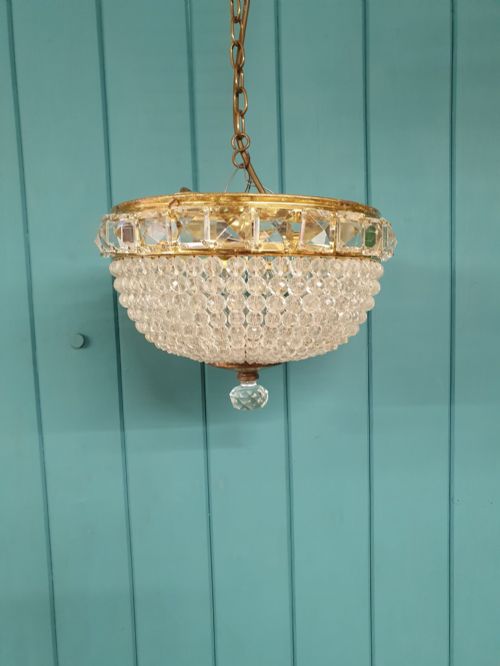
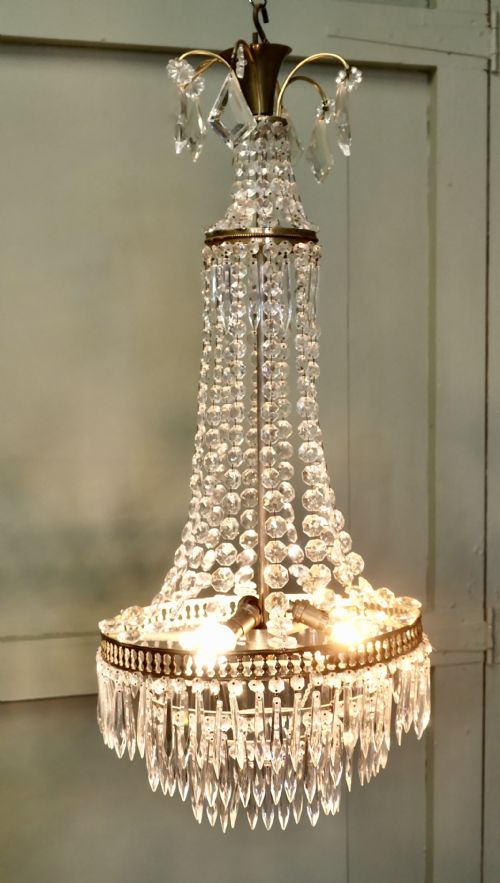
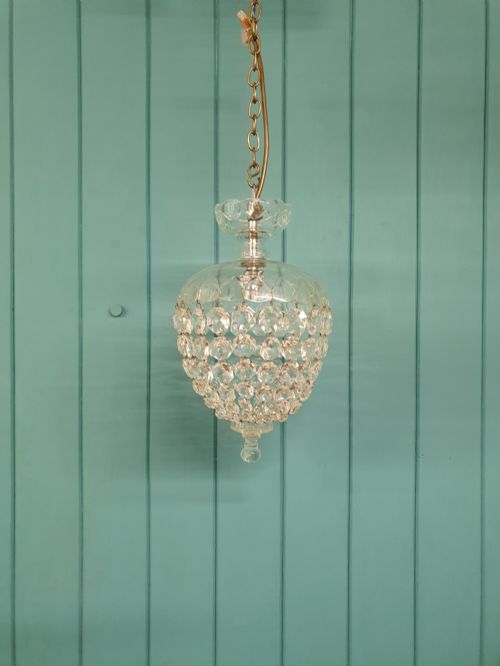
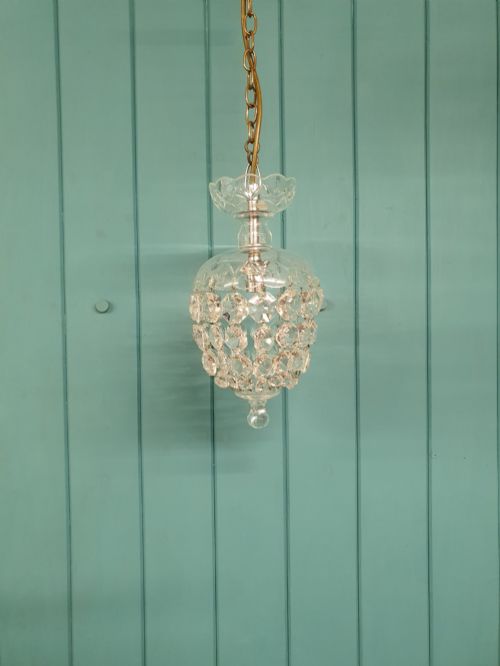
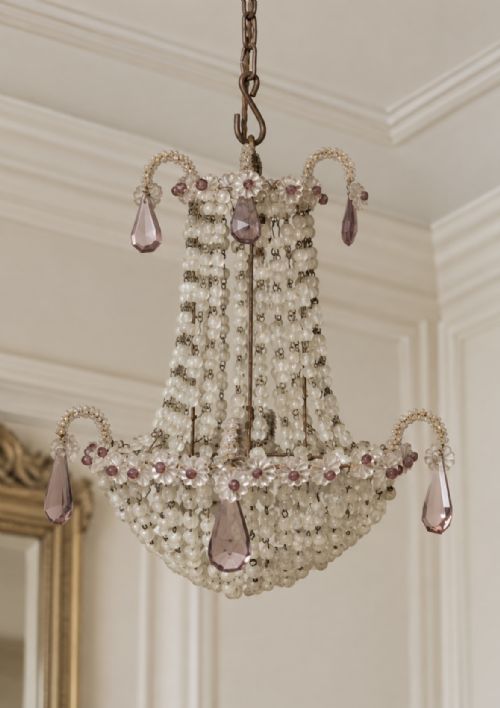
A beaded glass ceiling pendant draws the eye upward with dense arrangements of crystal drops, coloured beads, and metal framework. These light fittings appear across forms such as bag chandeliers, dome tops, lanterns, and lampshades from the nineteenth century through the 1930s. Styles span French Empire, Art Deco, Italian Venetian, and Florentine designs, incorporating branches, tents, and waterfalls.
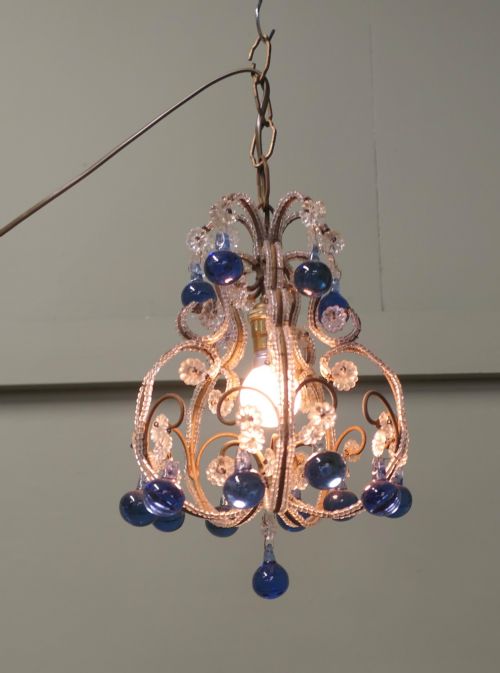
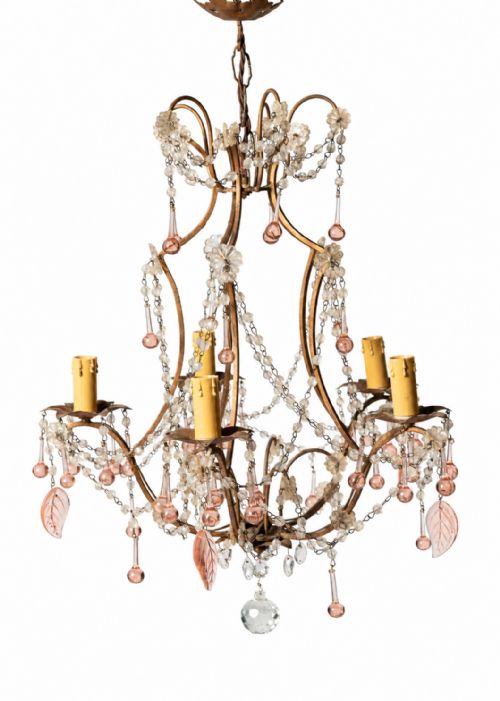
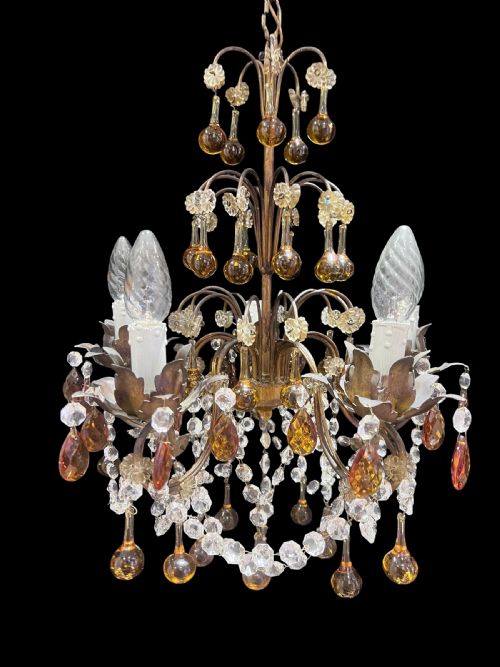
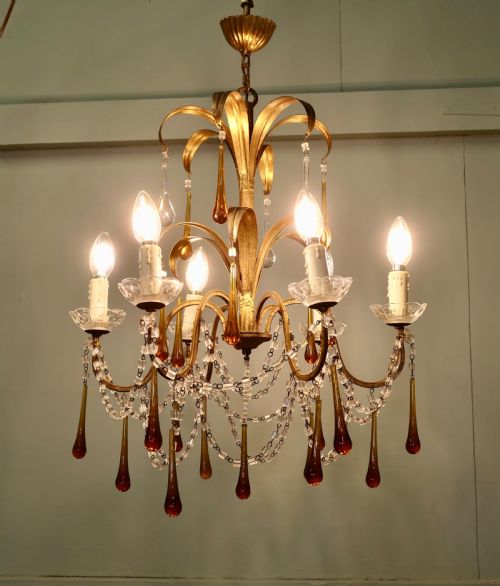
The pieces on this page originate from the Edwardian era, the 1910s, 1920s, and 1930s. Buyers encounter small wire chandeliers with flowers, large multi-light fixtures with coloured crystal fruits, and tapered bag chandeliers measuring across various diameters. The construction adapts to domestic spaces through single lights or branching arms hung with drops and prisms.
Materials and construction
Makers built the structural frames using brass, gilt metal, chrome, iron, and gilt bronze. These metal armatures support arrangements of cut glass, crystal, and glass beads held together with wire linkages.
Details include amber and clear crystal, coloured drops, red drips, and blue prisms positioned at the top and centre. Some examples feature gilt toleware, tinsel work, or glass bunches of grapes and fruit suspended from branches.
Beaded Glass Ceiling Pendant Retail Price Guide 2026
Typical asking prices for beaded glass ceiling pendant among the pieces listed under this phrase on Sellingantiques today, from the lower quarter to the upper quarter. They describe what is for sale here now, not the wider market.
Listings span the nineteenth century, Edwardian period, 1910, 1920, 1930, and Art Deco styles.
Evaluating the standard
The distinction between tiers rests upon the density and cut of the glass elements. Denser groupings of cut crystal drops, intricate brass or gilt framework, and complex configurations such as tent and waterfall structures elevate the standard of a fixture.
Simpler wire frames with sparse beads occupy a different category from large multi-light Italian and French pieces with coloured crystals and elaborate metalwork. The integration of specialty components like glass fruit clusters or matched prisms defines the upper end of the range.
The Beaded Glass Ceiling Pendant Glossary
- Bag chandelier
- A light fixture featuring a flat top ring tapering down to a smaller bottom ring, enclosed in a net or bag of hanging glass beads.
- Tent and waterfall
- A mounting style where strings of beads form an upper cone shape above tiers of cascading glass drops.
- Toleware
- Painted tin or metal sheet fashioned into decorative canopy and frame elements on hanging lights.
- Prism
- A cut glass pendant designed to refract light into spectral colours, suspended from arms or rims.
- Galleon chandelier
- A hanging light fixture shaped to resemble the silhouette of a historic sailing ship.
Beaded Glass Ceiling Pendant: Frequently Asked Questions
How do I hang a beaded glass ceiling pendant?
These fixtures suspend from ceilings using chains or wiring attached to the upper ring, canopy, or dome top. Proper installation requires securing the weight to a ceiling joist.
Ceiling height dictates the drop length, particularly for multi-tier tent and waterfall designs or large multi-light chandeliers.
What rooms suit a bag chandelier?
Bag chandeliers work well in hallways, bedrooms, and dining spaces where their tapered profile fits moderate ceiling heights. Their enclosed beaded shape disperses a soft, diffused glow.
Larger multi-branch versions require higher ceilings and open floor space to accommodate their wider diameter and extensive crystal drops.
How do I clean a beaded glass chandelier?
Maintenance involves wiping individual glass beads, drops, and prisms using a mild cleaning solution applied with a soft cloth. Keeping the metal frame dry prevents tarnish.
Many practitioners clean delicate wire and glass assemblies in place to avoid disturbing the original stringing and linkages.
How do I tell Edwardian pieces from 1930s pieces?
Edwardian examples often feature brass and cut glass tapered bag designs or dome top configurations with amber and clear crystal. They tend to reflect traditional Edwardian decorative conventions.
Pieces from the 1930s frequently incorporate Art Deco styling, chrome elements, or distinctively coloured glass drops and geometric silhouettes.